“It’s an easement.” “No, it’s not.” That quick back-and-forth opens a property line showdown posted by the couple behind @rancholoscamberos, and it ends with a piece of paper settling the whole thing.
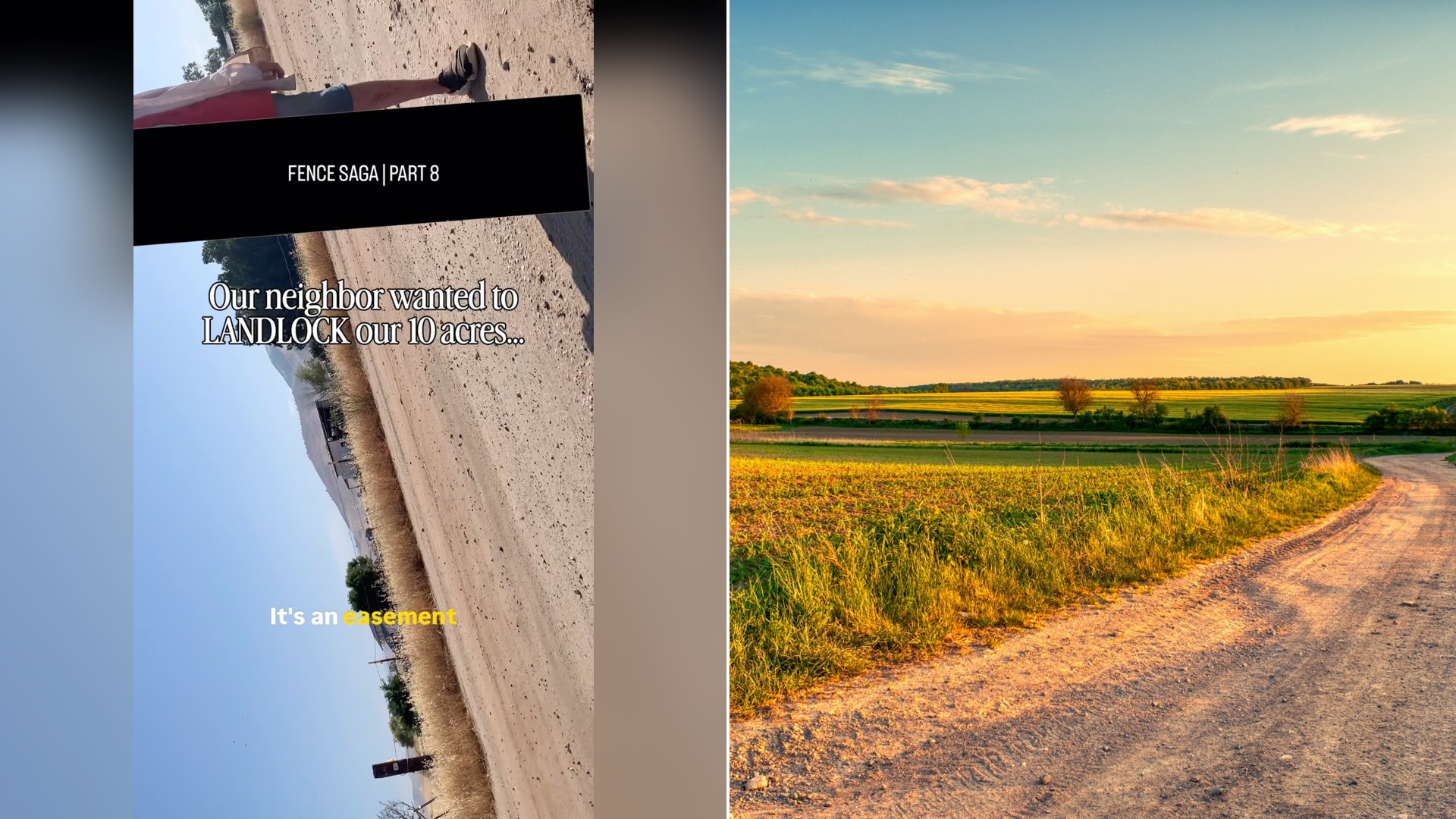
The couple are building their forever home on land they bought, and they call this chapter of their journey the Fence Saga. This installment is Part 8, and it is all about a road, a driveway and a deed.
The lesson they take from it is one every landowner can use: know what is actually recorded on your property before you need to know it.
View this post on Instagram
“You Do Have An Easement Across Our Property Into Your Driveway”
In the video, a neighbor insists the strip of land in question is not an easement. The landowner holds firm and tells the neighbor plainly that there is an easement across the property into the neighbor’s driveway.
The neighbor says they will check it out. The landowner answers with a number: it is a 60 foot easement.
Then comes the question that carries the whole exchange. “How would you get into your property if you didn’t have an easement across our property?”
The neighbor’s answer is a simple “Exactly,” followed by a thank you and an okay.
The Deed Spells Out A 60 Foot Easement Across Lots 14 And 15
The landowner does not rely on opinion. The language is read straight from the paperwork: an easement 60 feet in width for ingress and egress, along the southern 60 feet of lots 14 and 15.
“Ingress and egress” is the legal way of saying the right to get in and out. In plain English, the neighbor has a recorded right to cross that strip of land to reach their own driveway and property.
The landowner adds a pointer for anyone doing their own research. You need better information than what you find on the internet, and the proof here comes from the grant deed, which is the document that transfers a property to the person receiving it, known as the grantee.
Why The Couple Says Your Deed Is Worth Reading Before There Is A Fight
The caption on the post lays out the couple’s advice. Buying land, they write, has taught them there are a lot of things you do not think to check until you suddenly need them, and the deed is one of those things.
Their list is short and practical. Know what is actually recorded on your property. Know where your access comes from. Know what easements exist and what documents go with them.
And keep copies of everything. As they put it, “you can’t use that road” sounds a whole lot different when you already know what your paperwork says.
What An Easement Actually Is, In Plain Terms
An easement is a legal right that lets someone use part of another person’s land for a specific purpose. The land still belongs to the owner, but the easement holder has the right to use it in the way the document describes.
The most familiar kind is an access easement, like the one in this story, where a property would otherwise have no practical way to reach a public road. Others cover things like utility lines, drainage or shared driveways.
Easements are usually recorded with the county, which means they typically stay attached to the land even when it is sold. That is why a new buyer can find one on a property they thought they fully controlled.
How To Check Your Own Property Before A Neighbor Dispute Starts
You do not have to wait for a surprise at the fence line. A few steps can tell you what rights and limits come with your land.
- Pull your deed. Your county recorder or clerk’s office keeps recorded deeds, and many offices let you search them online or in person.
- Look at the recorded documents tied to your lot. Easements, restrictions and shared road agreements are often recorded separately from the deed, so ask about everything filed against your lot number.
- Review your title documents from closing. A title company’s report or policy normally lists easements it found on the property.
- Get a survey. A licensed surveyor can mark where an easement actually runs on the ground, which settles arguments about where a fence or a gate can go.
- Keep copies in two places. A folder at home and a digital copy mean you can produce the document in minutes, just as the couple did.
Fences, Gates And Easements Do Not Always Mix
This is a fence story at heart, and it is a good example of why fences are tricky near an easement. If a neighbor has a recorded right to cross part of your land, building a gate or a locked barrier across that strip can cause real trouble.
Before you put in posts, check where any easement runs, and talk with a local attorney if the language is complicated. Rules differ from one state and county to the next, so the recorded wording matters more than anything you hear secondhand.
It also helps to keep the tone friendly. In the video, the exchange stays short and the point is made with a question, not an argument. A calm conversation, backed by documents, tends to settle things faster than a heated one.
The couple’s Fence Saga continues on their Instagram page, and this chapter leaves one clear message for anyone who owns land or plans to: your access, your boundaries and your neighbor’s rights are all written down somewhere, and finding that paperwork early is the best protection you have.
More Stories You May Like
- California Brothers Promised Affordable Backyard Homes, Now Face 35 Felony Counts Each After Prosecutors Say They Collected More Than $1 Million From 13 Projects Without Doing The Work
- Vermont CEO Fought Neighbors For Nearly Five Years Over A Backyard Airstrip At His $3.5 Million Home, Then Bought A $14 Million Property With One Already Permitted, While A Neighbor Spent $300,000 Fighting Him
- New Jersey Renters Just Voted To Cap Yearly Rent Hikes At Just $20 For Rent Controlled Apartments, But There Is One Big Catch Waiting In December 2027
Leave a Reply