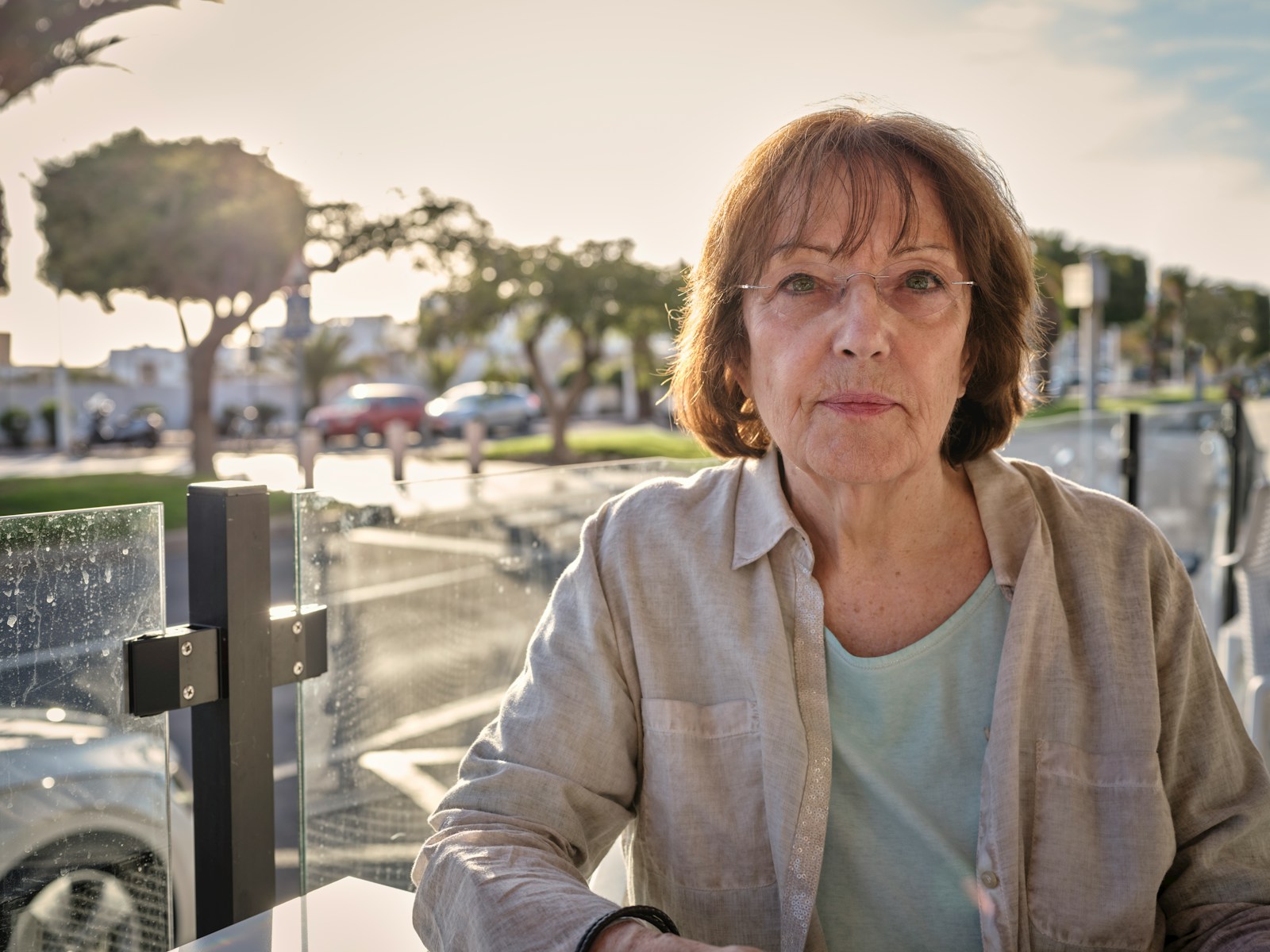
In a troubling incident that raises concerns about the influence of adult behavior on children, a 62-year-old woman found herself the target of disrespect from a young girl at a local community complex. The situation escalated when the girl, aged around seven or eight, flipped off the woman while adults nearby found the scene amusing rather than concerning.

The elderly woman, who has lived in a Section 8 complex for over a decade, is no stranger to the antics of local children. After losing her husband last year, she has faced numerous challenges, not least of which is the constant disruption caused by a group of children who regularly taunt stray cats and leave trash on her porch. Her attempts to address the issue have often resulted in confrontations with uninterested parents, leaving her feeling unsupported and frustrated.
Recently, the woman and her daughter were waiting outside the office of the complex to resolve a rent-related issue when they noticed a group of children playing nearby. Ranging in age from five to sixteen, the kids were accompanied by two adult women who appeared indifferent to the boys’ and girls’ behavior. The little girl, intrigued but not entirely sure how to interact, began walking in circles around the pair, clearly trying to provoke a response. Lastly, in a bold display of disrespect, she flipped her middle finger at the elderly woman, much to the delight of the adults watching.
The woman, already stressed about her rent situation, was taken aback by the gesture. She attempted to engage with the girl, asking where she lived, but was met with silence. Frustrated, the elderly woman’s daughter lost her temper and called the girl a “brat.” This only prompted the girl to run off, claiming she would tell her mother, a response that illustrates the divide between adult expectations and children’s actions today.
In the aftermath, the elderly woman felt compelled to report the incident to the complex’s office, a step she has taken many times before without any noticeable change. The lack of accountability from parents and the apparent normalization of rude behavior among the children leaves her feeling isolated. Despite the distressing nature of the event, when the woman’s daughter shared the story in a community group online, the reaction was surprisingly dismissive of the elderly woman’s experience. Many commenters assumed she must have been at fault or unapproachable, showing a troubling trend of people siding with the children without understanding the full context.
This incident highlights not only the challenges faced by residents in multi-family housing but also the delicate balance between community involvement and parental responsibility. Children often emulate the behavior of those around them, and in this case, the adults who laughed seemed to be endorsing a lack of respect for elders. While children are inherently curious and sometimes act out, it is disheartening to see adults responding to such incidents with ridicule rather than guidance.
The elderly woman’s experience is not unique; many residents in similar communities can attest to similar encounters. It raises important questions about the role of adults in teaching respect and accountability. The complex itself is meant to be a safe space for individuals of all ages, but when adults fail to model appropriate behavior, it creates an environment where disrespect can thrive.
As this story continues to circulate online, it has sparked discussions about community standards and the expectations placed on future generations. While the elderly woman and her daughter seek resolution for their troubling experiences, it becomes clear that changing attitudes is a community-wide effort. Respect for one another, regardless of age, must be a foundational part of any neighborhood interaction.
As for the elderly woman, her resilience in the face of disrespect serves as a reminder that everyone’s dignity deserves to be upheld. Perhaps, with increased awareness and dialogue, communities can foster environments where kindness and respect are prioritized over laughter at the expense of others.
More from Willow and Hearth:
Leave a Reply