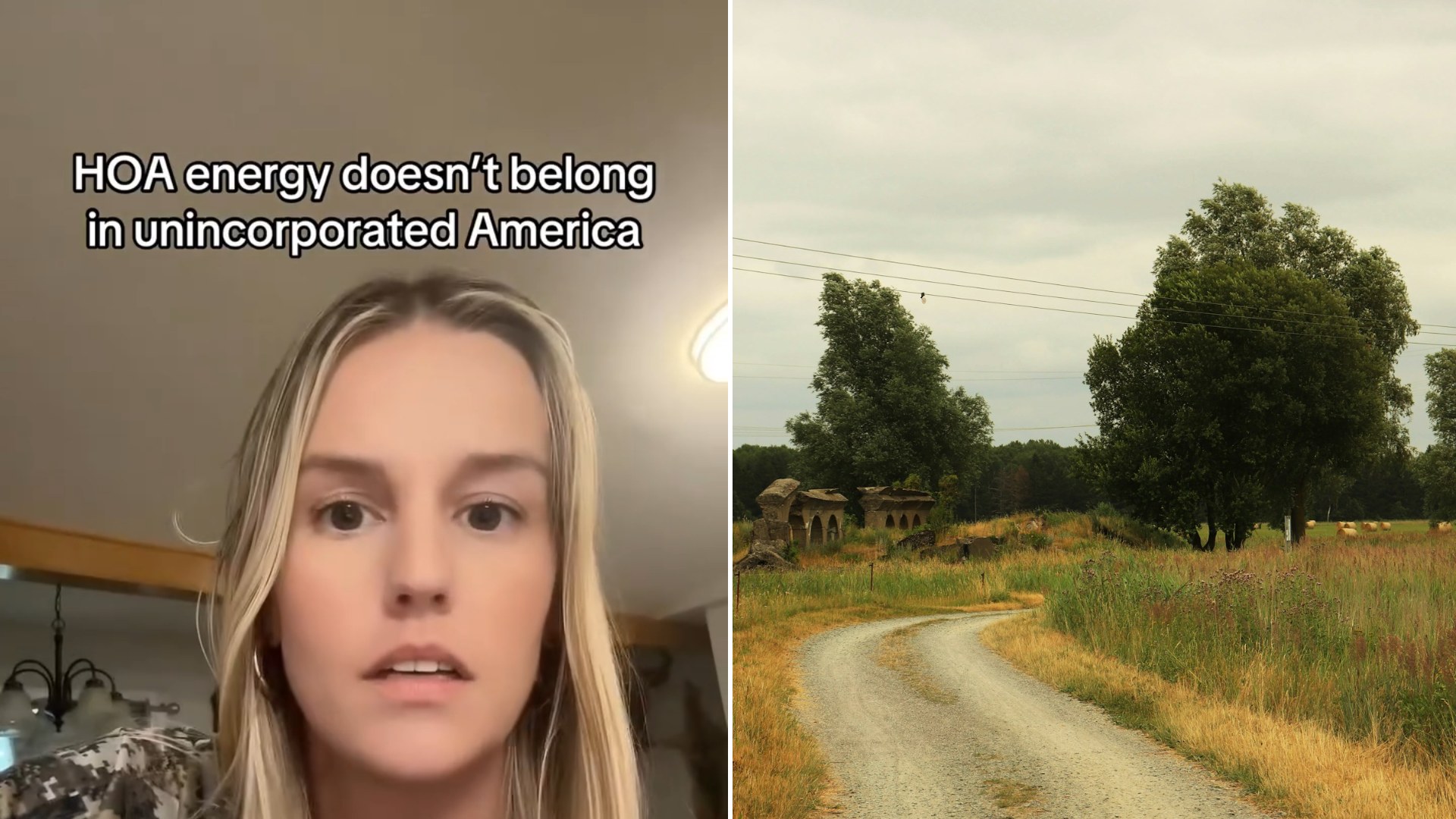
People move to rural, unincorporated areas for a lot of reasons — space, quiet, fewer rules. According to one creator, though, some new arrivals bring the rules with them anyway.
Posting on Instagram as @carlieforniaa, she captions the video with an exasperated shrug: “Yall drive me bonkers with this,” tagged with references to small towns and the rural South. According to the video, the creator rants about people moving to unincorporated, rural areas and then attempting to enforce Homeowners Association-style rules on their neighbors — a friction point between longtime rural residents and newer arrivals bringing suburban expectations with them.
The video doesn’t specify a particular incident or exactly what rules are being pushed, but the underlying tension is clear: unincorporated areas, by definition, typically lack the kind of centralized governance — and often the formal HOAs — that regulate things like lawn maintenance, fencing, or exterior paint colors in more suburban developments. When someone tries to informally enforce that kind of structure where it was never legally established, it apparently doesn’t sit well with neighbors used to a different, looser set of norms.
The rant clearly struck a chord — the video has been viewed 2.7 million times on an account with 239,000 followers, a reach that suggests this specific clash of rural and suburban expectations resonates with a lot of viewers watching their own neighborhoods change.
The friction described here often maps onto a broader pattern in fast-growing rural areas, where new subdivisions with formal HOAs sit right alongside older, unincorporated land that was never meant to be governed the same way — two very different sets of expectations sharing the same rural road.
It’s a tension that’s likely to keep surfacing as rural land near growing metro areas continues to be subdivided, bringing suburban-style expectations to communities that were never built, legally or culturally, around that kind of centralized oversight.
When HOA Culture Follows You to Unincorporated Land
Unincorporated areas — land that falls outside any city’s municipal boundaries — typically operate under county-level governance rather than local city ordinances, and unless a specific property is part of a legally established HOA (formed through recorded covenants, conditions, and restrictions), there’s generally no formal mechanism for a neighbor to enforce aesthetic or lifestyle rules on someone else’s land.
If you’re moving to a rural or unincorporated area, it’s worth checking county zoning and land-use codes ahead of time, since actual legal requirements (septic system regulations, setback rules, agricultural zoning protections) do exist even without an HOA, and they’re worth understanding on their own terms rather than assuming either “anything goes” or that informal neighborhood norms carry legal weight.
For longtime residents facing pushback from newer neighbors trying to impose rules that were never formally established, it can help to calmly and factually clarify what is and isn’t legally enforceable in the area — pointing to actual county zoning records tends to resolve these disagreements faster than an emotional back-and-forth. And for anyone drawn to rural living specifically for its lack of HOA-style oversight, it’s worth having a clear, friendly conversation about expectations early with new neighbors, before assumptions on either side harden into resentment.
It’s also worth knowing that some counties have begun fielding more complaints along exactly these lines as rural land gets subdivided for new development, and a few have responded by clarifying zoning maps and public boundary information specifically to reduce this kind of confusion. Checking whether your county has updated resources available can help settle a disagreement with facts rather than assumptions on either side.
For longtime rural residents, keeping a copy of the county’s official zoning designation for your own property on hand can turn a heated disagreement into a quick, factual clarification the next time someone attempts to informally enforce a rule that was never actually adopted.
You can watch the full video and follow @carlieforniaa on Instagram for more.
Leave a Reply