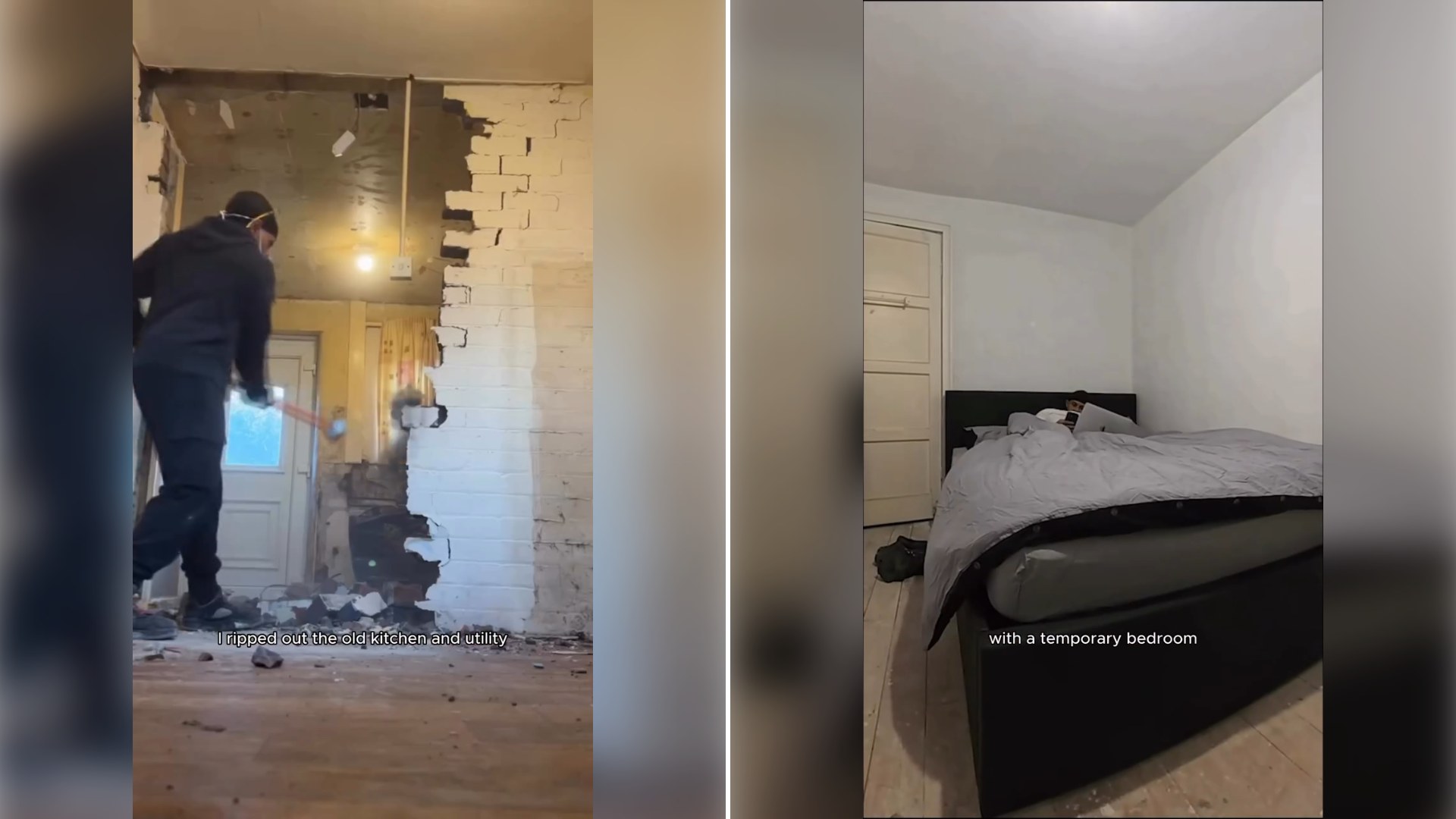
Some renovation journeys measure progress in weekends. This one measures it in months, and plenty of them. @benje.gs (Instagram) chronicles 20 months and more than £45,000 spent single-handedly renovating an abandoned house with zero prior experience, finally reaching the milestone of hosting his first gathering inside it, with plenty of work still ahead, but real, visible progress to show for the effort so far.
There’s a particular credibility that comes from a renovator who explicitly states they started with zero prior experience. Most renovation content, even the DIY-focused kind, implies at least some baseline competence, basic plumbing knowledge, familiarity with power tools, some construction exposure. A genuine beginner documenting real progress offers a dramatically more accessible entry point for viewers who’ve always assumed this kind of project was simply beyond their own skill level.
The specific framing of the milestone, hosting a first gathering rather than completing the renovation entirely, deserves real appreciation. It reframes success away from the binary of “finished” versus “unfinished” and toward a more honest, incremental understanding of what long-term renovation actually looks like, livable progress worth celebrating long before every box on the to-do list gets checked.
Twenty months is a genuinely significant timeline for a solo renovation project, and that duration itself tells an important story about the real pace of this kind of work when it’s done by one person without a crew. Professional renovation shows compress months of labor into a 44-minute episode, creating a deeply distorted sense of how quickly transformation actually happens outside of television production schedules.
The £45,000 figure also provides genuinely useful calibration for anyone considering a similar solo project. That number, spread across nearly two years, offers a far more realistic budget benchmark than the often-inflated figures associated with fully professional renovations, while still representing a serious financial commitment that required real planning and, presumably, real sacrifice to sustain over that timeframe.
There’s also a meaningful skill-building narrative embedded in a project of this length. A renovator starting from zero experience and working alone for nearly two years inevitably ends up developing genuine competence across multiple trades, electrical, plumbing, carpentry, tiling, simply out of necessity, a kind of practical education that’s difficult to replicate through any formal training program in the same timeframe.
This kind of long-form, honestly documented project also speaks to a genuine hunger among audiences for content that doesn’t rush toward a tidy resolution. Following a creator across nearly two years of real, sometimes slow progress creates a different kind of engagement than a single viral reveal video, one built on sustained investment and genuine curiosity about what happens next, episode after episode.
It’s worth acknowledging, too, the emotional endurance a project like this requires beyond the physical labor and financial cost. Solo renovation means solo decision-making, solo problem-solving when something goes wrong, and solo motivation to keep going during the inevitable stretches where progress feels slow or invisible, a psychological challenge that often gets less attention than the practical skills involved.
In the end, this project resonates because it’s honest about scale. Not every renovation wraps up in a satisfying season finale, and a creator willing to document the genuinely long, difficult middle of a project, not just the beginning and the eventual end, offers something far more useful and far more true to how real transformation actually unfolds.
Leave a Reply