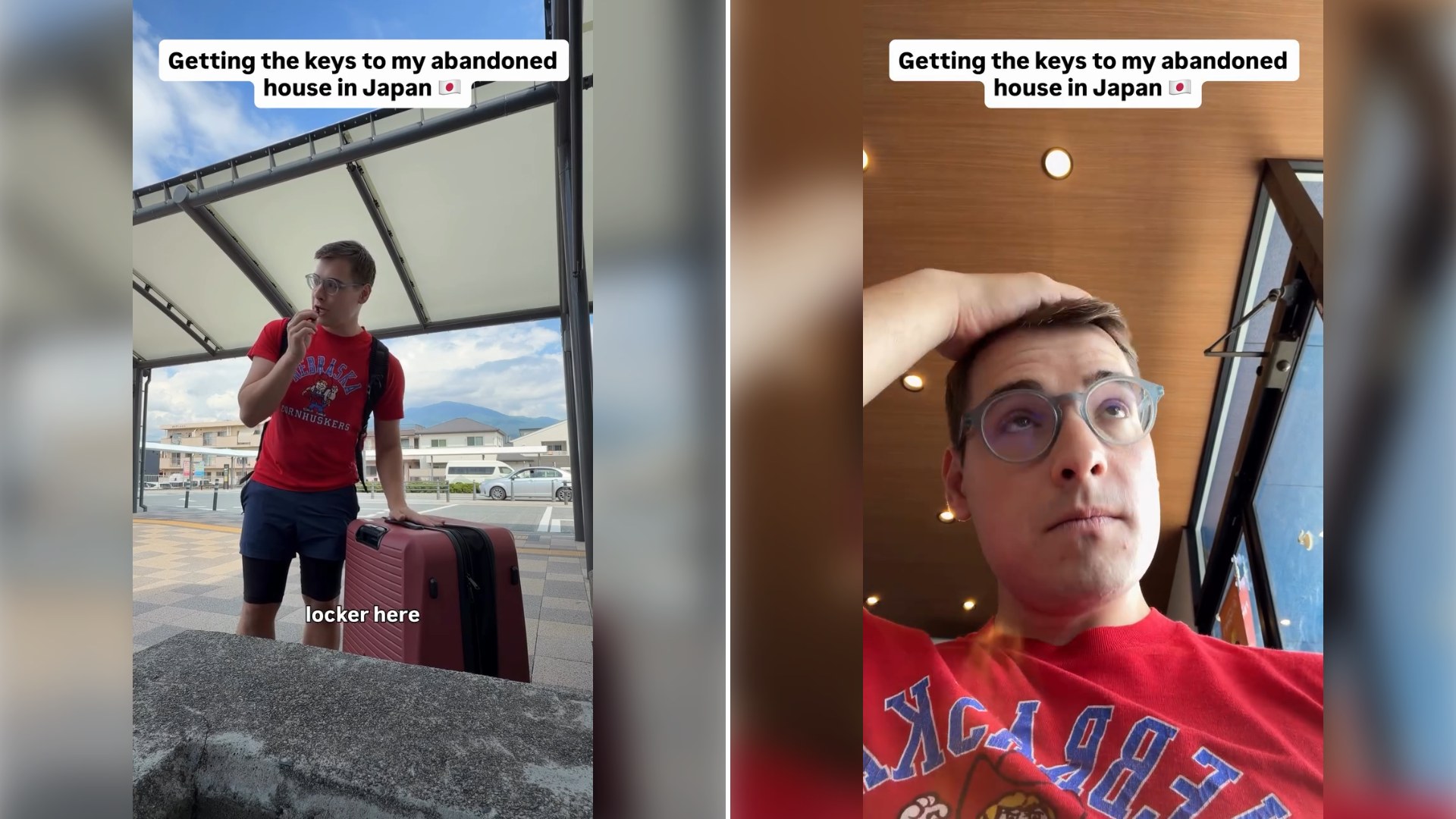
There’s a particular moment in every overseas property purchase when the transaction stops feeling theoretical, and @elliottnorris (Instagram) captures that exact moment, vlogging the journey of traveling to rural Japan to physically pick up the keys to an abandoned house he purchased, a milestone that marks the true beginning of what promises to be a long renovation ahead.
Japan’s abandoned house phenomenon, often referred to by the term akiya, has become one of the most compelling real estate stories of the past several years, driven by a genuinely unique demographic situation. Rural depopulation, an aging population, and inheritance laws that leave many families with properties nobody wants to maintain have combined to produce an enormous surplus of vacant, often remarkably affordable homes scattered across the Japanese countryside.
What makes this particular video resonate is the specific framing around the keys themselves. A property purchase completed remotely, through paperwork and wire transfers, can feel abstract right up until the moment of physically receiving a key and standing in front of a building that’s now legally yours, a threshold moment that this kind of travel vlog captures far better than any written account of the purchase process could.
There’s a genuine logistical complexity to international property ownership that content like this helps demystify for a broader audience. Navigating foreign property law, often in a language the buyer doesn’t speak fluently, coordinating with local agents or intermediaries, and simply managing the practical challenge of handling paperwork and key handoffs across a significant distance all represent real hurdles that aspiring international buyers need to understand before committing.
This kind of story also reflects a broader fascination with Japanese rural architecture and craftsmanship specifically, distinct from the general appeal of cheap international real estate. Traditional Japanese residential construction, with its emphasis on natural materials, specific joinery techniques, and a design philosophy deeply tied to seasonal and spatial sensibility, offers renovation possibilities genuinely different from what Western buyers typically encounter in their own markets.
It’s worth acknowledging, too, the genuinely significant renovation challenges that often await buyers of akiya properties specifically. Many of these homes have sat vacant for years or even decades, meaning structural issues, pest damage, and outdated or nonexistent modern utilities are common realities that buyers need to budget for realistically, well beyond the attractive initial purchase price that draws so much attention.
There’s also a cultural dimension worth considering around what it means for a foreign buyer to take on stewardship of a traditional rural Japanese home. Beyond the renovation itself, there’s often an implicit responsibility to understand and respect the building’s history and cultural context, rather than treating it purely as inexpensive raw material for a personal project disconnected from its original setting.
This kind of content also speaks to a broader trend of international remote work and lifestyle flexibility enabling exactly this kind of ambitious property purchase. A decade ago, managing a renovation project on the other side of the world would have required a level of logistical commitment few people could sustain. Today’s more flexible work arrangements have made genuinely ambitious international property projects considerably more feasible for ordinary buyers.
In the end, this video marks a beginning rather than a destination, and that’s precisely its appeal. The real story, the renovation itself, the challenges and discoveries that will surely follow, is still ahead, and capturing this threshold moment invites an audience to follow along for what’s likely to be a long and genuinely unpredictable journey.
Leave a Reply