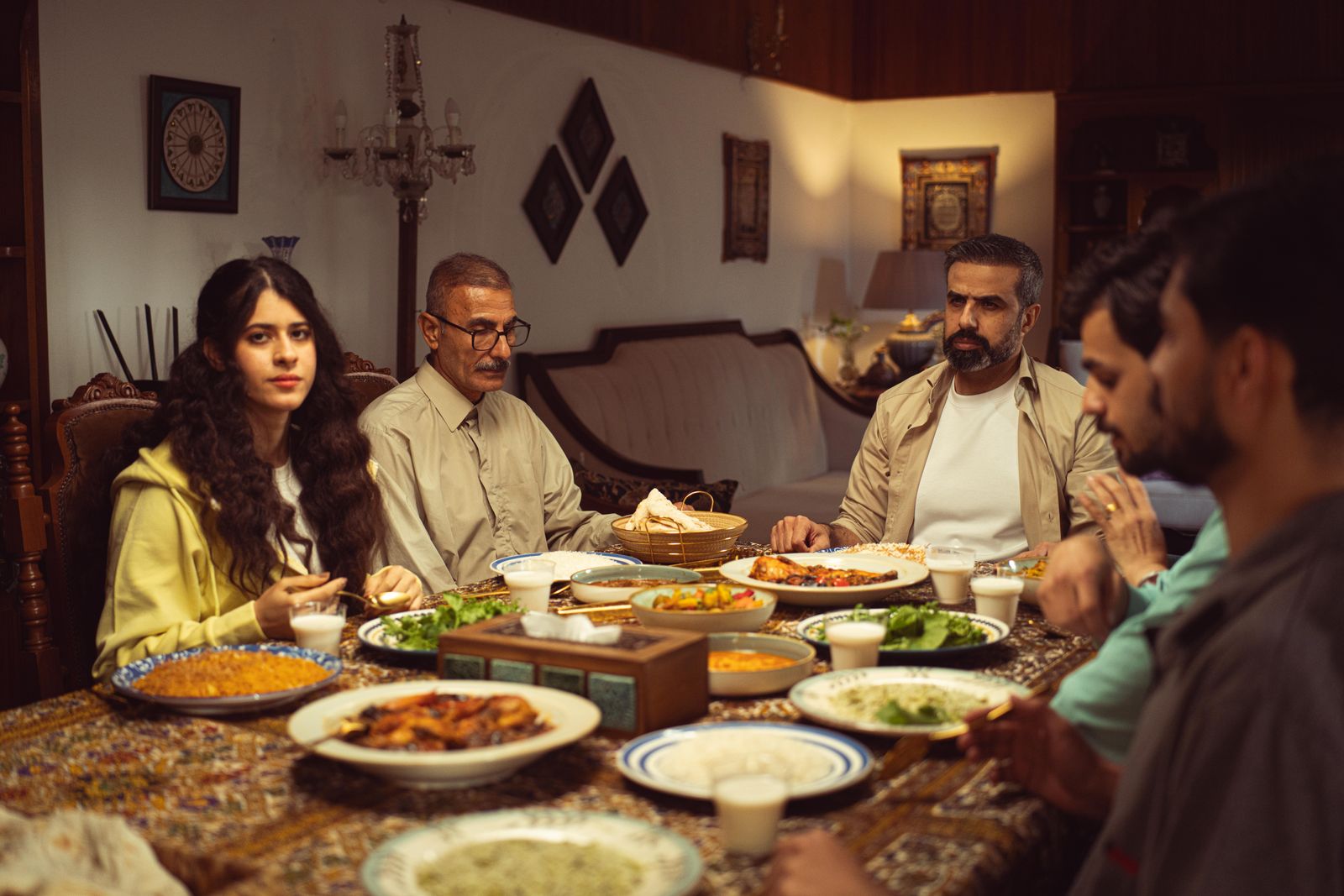
A family gathering meant to celebrate special milestones quickly spirals into chaos when one member can’t seem to resist turning the spotlight on herself. In a candid post, a young mother-in-law lays bare the frustrations of dealing with her narcissistic mother-in-law (MIL), whose public meltdowns and constant complaints have transformed joyful occasions into personal crises, leaving the entire family on edge. With the poster contemplating how to confront this behavior, it raises the question of how much a family can tolerate before someone finally snaps.

The poster outlines a familiar scenario: her mother-in-law regularly lashes out—not only at her father-in-law (FIL) but also in front of the entire family. The MIL has a penchant for bickering over the most trivial of issues, whether it’s refusing to share a drink or vocally expressing her annoyance over a simple question. “She seems fully unaware of how actually selfish and immature she acts,” the poster states, summarizing years of pent-up frustration felt by her husband and his siblings. Despite the chaos she creates, whenever anyone tries to address the MIL’s behavior, she swiftly plays the victim, effectively silencing any criticism.
Family events, such as birthdays, graduations, and holiday gatherings, have become fraught with tension as the MIL transforms these celebrations into opportunities to air grievances, particularly directed at FIL. The poster recalls moments where the MIL would loudly cuss him out in public settings, leaving guests feeling uncomfortable. The poster, clearly at her wit’s end, considers how to intervene when the situation inevitably escalates again, contemplating phrases that might refocus the attention away from her mother-in-law’s outbursts.
Seeking a tactful solution, the poster has started brainstorming statements to remind her MIL that she is not the center of attention. Lines like, “Don’t forget it’s husband’s birthday! I bet the only gift he wants is for you to stop yelling at his father for one evening together,” reflect her desire to call out the MIL’s selfishness while maintaining decorum. She also considers more direct comments, such as, “When you get mad at FIL, it makes everyone uncomfortable, please control your voice during dinner.” These phrases illustrate her struggle between asserting boundaries while trying not to provoke further outrage from her MIL.
As readers dive into the situation, many resonate with the poster’s plight. Some suggest that her approach of direct but respectful confrontation is undeniably warranted. A few emphasize the importance of family unity over individual grievances, hinting that the poster’s husband should step up to support her. The consensus appears to be that the behavior of the MIL is not just an annoyance; it is a genuine issue that, if left unchecked, could erode the family dynamic further.
In an increasingly volatile situation, it remains unclear how the poster will navigate future celebrations. The threshold for tolerating her mother-in-law’s antics seems to be reaching its breaking point, leaving her with some harsh words simmering under the surface. As she stands at the crossroads of having her voice heard versus maintaining family harmony, the poster is ready for confrontation but desperately wishes it wouldn’t have to come to that. The tension remains palpable, highlighting the emotional weight that family gatherings can carry when one member refuses to be considerate.
More from Willow and Hearth:
Leave a Reply