Two for-sale signs sit side by side on a quiet Nashville street, and one of them tells a story sellers across the country are starting to know too well. The owner of the house behind real estate analyst Reventure Consulting paid $505,000 for it in 2023. Today it is listed at $459,000, a $46,000 loss on paper before a single realtor fee or closing cost comes out of the check.
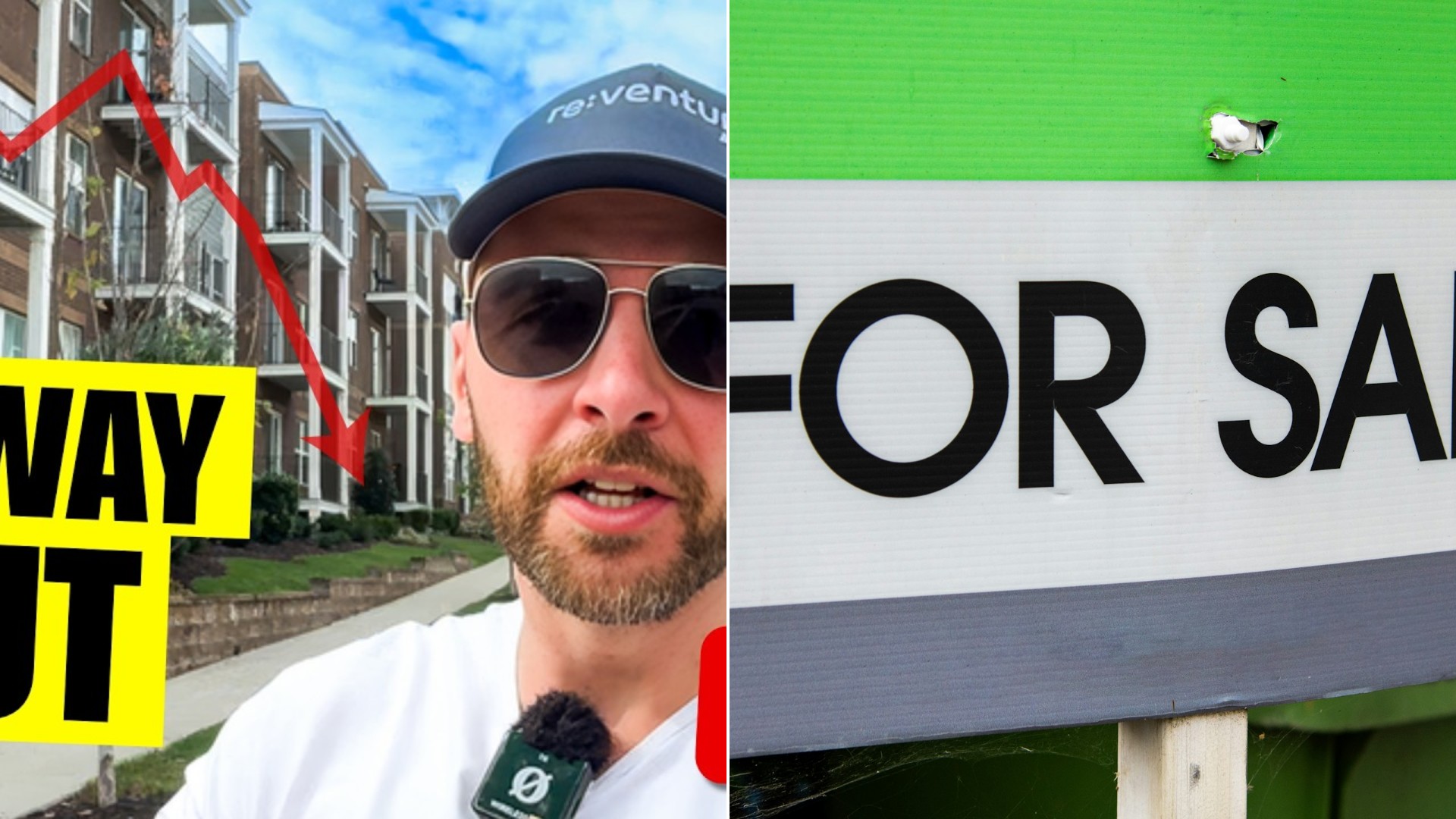
Reventure Consulting stood on that street in a recent YouTube video and pointed at the two listings. He says he is seeing more and more of this where he lives: sellers competing door to door, and some of them taking a loss on homes they bought only a couple of years ago, when everybody was sure prices would climb forever.
Showings Are Slipping Fast
The video opens with a number that has sellers nervous. According to Reventure Consulting, ShowingTime, a company owned by Zillow that tracks how many showings realtors book for buyers, reports that showings through early October are down 8% from the first week of the year. At the same point last year, showings were up 18%. He calls it a good leading indicator for the whole market.
He adds that the Wall Street Journal reported mortgage rates had their biggest weekly surge in four years, and that local realtors in places like South Carolina say showings have completely stopped. Meanwhile, homes keep coming onto the market. Realtor.com counted 1.1 million listings in September, which is within 5% of the level before the pandemic and up 100% over the last five years.
Some of the drop is just the calendar. Showings climb in spring and summer and fade in the fall. What is different this year, he says, is how steep the fall drop has been, and fewer people walking through front doors in October means fewer offers in November.
What a Loss Really Costs a Seller
Back on that Nashville street, the math gets worse the longer you look at it. The $46,000 gap between $505,000 and $459,000 is only the price cut. Once realtor fees and closing costs are added, he estimates the seller is looking at something closer to a $70,000 to $80,000 hole. He says the owners thought they were buying into a growing area of town and getting a good deal, and now they are minus $45,000 or more on their investment.
He remembers when local realtors, mortgage brokers and investors almost shamed people for not buying, warning that they would miss out on all that appreciation. Now, he says, home values are dropping across roughly half the country, and builders keep adding new houses and townhomes to the same neighborhoods. Buyers who bought from builders three years ago are sitting on losses, and the builders are still putting up for-sale signs.
A second house nearby shows how it plays out. It is listed at $550,000, a four-bedroom, three-bath home of 2,200 square feet. The current owner paid $580,000 in 2023, so a $30,000 loss is already baked in. Yet the same house sold for $312,000 back in 2016. Even after cutting below the 2023 price, he points out, it still sits far above where it was ten years ago. A buyer’s payment on it would run about $4,400 a month according to Zillow, over $50,000 a year, and he says median incomes in the area simply do not support that.
Is It Prices or Rates?
There is a loud debate in real estate right now. One camp blames mortgage rates, which he says are back up around 7.5% on a 30-year fixed loan. The other camp blames prices and says the best cure for high prices is high prices, because demand eventually gives out.
Reventure Consulting sides with prices. He shows a chart covering 130 years of the US housing market, with inflation-adjusted home prices as a blue line and mortgage rates as an orange line. Prices today are at the highest level on record, higher even than the 2006 bubble. From roughly 1890 to 2000, he says, inflation-adjusted prices did not grow at all, because homes rose only as fast as inflation and incomes. Rates, by comparison, look ordinary. Mortgage rates ran 8% to 9% in the 1990s and hit 18% in the late 1970s and 1980s, so he argues there is nothing inherently wrong with 7%.
One more listing makes his point. A landlord is selling a 2,500-square-foot house, with a yard that has not been mowed in a while, for $697,000. A year ago the same house was listed for rent at $2,900 a month. Buying it at today’s price would cost close to $4,900 a month with mortgage, taxes and insurance. That is $2,900 to rent against $4,900 to buy, and he says it shows how many sellers are still overpricing even after their first price cuts. When he ran the house through his listing analyzer, it suggested a fair offer around $550,000, roughly 23% to 24% below the ask.
How He Says to Make an Offer
For buyers, his message is that a downturn does not arrive all at once. It starts when one out of three or four sellers begins trimming prices, which slowly pulls down what the market will actually pay. Many other sellers stay stuck on yesterday’s number, so he treats the list price as a starting point for negotiation, especially in a zip code where forecasts point to a 5% to 10% decline.
His approach is built on looking serious. Tour the house with the listing agent, decide on your number afterward, then reach out and say you loved the house, ran your numbers, and are coming in below list price. Then ask whether the seller still wants to see an offer. If the answer is yes, send the offer with your pre-approval letter, proof of the cash you have for the down payment, and a clear closing timeline, such as a four-week close. He says to skip the apologies and skip the lecture about comparable sales.
Expect a rejection at first, he says, and watch for a counteroffer, because a counter means the seller wants to deal. He tells of buying a house in Atlanta that was listed at $410,000 after previously selling for $490,000. He offered $315,000 and the seller countered at $400,000. He turned the counter down flat, and three weeks later the seller came back and he bought it for $330,000. He says he also bought a home earlier this year at a $160,000 discount.
The same thinking works at the kitchen table for any family watching this market. Check how long a house has been listed and whether its price has already dropped, compare today’s monthly payment with local rents, and do not be shy about a lower offer backed by solid paperwork. In a market where showings are down and listings are up, the buyer with documents in hand has more leverage than most people realize.
More Stories You May Like
- Overpricing Skipping The Obvious Repairs And Over Renovating Before Listing Are The Three Seller Mistakes That Can Cost Real Money On A Sale
- Three New York City Laws Every Renter Should Know Before Signing a Lease Including Broker Fees Being Illegal When the Landlord Hired the Broker and One Month Deposit Limits
- Couple Who Bought A House Before Getting Married Wants To Move Out To The Country With $220,000 In Equity And The Hosts Call It A No Brainer
Leave a Reply