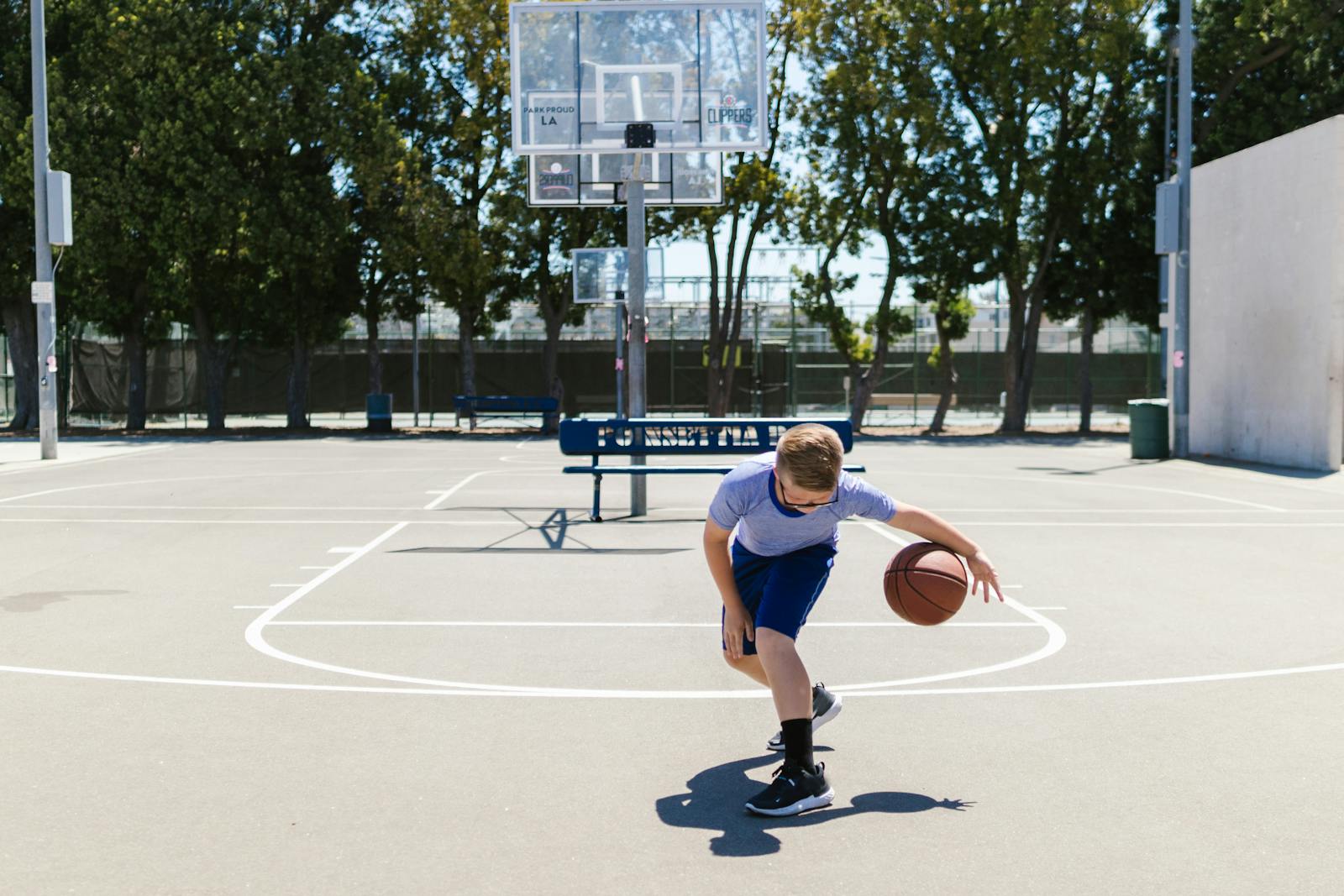
In the picturesque town of Mannington, West Virginia, a peculiar incident has ignited heated discussions among local residents, particularly regarding the delicate balance of community living and neighborhood relationships. A local father recently shared his ordeal with the online community, and it has raised eyebrows and sparked debates about personal freedoms, parenting, and the role of law enforcement in mediating such conflicts.

The father, who has a 7-year-old son, described a recurring issue with a particular neighbor who has taken a strong stance against children playing basketball in the area. What started as innocent fun among kids has escalated into a confrontation that has left this parent baffled and concerned about the implications for his son’s recreational activities.
According to the father, the neighborhood kids, including his son, often gather in his yard to play basketball. It is a scene that many families can relate to—a joyful chaos of laughter, cheers, and the sound of basketballs bouncing on the pavement. However, one neighbor has apparently found this joyful assembly to be a point of contention. The father recounted instances of this neighbor yelling at the children and, disturbingly, resorting to threats that could endanger the kids. This neighbor’s actions have raised concerns about how far an adult should go in expressing displeasure over children’s play.
The breaking point occurred during a recent weekend gathering, when the neighbor’s frustrations boiled over after his own grandchildren left the scene. Reports indicate that the neighbor shouted profanities at the father’s son for allegedly throwing a water balloon in the road, calling him derogatory names. The father, understandably upset, confronted the neighbor, insisting that such language was unacceptable when directed at children.
Instead of resolving the conflict, this confrontation seemingly led to escalation. The neighbor and his wife decided to take their grievances to law enforcement, contacting the Chief of Police to register a complaint about the basketball hoop, claiming it posed a danger to the neighborhood. In an unexpected turn of events, the Chief of Police sided with the neighbor, instructing the father to remove the basketball hoop from his property due to the complaints received.
This verdict has left the father feeling as though he and his son have been unfairly punished for simply wanting to engage in a common childhood pastime. The reaction from the Chief of Police has sparked debate in the community about the role of local authorities in mediating neighborhood disputes. Many are questioning whether it is appropriate for law enforcement to intervene in family recreational activities based solely on complaints from a disgruntled neighbor.
The scenario raises broader questions about community dynamics. On one hand, it’s essential to maintain peace and harmony within the neighborhood; on the other, children’s right to play and enjoy their childhood cannot be discounted. Neighborhoods thrive on the balance of interests, and when that balance tips, it can lead to conflict. The father’s predicament highlights a growing tension in community living—what happens when one person’s concerns overshadow the rights of others to enjoy their homes?
In Mannington, many families can empathize with the father’s situation. Basketball hoops, bicycles, and all manner of childhood recreation are integral parts of growing up in a tight-knit community. The essence of neighborhood life often revolves around children playing freely, creating bonds that last a lifetime. Yet, the father’s experience serves as a reminder that not all neighbors share the same perspective on what is acceptable play or noise levels in their vicinity.
As the father wonders if he and his other neighbor are in the wrong, community sentiment appears divided. Some sympathize with the father’s struggle to create a lively and engaging environment for his son, while others believe the neighbor’s concerns should not be dismissed outright. In the end, it is a microcosm of the complexities of living in a close community where personal space, noise, and children’s play intersect in unexpected and often contentious ways.
With the basketball hoop now sidelined, the father is left contemplating his next steps. Should he comply with the police chief’s orders and install a more subdued form of entertainment for the children? Or is there a way to foster a more cordial relationship with the neighbor while still allowing kids to play? The path forward remains uncertain, but one thing is clear: the delicate fabric of community living is always subject to tension, negotiation, and the occasional outburst.
More from Willow and Hearth:
Leave a Reply