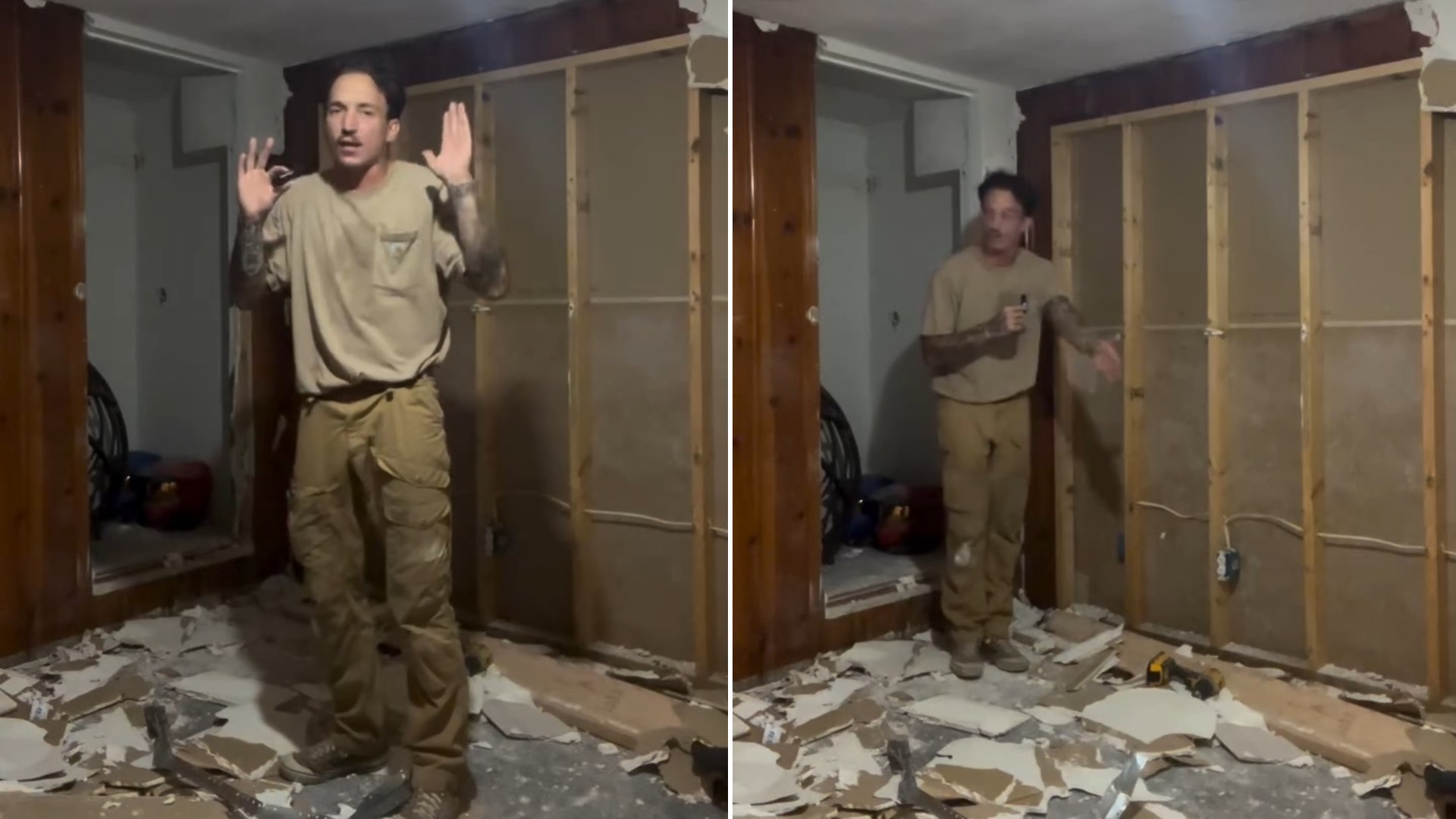
Buying a house is supposed to feel like the finish line. For one new homeowner, it turned into the opening scene of a much longer, much angrier story, and he decided to film the whole thing rather than suffer through it quietly.
Posting under the Instagram handle @khaotyyck, the homeowner shared an unscripted, high-energy rant listing out every construction defect and permit problem he uncovered after closing on his own property. The caption on the reel says it all in four words: “All is quiet on the frontal lobe.” Anyone who has bought a house and then discovered what was actually behind the walls will recognize that particular flavor of exhausted, half-laughing rage.
The reel, posted directly on his own account, doesn’t read like a polished home-inspector explainer. It reads like a guy who just found out how much was wrong with the place he now legally owns, hitting record before he’d had time to calm down. That rawness is exactly why it struck a nerve. Most home-buying horror stories online get sanded down into tidy listicles: five red flags to watch for, three questions to ask your inspector. This one skipped the polish and went straight to the venting, and apparently that’s what people actually wanted to see.

The Gap Between Inspection Day and Move-In Day
What makes stories like this one land so hard with other buyers isn’t the specific list of defects. It’s the timing. A home inspection is a snapshot, taken by someone paid to look at a limited set of things in a limited number of hours, and it’s not designed to catch every permit that was never pulled or every repair that was done just well enough to pass a glance. Structural shortcuts, unpermitted additions, and code violations from a previous owner have a way of staying invisible right up until you own the place and start actually living in it, pulling up flooring, opening a wall, calling an electrician for something unrelated and getting bad news as a bonus.
That’s the emotional core of the @khaotyyck reel: not just anger at the defects themselves, but at the gap between what he was told he was buying and what he actually got once the ink dried. Permit issues in particular carry a nasty compounding effect. A repair or addition done without the right permits doesn’t just mean the work might be substandard. It can mean the homeowner is now on the hook for bringing it up to code before they can sell, refinance, or in some cases even insure the property properly. What looked like someone else’s shortcut becomes the new owner’s headache, invoice, and, judging by this reel, content.
Why Buyers Keep Sharing These Moments
Rants like this one keep circulating because they function as a kind of public service, even when that’s not remotely the intent. A calm explainer about the importance of permit history doesn’t stick the way watching someone else go through it in real time does. There’s a reason “new homeowner discovers everything wrong with the house” has become its own recognizable genre online: it’s relatable in the way a car crash is relatable, close enough to something that could happen to anyone that it’s impossible to scroll past.
It also says something about how much homebuyers are expected to just accept on faith. Inspection reports come with disclaimers. Sellers disclose what they’re legally required to disclose and not necessarily an ounce more. Permit records live in county offices that don’t exactly make themselves easy to search. By the time a buyer figures out what’s actually wrong, they’ve already signed, already moved boxes in, and already lost most of their leverage.
The caption’s dry, half-defeated humor, all quiet on the frontal lobe, indeed, is doing more work than it looks like. It’s the sound of someone processing a genuinely expensive problem by turning it into something other buyers can laugh at, wince at, and quietly bookmark for their own next house hunt. That combination of catharsis and cautionary tale is exactly why a video like this doesn’t stay contained to one frustrated homeowner’s account for long. Everyone buying a house eventually learns that the closing table isn’t the end of the story. Some people just document the sequel louder than others.
Leave a Reply