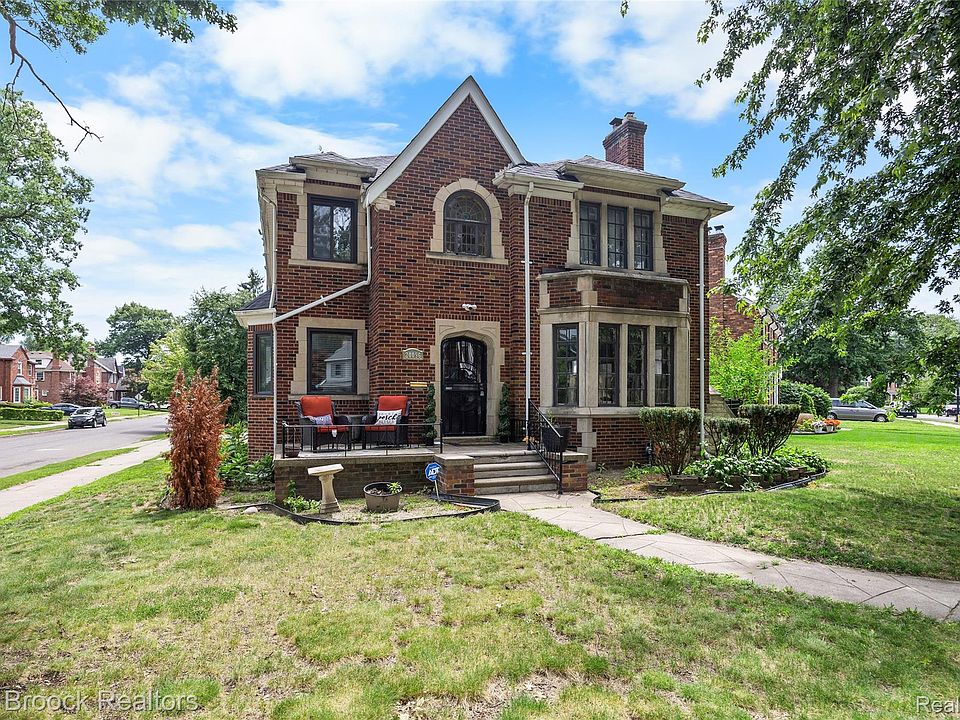
A nine-bedroom Detroit house listed for under $260,000 turned into enough of an internet sensation that its listing agent says he ended up fielding calls from nearly every area code in the country. The 6,800-square-foot property at 14574 Rutland Street, built in 1938, sold in February for $303,000, but not before a few weeks of viral attention that its agent has described as both flattering and exhausting in equal measure.
How a modestly priced mansion found a national audience
Listing agent Mark Reling of MVPS Realtors put the home on the market at well under $260,000, a price point that looks almost implausible next to nearly 7,000 square feet and nine bedrooms, according to a report from Homes.com that tracked the listing’s spread. A home-tour account with roughly 2 million followers on Instagram picked up the property and posted a video walkthrough that racked up 1.7 million views on its own, part of more than a million total views the listing generated once other accounts and outlets picked it up.

That attention translated into real foot traffic. An open house pulled in roughly 200 people, and Reling fielded another 200 or so individual showings on top of that, a volume that would be unusual for a house at any price point, let alone one competing with far more move-in-ready listings in the same range. He described spending two weeks logging more new area codes in his phone than he’d accumulated in 37 years working in real estate, a stretch he’s said made parts of the job genuinely draining, since much of that call volume came from people with no real intention of buying, just curiosity about a house they’d seen online.
What actually happens after a listing goes viral
Viral attention and an actual sale don’t always line up, and this listing is a decent example of the gap between the two. Despite the massive reach, the home ultimately sold for $303,000, about $43,000 above its initial asking price, after drawing six offers and going to a local real estate investor rather than one of the thousands of people who’d watched the video tour. Nine-bedroom homes built in the 1930s typically need substantial system updates, roofing, electrical, plumbing work that scares off buyers looking for a straightforward move-in, which likely explains why an investor rather than a first-time family buyer ended up closing the deal.
Homes.com’s reporting frames the whole episode as a case study in what viral real estate content actually delivers for a seller: enormous visibility, a flood of interest that’s mostly untethered from actual purchasing intent, and a final sale price that, while solidly above asking, is nowhere near what the online buzz alone might have suggested. Six competing offers is a strong outcome by any normal measure, but it’s a fraction of the audience that watched the property tour unfold across social platforms.
A pattern showing up across the industry
Detroit’s housing stock includes a disproportionate number of large, architecturally distinctive homes built decades ago when the city’s population and industrial base were both far larger, and prices in some neighborhoods still lag well behind other major metros relative to square footage. That gap between size and price is exactly the kind of contrast that performs well on home-tour social media, where “you won’t believe what this costs” content reliably outperforms more conventional listing photography.
For agents, the tradeoff is becoming familiar: a viral listing can generate a sale price above asking and plenty of brand visibility, but it also means fielding an avalanche of calls from people who were never going to make an offer, a cost in time and attention that doesn’t show up in any closing statement. Reling’s experience suggests that for agents willing to accept a couple of chaotic weeks, the payoff in exposure and final sale price can be worth it, even if most of those newly logged area codes never call back again.
What buyers can take from a story like this one
For anyone browsing listings from the comfort of a social media feed, the Rutland Street house is a useful reminder that square footage and bedroom count only tell part of a property’s story. A 6,800-square-foot home built nearly ninety years ago almost always comes with deferred maintenance that a two-minute video tour can gloss over entirely, whether that’s an aging roof, knob-and-tube wiring somewhere behind the walls, or a heating system that hasn’t been touched since a previous decade. The eventual buyer, an investor rather than an owner-occupant, was almost certainly budgeting for exactly that kind of work from the start.
That doesn’t make the listing any less of a legitimate opportunity for the right buyer. Large, character-filled homes in Detroit’s more affordable pockets can still represent real value, particularly for buyers with renovation experience or the cash reserves to handle surprises. What the viral moment mostly proved is that price-per-square-foot numbers this far below national averages will always draw a crowd online, whether or not that crowd is actually in the market to buy.
Leave a Reply