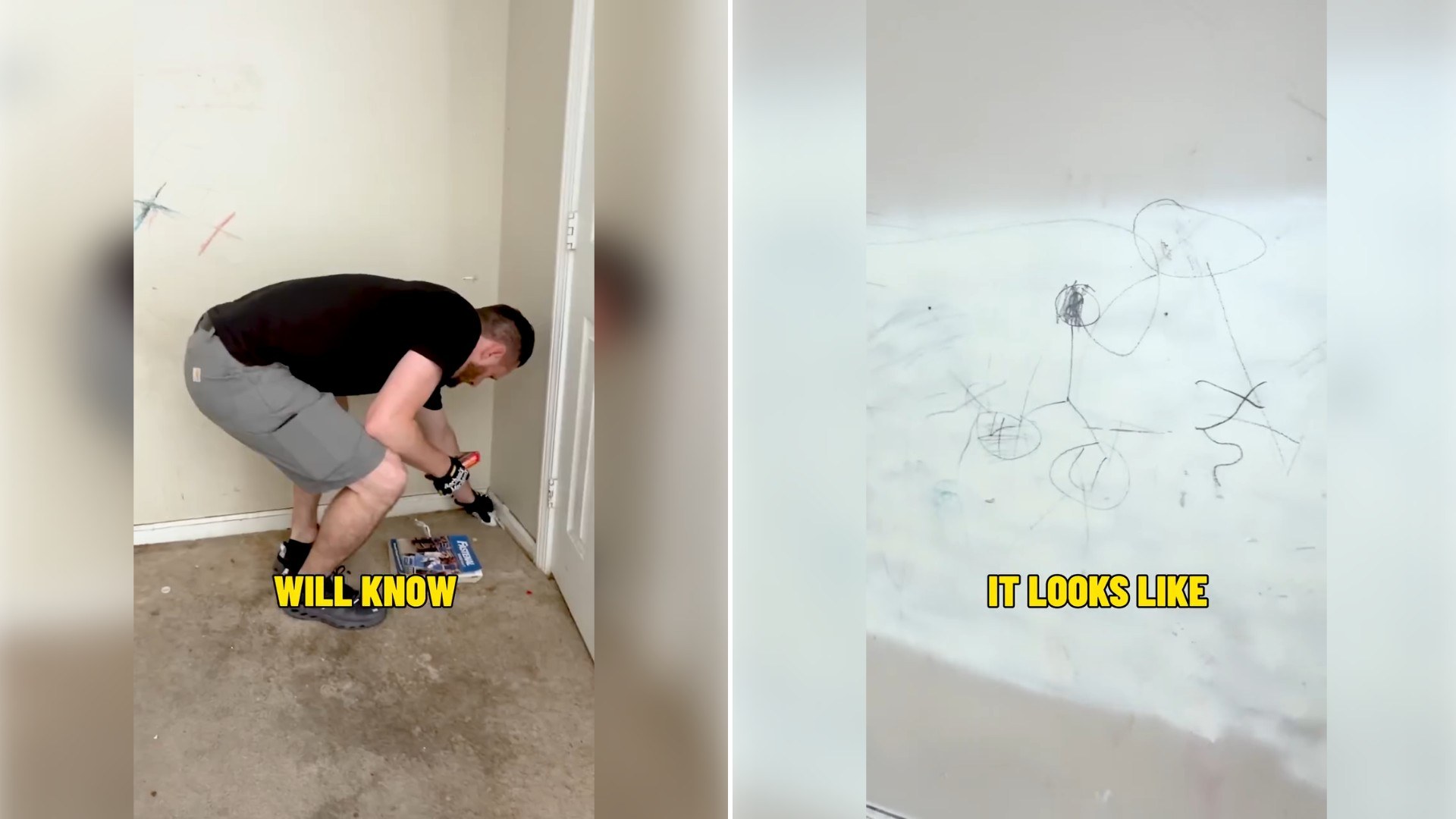
The keys hit the counter, the door swings open, and for a moment the apartment just sits there in silence, empty of the life that filled it for years. This is the moment a property owner named Ian chose to film, walking room by room through a rental unit right after a long-term tenant moved out, letting the camera catch every detail before he says a word about it. It’s a format that has become something of a ritual for landlords and property managers online, but few pull it off with the same patient, deliberate pacing that lets viewers form their own impressions before the reveal.
The caption frames the video honestly, as the unglamorous work that begins the second a tenant hands back the keys, with on-screen text teasing each discovery room by room like chapters in a slow-building story. There’s no dramatic music sting, no jump cut designed to shock. Instead, the video leans on suspense built from familiarity, the sense that anyone who has ever rented or owned property knows exactly what kind of surprises might be waiting behind a closet door or under a rug, and wants to see whether this particular walkthrough confirms or defies their expectations.
What separates this kind of content from a simple complaint about a bad tenant is the tone. As @trackrecordassets frames it, the walkthrough isn’t really about assigning blame so much as documenting reality, the gap between how a space looks when someone hands over the keys and how much work it actually takes to get that space ready for the next person to call home. That gap is often invisible to renters who have never sat on the other side of the transaction, and it’s exactly the kind of behind-the-scenes look that tends to hold an audience’s attention, because it answers a question most people have wondered about but never actually seen play out.
View this post on Instagram
Move-out day has a reputation, deserved or not, as the moment when a rental relationship reveals its true condition. For a tenant, it’s often treated as a formality, a box to check before the security deposit conversation begins. For a property owner, it’s closer to an audit, a room-by-room inventory of wear, damage, and the countless small decisions a resident makes over months or years of living somewhere that eventually add up to either a smooth handoff or a costly one. Scuffed walls, worn carpet, appliances that were never quite maintained the way the lease specified, all of it surfaces in that first walkthrough, and all of it eventually becomes either an easy turnover or a lengthy, expensive one.
For renters watching this kind of video, there’s a practical lesson worth taking seriously long before their own move-out day arrives. The condition documented at the start of a lease and the condition documented at the end are usually compared directly, and the difference between the two often determines how much of a deposit actually comes back. Taking dated photos and videos at move-in, keeping a written record of any pre-existing issues, and doing a final walkthrough before handing back keys can save a tenant from disputes that are difficult to resolve after the fact, since memory alone rarely holds up against a landlord’s own documentation. Simple maintenance habits during a tenancy, wiping down surfaces regularly, addressing small leaks or stains before they spread, and avoiding modifications that aren’t explicitly allowed under the lease, tend to make an enormous difference in how that final walkthrough goes.
For property owners and future landlords, the video functions almost like a case study in patience and process. Instead of reacting emotionally to whatever condition a unit is left in, a methodical room-by-room review, documented on camera or otherwise, creates a clear paper trail that protects everyone involved if a deposit dispute ever needs to be resolved formally. It also offers a kind of quiet reassurance to anyone considering becoming a landlord themselves: the unglamorous work is real, but it is also manageable, one room, one photo, one line item at a time. What makes videos like this one so compelling to watch, ultimately, is that they turn an ordinary, often stressful transition into something almost meditative, a reminder that behind every rental sign and lease agreement is a physical space that someone, eventually, has to walk through, evaluate, and get ready for whoever comes next.
There’s also a quieter, more universal lesson buried in the format itself, one that applies well beyond the world of rental property. Any transition, whether it’s a change of address, a change of job, or simply the end of a long chapter, tends to come with its own version of this walkthrough, a moment when someone has to step back and take honest stock of what’s left behind before moving forward. Watching someone do that calmly, methodically, and without excessive drama offers a small model for handling life’s messier handoffs with a bit more patience than they might otherwise get, one room, one detail, one decision at a time.
It’s also a useful reminder that the emotional weight of an ending, whether it’s a lease, a job, or a chapter of life, often has less to do with the ending itself and more to do with how thoroughly someone takes stock before closing the door behind them. A rushed goodbye tends to leave loose ends, unresolved questions, unfinished business, while a deliberate one, even an imperfect one, tends to close more cleanly. That’s true whether the space in question is a rental unit being handed back to its owner or any other transition someone is walking through on their way to whatever comes next.
Leave a Reply