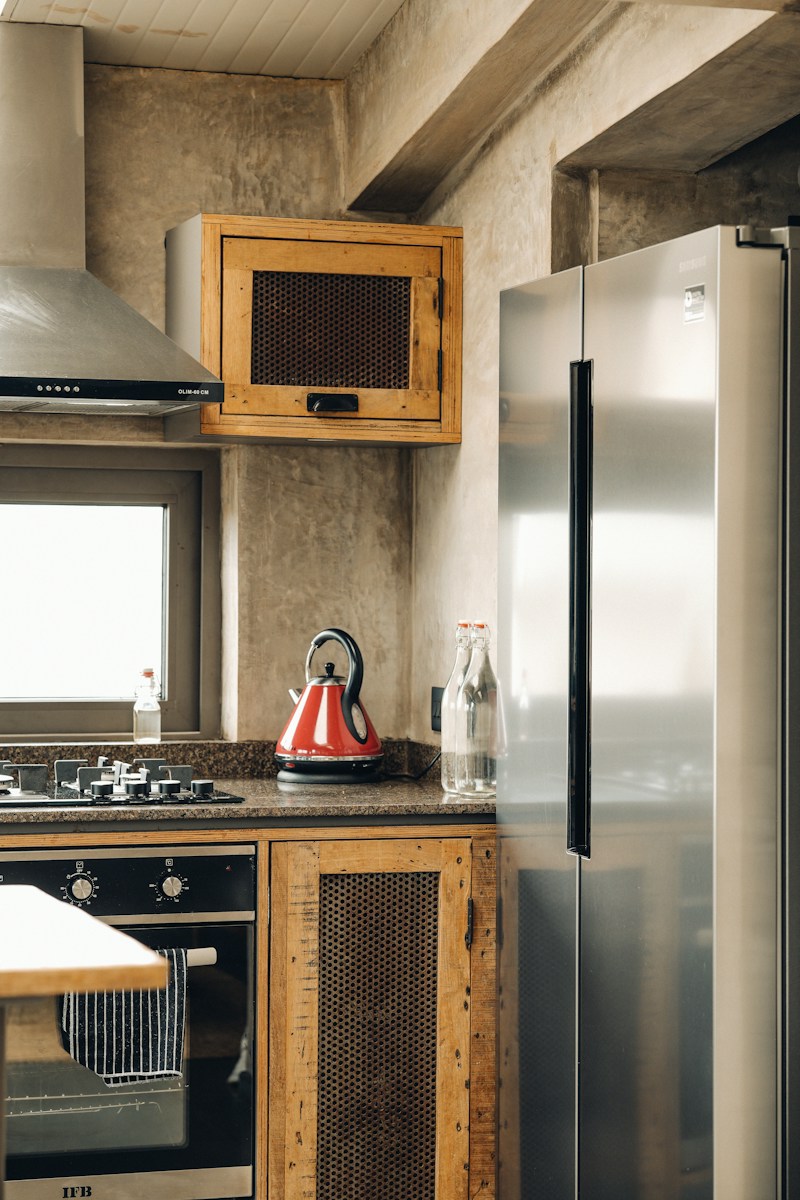
Every kitchen has the same ritual: someone opens the fridge, stares into it for ten seconds trying to remember what they came for, then closes it and lets a little more cold air spill out onto the floor. Samsung thinks it has a fix. The company’s new Bespoke AI 3-Door French Door refrigerator comes with a feature called AutoView™, a glass door panel that lights up the moment someone walks toward the fridge, letting them see what’s inside without touching the handle at all, according to Samsung’s own announcement of its 2026 kitchen lineup.

It’s a small idea that solves an annoyingly common problem. Refrigerator doors get opened dozens of times a day in an average household, and every one of those openings dumps out cold air the compressor then has to work to replace. ENERGY STAR’s own guidance on refrigerator efficiency is blunt about it: minimizing how long a door stays open, and reducing air leakage in general, is one of the simplest ways to cut a fridge’s energy use. AutoView doesn’t require the door to open at all for a quick look, which is either a neat efficiency trick or just a really good excuse to stop pretending you don’t check the fridge four times before dinner.
How it actually works, and what it costs
The panel isn’t just always-on glass, which would defeat the purpose by letting light and warmth in constantly. Instead, it illuminates specifically when someone approaches, showing the contents behind the glass, then goes dark again once they walk away. Samsung is pairing the feature with a redesigned interior on its 24 cu. ft. counter-depth and 29 cu. ft. full-depth 3-Door French Door models, the latter of which Samsung is marketing as an industry-first for its size class. Buyers also get a choice between Sphere Ice™, which forms slow-melting ice spheres meant to chill drinks without watering them down, or a more traditional dual auto ice maker, plus an external tall water and ice dispenser.
The new refrigerator lineup starts at $2,799 and comes in stainless steel or matte black steel finishes, but AutoView specifically is being held back for a slightly later rollout, arriving on shelves later in 2026 rather than shipping with the initial launch. Samsung EVP of Consumer Electronics Michael McDermott framed the whole 2026 Bespoke AI lineup, AutoView included, as part of a broader design push, saying the appliances demonstrate Samsung’s commitment to craftsmanship with premium design choices that blend seamlessly into modern living spaces.
Why a window on a fridge door matters more than it sounds
It would be easy to write this off as a gimmick, another smart-home flourish nobody asked for. The real appeal lives somewhere smaller: the number of tiny daily frictions a household absorbs without noticing them. A parent trying to figure out whether there’s enough milk for tomorrow’s cereal doesn’t want to open the door, let cold air out, and then close it again a second later once they’ve confirmed there isn’t. A kid grazing between homework and dinner doesn’t need to stand there with the door open, deciding. A window that lights up on approach turns a two-step process, walk over and open the door, into a one-step glance.
Samsung isn’t the first company to chase the idea of seeing inside a fridge without opening it; smart displays and interior cameras that stream to a phone have been creeping into high-end kitchens for years. What’s different about AutoView is that it skips the screen and the app entirely and just gives you a literal window, no login required, no camera feed to load. That’s a fairly deliberate bet: that the most useful smart feature isn’t the one that adds a new interface, but the one that quietly removes a step from something everybody already does without thinking twice about it.
Part of a bigger kitchen refresh
AutoView is arriving alongside a broader overhaul of Samsung’s kitchen lineup rather than as a standalone gadget. The same announcement introduced a new Bespoke AI dishwasher with a turbidity sensor that reads how dirty the wash water actually is and adjusts cycle length on the fly, plus an Extractor Induction Hob that combines a cooktop with built-in ventilation and a scratch-resistant glass surface rated at 8 on the Mohs hardness scale. The pattern across all of it is the same: appliances that quietly adjust themselves to how a household is actually using them, rather than appliances a household has to learn to work around.
Zero Clearance Fit, a design Samsung is also rolling into the new French Door refrigerators, lets the units sit nearly flush against a wall instead of needing several inches of clearance behind them, which matters more than it might sound to anyone who has measured a kitchen alcove and realized their old fridge juts out further than they’d like. None of these are the kind of features that show up on a spec sheet and stop anyone in their tracks. They’re the kind that show up six months after installation, when someone realizes they haven’t opened the fridge door just to check on something in weeks, and can’t quite remember when that stopped being a thing they did.
That’s probably the more honest way to judge a feature like this. Not by whether it sounds impressive in a press release, but by whether it changes a habit nobody thought was worth changing until it quietly disappeared.
Leave a Reply