Here is a home improvement story with a moral your grandmother would approve of: you can learn almost anything if you are willing to put in the hours. Creator @alexisandraaustin says both bathrooms in her home were renovated almost entirely by her, and she insists she taught herself nearly everything along the way. Her message to anyone sitting on the fence is to take this as your sign to start tackling your own DIY projects.
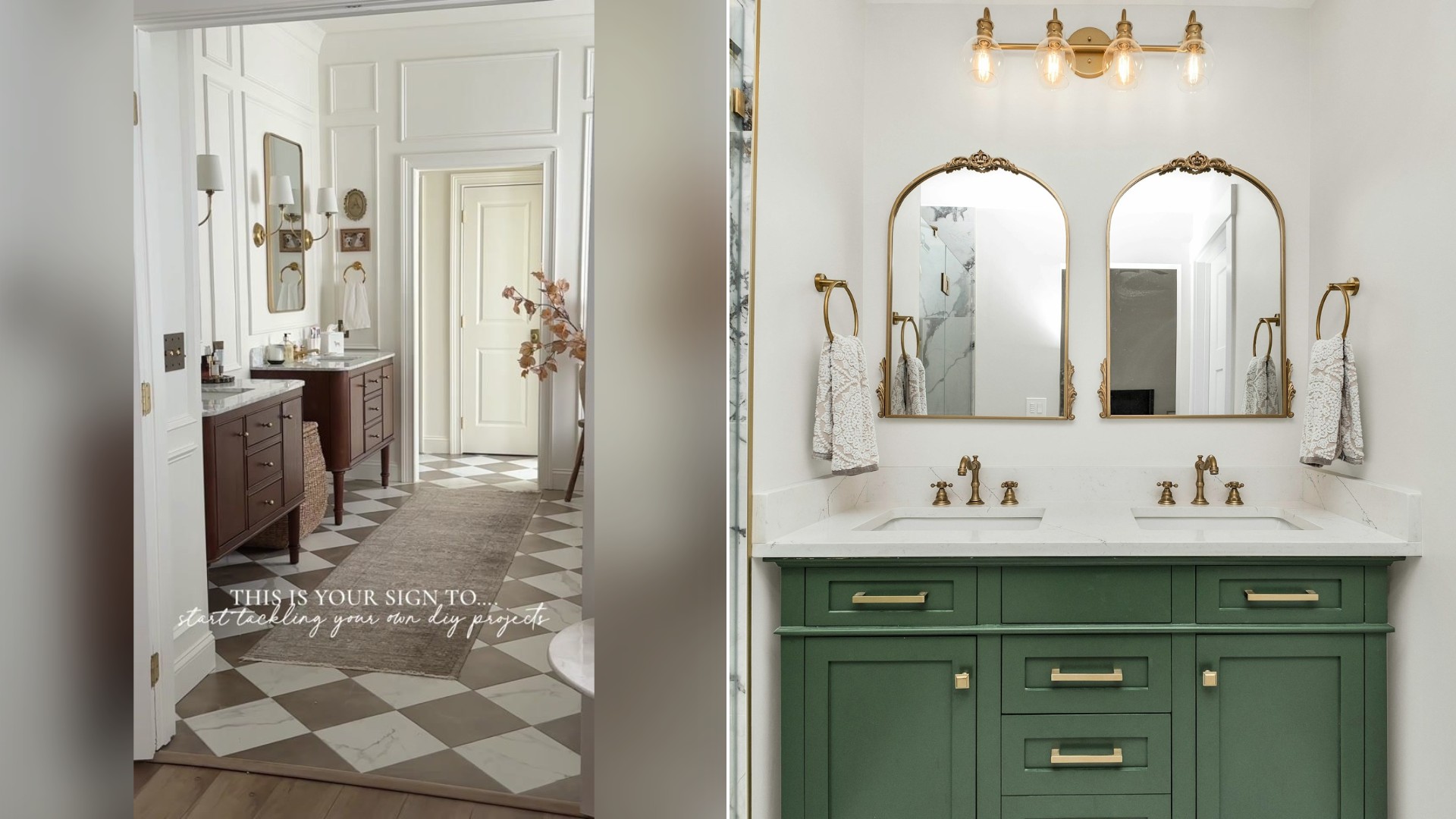
Her method was not magic. She spent countless hours researching, watching tutorials and learning as she went. She had tackled a few smaller projects before, but she says those were also things she had to teach herself, so the habit of figuring it out was already in place. Then she took everything one step at a time.
@alexisandraaustin
Where the savings went
The biggest payoff of doing both renovations herself, she says, was being able to put more of the family budget toward higher-end finishes. Instead of paying for labor, she poured the money into the parts of the bathroom you see and touch every day: the marble, the beautiful vanities and the unlacquered brass fixtures. The result, in her words, is a pair of spaces that feel much more custom while saving so much on labor.
That trade is worth pausing on. In many remodels, labor is one of the largest line items on the estimate, often rivaling the cost of the materials themselves. A homeowner who is willing to supply the work can redirect that money to materials that would otherwise be out of reach. A bathroom is small, which means a modest amount of marble or a single standout vanity can change the whole feel of the room.
Why marble and unlacquered brass make a statement
Both of her headline materials are known for character. Marble has been a symbol of luxury for centuries, prized for its soft veining and bright, clean look. It is a natural stone made mostly of calcium carbonate, which is why it reacts to acids such as lemon juice, vinegar and some bathroom cleaners. Homeowners who choose marble generally seal it, wipe up spills promptly and use pH-neutral cleaners made for stone, and many embrace the gentle wear that develops over the years as part of its charm.
Unlacquered brass is another material with a loyal following. Unlike lacquered brass, which carries a protective coating that keeps it shiny, unlacquered brass is left bare, so it slowly darkens and develops a patina as it is touched, exposed to moisture and cleaned. Some people love that lived-in, warm glow, while others polish the metal regularly to keep it bright. Either way, it is a finish that tends to look more personal the longer it is in a home.
The honest part: moments of doubt
She is refreshingly candid that it was not smooth sailing. Were there moments when she questioned what she had gotten herself into? Absolutely, she says. But seeing the spaces come together has been, in her words, so rewarding. Anyone who has lived through a remodel will recognize that mix of regret and pride, usually in the middle of the project, when the old tile is gone and the new one is not yet in.
Her story lands at a time when many homeowners are looking for ways to stretch a renovation budget, and the video carries the hashtags homedecor, homeinspo, homedesign and beforeandafter, the kind of posts people save to plan their own makeovers. Seeing a real before and after from someone who did the work herself is often the nudge a hesitant beginner needs.
How to follow her lead without biting off too much
If her story has you itching to pick up a tool, here are a few widely shared pieces of advice for first-time bathroom renovators.
- Start with a plan. Decide on the layout, the finishes and the order of work before you demolish anything, so each step leads logically into the next.
- Take one step at a time, as she did. Bathrooms are small, but they pack plumbing, waterproofing, tile and fixtures into a tight space, and rushing one stage tends to cause problems in the next.
- Learn from tutorials, but also read the manufacturer instructions that come with your vanity, faucets and tile products. They often contain installation details that general videos skip.
- Start with the projects within your reach. Painting, replacing a vanity or swapping fixtures are friendlier than moving drains or rewiring.
- Know when to call a licensed pro. Electrical and major plumbing changes often require permits and inspections depending on where you live, so check with your local building office first.
The bigger takeaway
The lesson in this renovation is not that every homeowner should tear out a bathroom this weekend. It is that patience, research and a willingness to learn can open up choices that a tight budget would otherwise rule out. By doing the labor herself, she says, she could afford marble, handsome vanities and unlacquered brass, and make two ordinary rooms feel custom.
For readers who have been putting off a project because it looks intimidating, her closing thought is the one worth keeping: take it one step at a time, and expect a few moments of doubt along the way.
More Stories You May Like
- Home Inspector Aims A Thermal Camera At A Mirror Next To A Mini Split And Cannot Figure Out How A Reflection Shows A Cold Spot
- Inspector Finds A Dishwasher Hose Chewed Through, Duct Tape Used As A Repair And Mold Growing In The Attic Of A House Loaded With Problems
- Termite Inspector Wearing Smart Glasses Pokes One Board On A Torrance Home And Droppings Pour Down Like A Waterfall
Leave a Reply