Every winter, the same thing happens in older homes. A room feels freezing, so somebody nudges the thermostat up, then up again. Host Jeff, who runs the Home RenoVision channel, says that is the real cost of a draft: it gives you the illusion that you are freezing, so you keep raising the heat. His fix does not require opening a single wall, and a thermal camera proves it works.
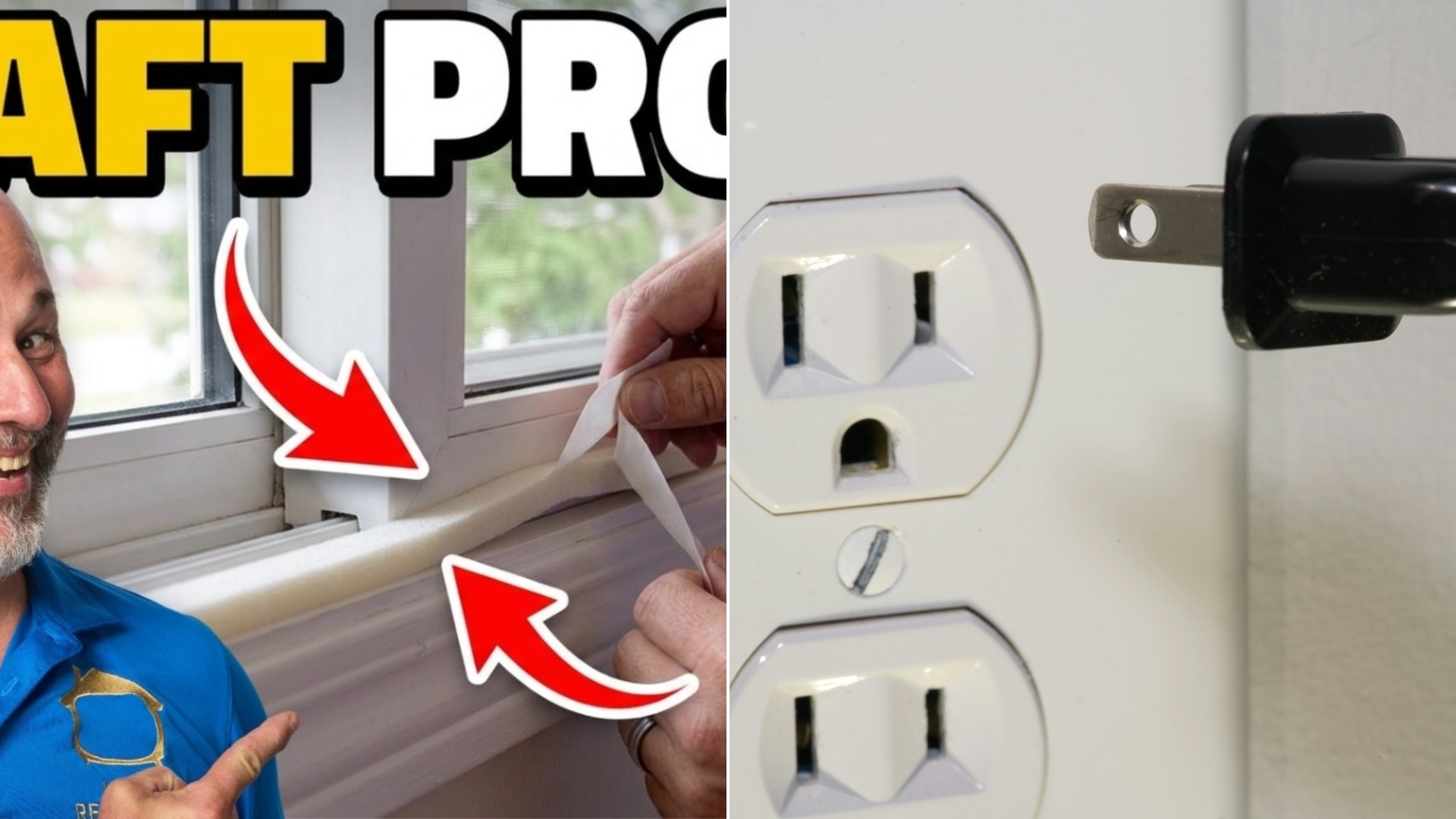
In his walkthrough he covers the most common leak points in an older house: windows, outlets on exterior walls and entry doors. Here is how each one works.
He starts with windows, because that is where many people feel the chill first.
Start With The Window Seals
On many older vinyl windows, the frame has two little foam strips designed to make contact with the vinyl, creating two seals against cold, wet air. With the window locked, the strips should pull tight together, and you should be able to hold your hand along the edge without feeling a draft. If you do feel one, you have an issue.
Over time those strips get damaged or compressed, and in the open position you can see a big void where the foam is supposed to make contact. His fix is a roll of window foam seal, which is two sided tape with release paper on the back. He suggests putting it on the outside of the window, right to the top, at the middle point of contact, then closing and locking the window so it compresses. He says that gets rid of most of the draft and works for nearly every old window.
A Plastic Film Third Pane
For windows you rarely open, such as in bedrooms, he adds a layer of plastic film that acts like a third pane. Heat chases cold, so in winter heat escapes through the glass and the room feels drafty. The film traps a layer of air that slows that heat loss.
The kit uses two sided tape on the outside of the casing, which also covers any gap behind the casing between the frame and the wall. All you need is a sharp knife or scissors and a hair dryer. Stick the tape, peel the backing, and start at one side as high as you can, stretching the film as comfortably as you can. Then take the hair dryer on medium speed, not too close, and watch the wrinkles disappear as the film shrinks. It is not perfect, he says, but you still have a clear view outside and a more comfortable room. He adds that if you need to open a window for ventilation, such as in a bathroom in winter, this is not the window to cover.
The Thermal Camera Test
Then he pulls out the thermal camera to show a problem most people never think about. The outlets on exterior walls are metal boxes full of holes, and cold blows through them. On the camera, the plug shows a purple spot in the middle of the screen. When he touches it with his finger, the color changes from pink to purple, which he describes as cold as ice.
The cause is simple. The steel box is 2 inches deep, but the stud is only 3 and a half inches, leaving just an inch and a half for insulation. Installers often push the insulation out of the way around the box, so there is a gap above and nothing behind it.
Foam Pad Plus Spray Foam
The first fix is a foam pad that fits behind the cover plate. Back on the camera, you can see where the foam stops the draft, though the top and bottom outlets remain two purple circles. That means air is still blowing in behind the box.
So he gets out his spray foam gun, inserts it all the way into the opening and fills the cavity, while watching to make sure he does not fill the box itself. It takes what he calls an insane amount of foam. When he puts the cover plate back on, the camera shows a lot more yellow, a clear improvement. His point is that you can improve the insulation around that box beyond code, with no demolition. As always, switch off the circuit before you remove a cover plate.
Fixing Entrance Doors
Doors are the other big culprit. He shows how you can see daylight through the gap of one door and finds a damaged gasket. These gaskets are inserted, not stapled, so a hardware store sells replacements that push right in. Go slowly with the nylon, because friction can burn you. Corner seals are wedge shaped gaskets with two sided tape, one for each side of the door.
The door sweep is the third piece. If the fins are torn off, you have a significant hole in the building. Entry doors are almost always 36 inches wide, so a new sweep slides in. He sets each screw at the bottom of its slot so the gasket stays compressed and can be adjusted later.
If the door is warped, though, you cannot just buy a new slab. A front entry door is part of a system that includes the frame and sidelights, and it has to be installed square, plumb and not twisted. If it still leaks, he says, the problem is the installer, not the product.
A Simple Checklist For This Weekend
- Hold your hand around locked windows and feel for drafts.
- Replace worn foam strips with window foam seal.
- Add shrink film to windows you do not open.
- Seal behind exterior wall outlets with a foam pad and spray foam.
- Check door gaskets, corner seals and sweeps.
None of it needs a contractor, and all of it costs a fraction of what a higher thermostat does over a winter.
More Stories You May Like
- Home Inspector Aims A Thermal Camera At A Mirror Next To A Mini Split And Cannot Figure Out How A Reflection Shows A Cold Spot
- Baby Boomers Are 42% Of Home Buyers And 55% Of Sellers While First Time Buyers Have Fallen To 21% The Lowest Share Since 1981
- Skipping The Sewer Scope Roof And Crawlspace On A Home Inspection Is A Gamble And Buyers Who Skip The Walkthrough Miss The Chance To Ask Questions
Leave a Reply