For 13 years, one wife decorated around her husband’s dining room wallpaper. Every rug, curtain and centerpiece had to work with a wall she did not choose.
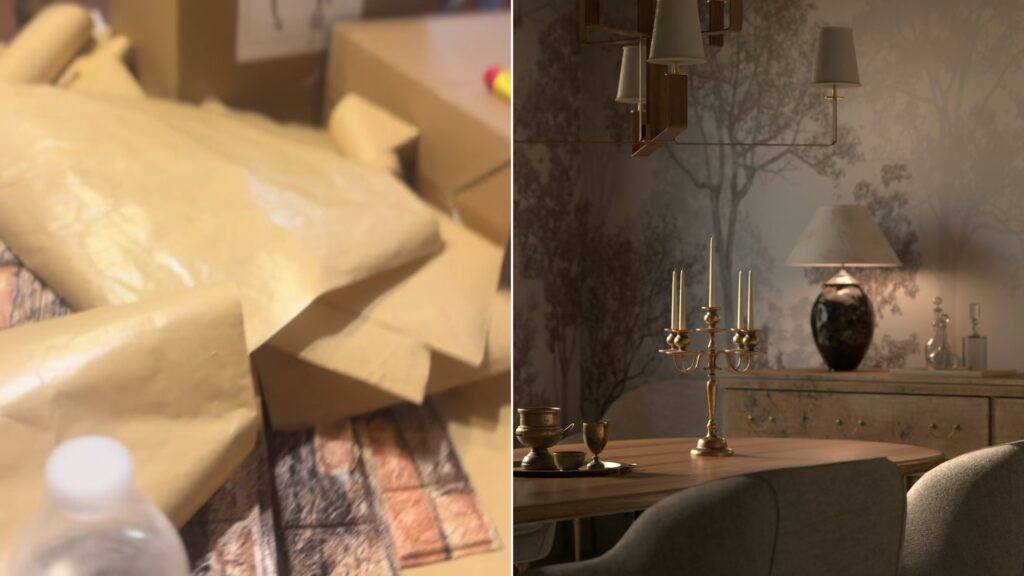
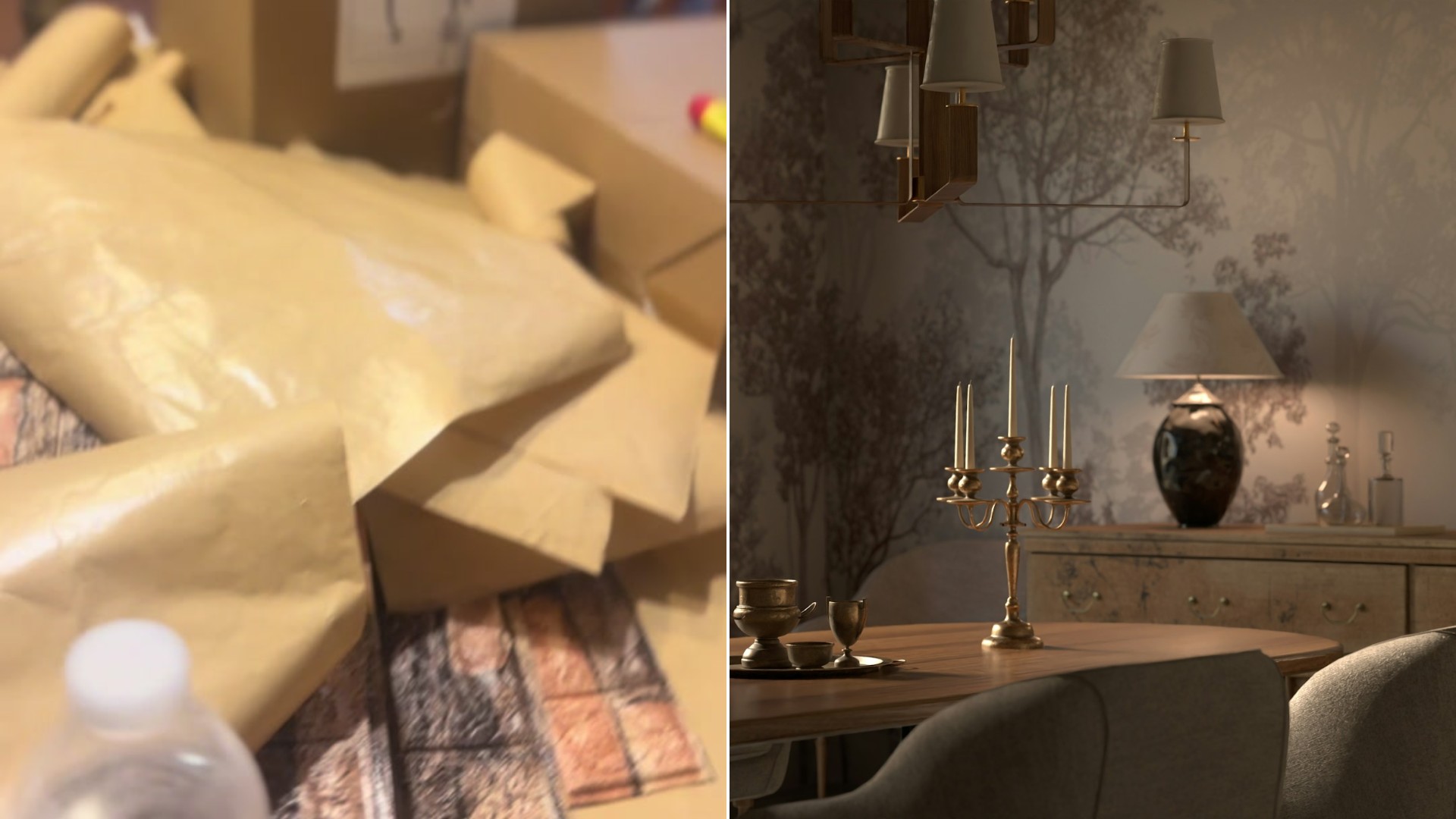
Then @firstlady446 took matters into her own hands. She ordered eight boxes from Amazon, finished the room in almost two weeks, and says her husband had no faith in her.
@firstlady446
Thirteen Years Of Working Around One Wall Covering
The creator says she spent 13 years decorating around the dining room wallpaper her husband had put up. Anyone who has lived with a room they cannot change knows how that feels, as each new piece of decor has to fight with the pattern.
Dining rooms are a place where families gather for holidays and Sunday dinners. When the walls stay the same for over a decade, the room can start to feel like a time capsule.
The fix did not come from a contractor. It came from a shopping cart and a stubborn decision to try.
Eight Boxes From Amazon And A Plan
She ordered eight boxes from Amazon, and the product she used was a peel and stick wall covering. That style of wallpaper has an adhesive back, so there is no paste, no bucket and no need to soak and steam the surface.
Peel and stick has become a favorite of renters and DIYers because it is forgiving. If a panel goes on crooked, you can usually peel it back and try again, at least in the first few minutes.
Eight boxes also shows she thought about the size of the job. Dining rooms have a lot of wall, and running short halfway through a project is the kind of problem that can stall a weekend.
Done In Almost Two Weeks
The creator says she finished the room in almost two weeks. For someone working around a job and a household, that is a solid pace, and it shows that a transformation does not have to take months.
Working in small stretches helps. Doing one wall at a time keeps the pattern lined up and keeps you from getting tired and sloppy at the end of a long day.
Her own summary is the part that gives the story its spark. She says her husband had no faith in her, and she proved him wrong with her own hands.
How To Hang Peel And Stick Wallpaper Without Tears
If her story has you eyeing your own walls, a few habits make the job go better. Preparation is where most of the success is decided.
- Clean the wall well and let it dry. Dust and grease keep the adhesive from sticking.
- Fill holes and sand rough spots, because the paper will show bumps.
- Use a level to draw a straight vertical line for the first panel. Walls and ceilings are rarely perfectly straight.
- Peel a little of the backing at a time and smooth with a squeegee from the center outward to push out bubbles.
- Trim with a sharp blade and change it often for clean cuts.
Order More Than You Think You Need
Measure the wall width and height, multiply to get the square footage, and add extra for pattern matching and mistakes. Many pros suggest adding at least ten percent, and more for large repeating patterns.
Buy everything at once from the same batch when you can. Color can vary slightly between production runs, and a mismatch is hard to hide on a wall you look at every night.
Know What You Are Getting Into With Old Wallpaper
Peel and stick works best over a smooth, sealed surface. If old wallpaper is still on the wall, it needs to be assessed, since loose or textured paper can lift and show through the new layer.
Some people remove old paper first with a scoring tool and warm water or a steamer, and then prime the wall before starting. It adds a day to the job, but it often saves frustration later.
Styling A Dining Room After A Big Wall Change
Once the new wall is up, the rest of the room can follow. Many designers suggest choosing one or two colors from the wallpaper and repeating them in small touches, such as table linens, a vase or artwork.
A bold pattern on all four walls can feel heavy, so some people use it on one accent wall and paint the others a calm shade. Lighting matters too, since a dimmer on the dining room fixture lets the room feel cozy at dinner and bright for homework.
Take a step back and live with the room for a week before adding more. Often the finished look needs less than you think, and the walls do most of the talking.
What Happens When You Want It Gone Again
One reason peel and stick is popular is that it is designed to be removable. Warming an edge with a hair dryer and pulling slowly at a low angle often helps the adhesive let go without tearing the wall surface.
Results depend on the paint underneath and how long the paper has been up, so it is wise to test a hidden spot first. A little patience at the start can spare you from patching later.
The Bigger Lesson
Her story is about more than wallpaper. It is about the quiet power of deciding that a room can change and that you are allowed to be the one to change it.
If you have a space that has bothered you for years, start small. Order a sample, test a patch in a corner, and see how it feels. A wall is only paper and paint, and the confidence you gain from changing it tends to carry into the rest of the house.
More Stories You May Like
- Engineer Buys A Retired Boeing 737 On Facebook For Around $5,300, Buries It In A 14 Foot Hole For A Secret Party Bunker, And His Wife Says It Was Junk But She’s Coming Around
- Woman Who Was Homeschooled Says Putting Kids Around Other People Is Not Real Socialization, Recalling Friends Who Denied The Moon Landing And Were Against Vaccines
- Woman Borrows Money From A Friend And Leaves Her Husband For A €50,000 Tiny House On Rented Camping Ground, Where She Washes Clothes By Hand Or At Her Ex’s House
Leave a Reply