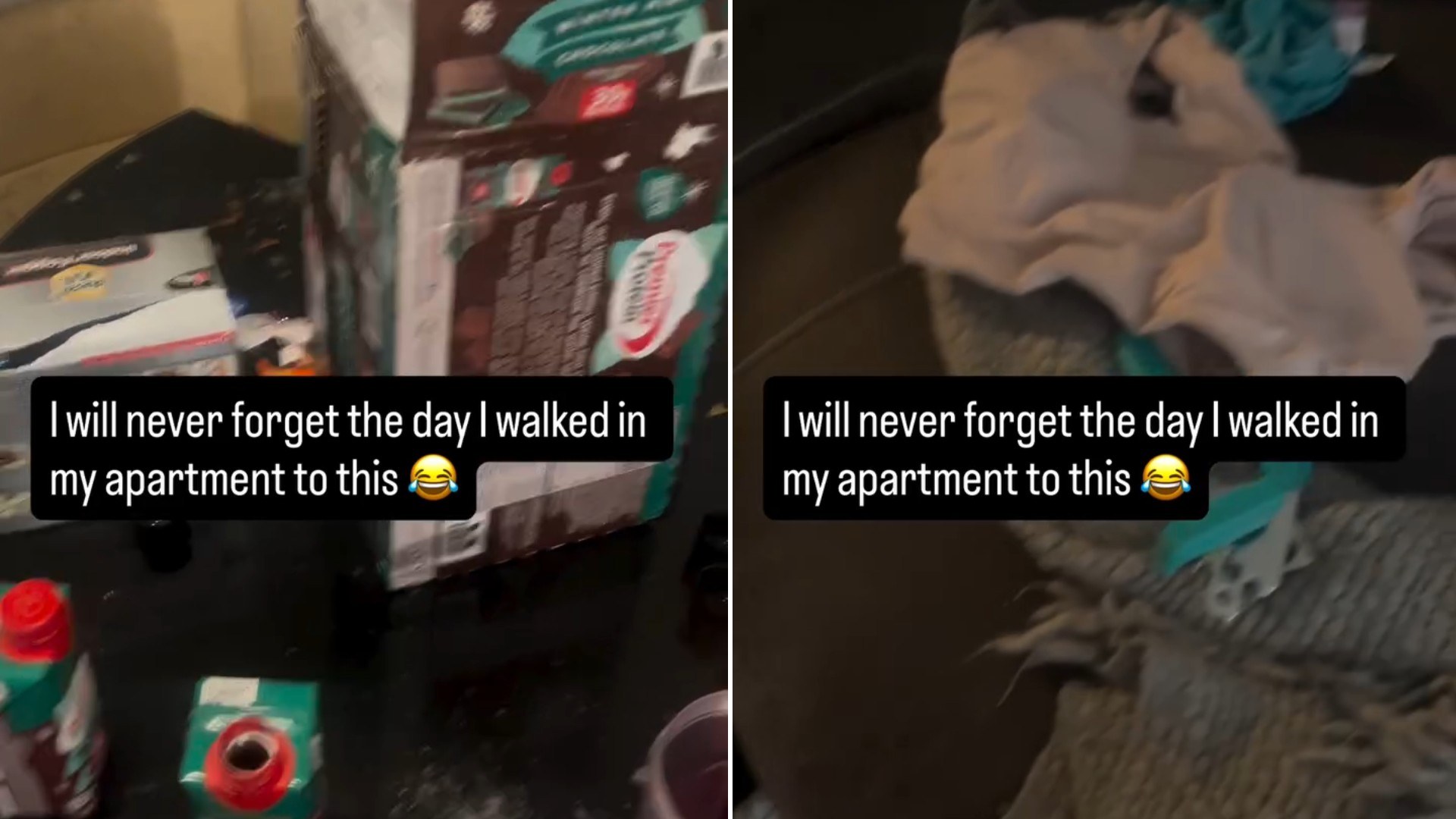
The camera shakes noticeably as she walks through her own front door, and it’s immediately clear this isn’t a planned, well-lit video shoot, it’s a real-time reaction caught in the moment of discovery. Returning home after a month-long guest had stayed in her apartment, she pans across rooms full of debris and unfamiliar belongings, narrating her shock out loud as she processes what she’s actually looking at, the mismatch between the apartment she left behind and the one she’s now standing in.
Her voice carries the specific tone of someone still working through disbelief rather than performing outrage for the camera, saying at one point that she will never forget the moment of walking in and seeing it all. There’s no polished narration structure here, no clean before-and-after cuts, just handheld footage capturing genuine surprise as she moves from room to room, cataloguing a mess and a pile of unfamiliar items left behind by someone who was supposed to be a temporary guest and instead left a lasting impression on her living space.
What makes this video land so effectively is precisely its lack of polish. As @thatgirlkapreee demonstrates simply by keeping her phone recording while she processes the mess in real time, the raw, shaky footage reads as far more credible than a staged reveal ever could, giving viewers the sense they’re witnessing the exact moment of discovery alongside her rather than a recreated or exaggerated version of it after the fact.
Hosting arrangements that stretch across a month or longer occupy a strange middle ground that a lot of people underestimate before agreeing to them. A weekend guest rarely has time to meaningfully alter the rhythm or condition of a home, but a month is long enough for someone to settle in, accumulate their own clutter, shift furniture around for their own convenience, and in some cases simply stop treating the space with the same care they might have shown on day one. What starts as a short favor for a friend or family member can quietly evolve into something closer to an unofficial roommate situation, minus any of the boundaries or agreements that typically come with an actual roommate arrangement.
For anyone considering hosting someone for an extended stay, whether a friend between apartments, a family member visiting for an extended period, or anyone else needing a place to land for weeks rather than days, a few upfront conversations can prevent exactly this kind of unpleasant homecoming. Setting a clear expectation about tidiness and shared spaces before the stay even begins, rather than assuming it will be understood implicitly, removes a lot of the ambiguity that tends to build resentment on both sides. It’s also worth agreeing on a plan for how the space should look at the end of the stay, whether that means a walkthrough together before the guest leaves, or simply a shared understanding that the apartment should be returned to roughly the condition it was found in, dishes washed, surfaces cleared, personal items packed up rather than left scattered.
There’s also a broader lesson here about the emotional weight of home as a concept, separate from the practical cleanup involved. A home functions, for most people, as one of the few spaces that feels entirely under their own control, and having that sense of control disrupted, even temporarily and even by someone well-intentioned, can feel disproportionately unsettling compared to the actual physical mess involved. That’s likely part of why her reaction on camera reads as genuinely rattled rather than simply annoyed, the mess itself is fixable with time and effort, but the feeling of walking into a space that no longer feels entirely like her own takes a little longer to shake off. What this video ultimately offers, beyond a cautionary tale about long-term guests, is a reminder that clear expectations set at the very beginning of any extended stay are almost always cheaper, in time, effort, and peace of mind, than the cleanup and recalibration required afterward.
It’s worth noting too how relatable this particular scenario is, even for people who’ve never hosted anyone for a month straight. Nearly everyone has some version of a shared-space horror story, a college roommate, a sibling who overstayed a visit, a friend who borrowed something and never quite returned it in the condition it was lent. Watching someone else’s version play out on camera, raw and unedited, tends to land less as gossip and more as validation, a reminder that the frustration of a violated space is a nearly universal feeling, regardless of the specific circumstances that led to it.
It’s also worth acknowledging the courage it takes to film a reaction like this one honestly, shaky camera and all, rather than waiting until the mess is cleaned up to present a more composed version of events. That choice to document the raw, unfiltered moment rather than the tidy aftermath is likely a big part of why the video resonates so strongly, giving viewers something closer to a real, shared experience of the discovery rather than a secondhand retelling delivered after the emotions have already settled.
Leave a Reply