Replacing kitchen island cabinetry outright can get expensive fast, which is exactly the problem creator @hannah.is.home ran into before finding a workaround. Rather than tear out and replace her existing island cabinets, she demonstrates a budget-friendly DIY transformation using fluted wood panels applied directly over the existing structure.
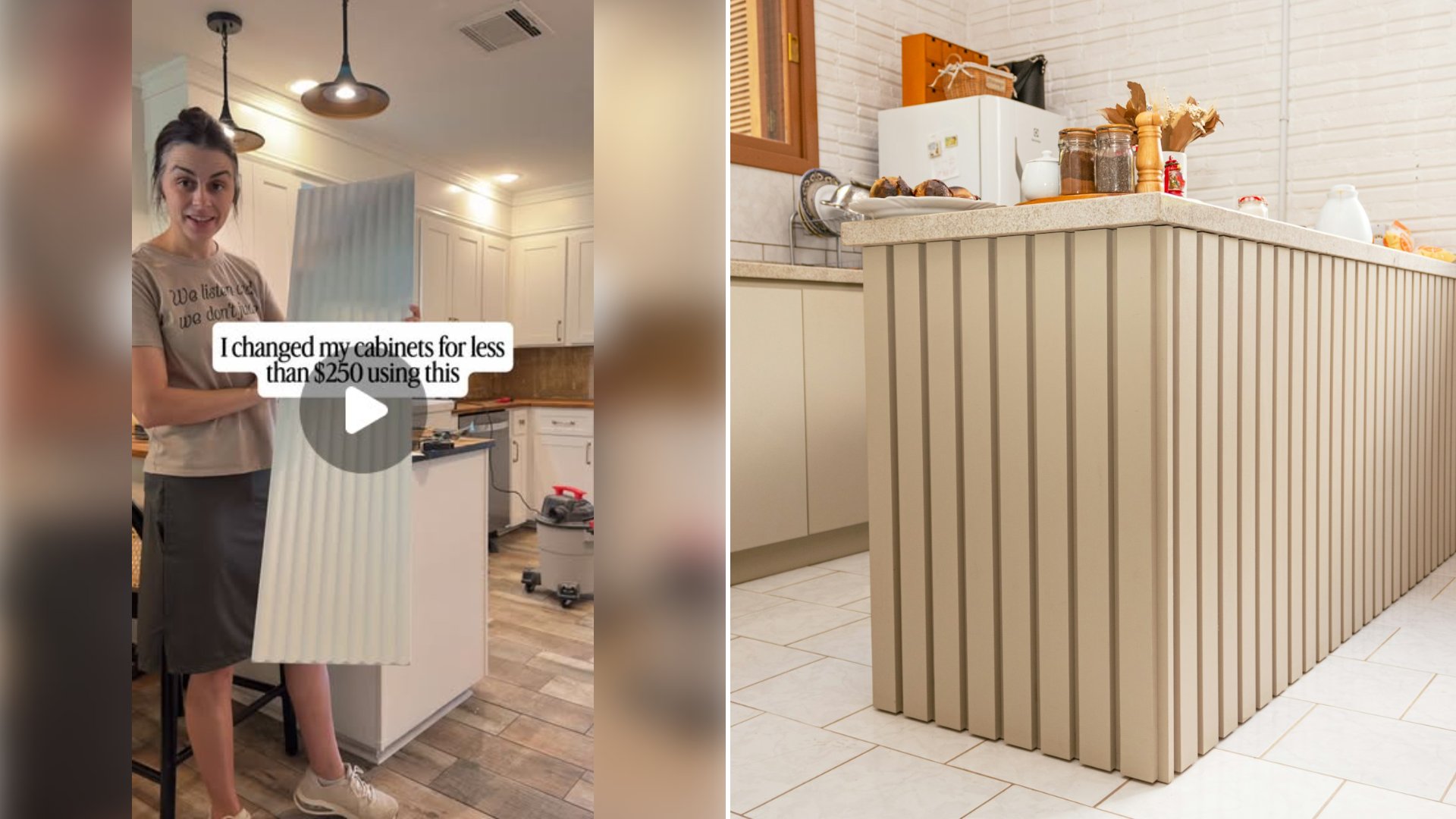
The video walks through the process step by step: measuring and cutting the fluted panels to fit the island’s existing faces, attaching them in place, and finishing the edges so the add-on reads as a built-in architectural detail rather than a retrofit. The result is a textured, high-end look that completely changes the character of the island without the cost, mess, or timeline of a full cabinet replacement. She frames the whole project as budget-friendly, a clever way to get a designer-style upgrade without the designer-level price tag.
Fluted panel overlays have become a popular middle-ground fix among DIY renovators precisely because they solve the same problem this creator ran into. A full custom cabinet replacement means new boxes, new doors, new hardware, and often an installer, while a surface-level panel refacing project works with what is already there and simply changes the face of it.
Full cabinet replacement versus surface-level panel refacing
Industry cost guides consistently show a wide gap between these two approaches. A full custom kitchen island cabinet rebuild, including new cabinet boxes, doors, and installation labor, commonly runs well into the thousands of dollars depending on size, material, and whether a contractor is hired to handle the work. Semi-custom or stock cabinetry brings that figure down somewhat but still typically involves a meaningful material and labor cost once an island-sized run of cabinetry and countertop disruption is factored in.
Panel refacing, by contrast, works directly with the existing cabinet carcass. Fluted or shiplap-style MDF and wood panels are widely sold by the sheet or the linear foot at home improvement retailers, and a single kitchen island facelift using this method is generally achievable for a small fraction of a full replacement’s cost, since the project avoids new cabinet boxes, new countertops, and most of the demolition labor that drives up a full remodel. The tradeoff is that refacing changes only the visible surface, not the internal storage or cabinet hardware, so it suits homeowners who are happy with their layout and just want a different look.
For anyone considering a similar project, the biggest cost variables are panel material, whether the existing cabinet faces need extra prep like sanding or filling old hardware holes, and whether the panels are painted or left as a natural wood finish, since staining and sealing add both time and material cost to the final result.
More from Willow and Hearth
- Homeowner Quoted $18k by a Contractor for a Dining Nook Answers No Thanks I Got It and Builds the Bench, Cushions, Table and Hanging Plants in Five Steps
- Homeowners Pull Kitchen Cabinets Out of the Middle of the Room, Build IKEA Cabinets, Flip the Doors on a Fridge and Rework the Window Over the Counter
- Homeowner Strips 80 Years of Wallpaper From a Hallway With Six Orange Doors, Replaces the Doors, Adds Trim and Says Her First Paint Color Looked Like Barbie Skin
Leave a Reply