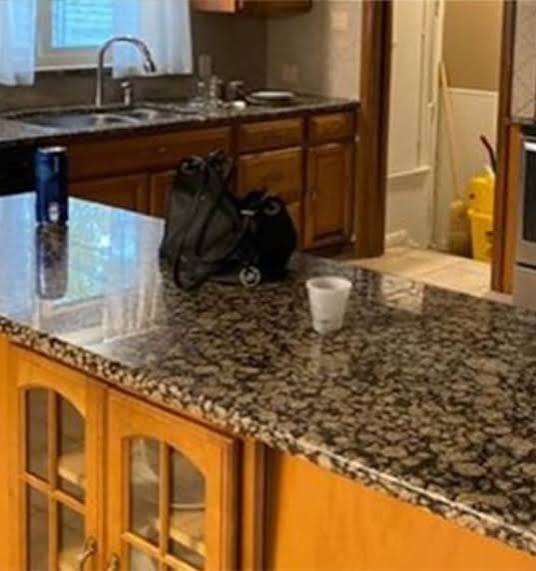
A five-bedroom house in Oak Park, Michigan, listed for $165,000 pulled in roughly 29,000 views in a single day — not because of its square footage or its finishes, but because of one kitchen photo showing two neat lines of white powder arranged on a plate on the counter. Within hours, people scrolling the listing on Zillow had turned an ordinary suburban sale into a full-blown investigation, according to reporting from Fox News, Inman, and Detroit’s WXYZ.
It’s a small, strange story, and that’s exactly the point. Long before anyone tours a house in person, they’ve already built a theory of it from photos alone — and sometimes those photos raise more questions than they answer.
A Prank That Went Further Than Planned
The powder wasn’t what the internet assumed. It was Goody’s Headache Powder, placed on the counter as a joke by the homeowner’s boyfriend, who wanted to see whether anyone would notice it in the listing photos. Somebody noticed. The image spread across social media and local group chats, with commenters speculating openly about whether the lines resembled cocaine staged for a photo shoot gone wrong.

The reaction wasn’t limited to online strangers. According to WXYZ’s reporting, the prank generated hundreds of texts and calls to the people connected to the listing, far beyond what anyone staging a joke for a real estate photo would reasonably expect. Local police in Oak Park looked into the matter and ultimately declined to pursue any investigation, reportedly citing a lack of grounds to establish what the substance actually was without testing it — which, given that it turned out to be an over-the-counter headache remedy, was moot anyway.
Zillow Stepped In, but the Listing Stuck Around
Zillow eventually pulled the photo for violating its Good Neighbor Policy, the platform’s rule against content that could embarrass or implicate people connected to a property. But the listing itself stayed up, and by the time the image came down, the damage — or, depending on how you look at it, the marketing win — was already done. The home reportedly drew more than 100 inquiries from interested buyers during the frenzy, a response most $165,000 listings in a Detroit suburb don’t typically generate in a single week, let alone a single day.
What the Story Says About How People Actually Shop for Homes
Anyone who has spent an evening scrolling listings knows the ritual: you don’t just look at square footage and school districts, you look at what’s left on the counters, what’s hanging in the closet through a cracked door, what the neighbor’s yard looks like in the background. Listing photos are staged, but they’re rarely staged perfectly, and the gap between “staged” and “perfectly staged” is where stories like this one live.

It also says something about how differently a listing photo can land once it leaves the control of the agent who took it. A photographer frames a kitchen to show off the counter space and the light. A viewer scrolling on their phone at 11 p.m. sees something else entirely, zooms in, and starts asking questions nobody involved in the sale ever intended to answer. Real estate photography has always been a kind of persuasion — this is what happens when the persuasion accidentally includes a detail nobody vetted.
An Object Lesson for Anyone Photographing a Home for Sale
Real estate agents have long advised sellers to clear counters before a photo shoot for exactly this reason — not because clutter looks bad, but because anything left in frame becomes part of the story whether the seller intends it or not. A stray prescription bottle, a utility bill with an address visible, a suspicious-looking substance meant as a joke: all of it gets scrutinized by an audience the seller never pictured, one photo at a time.
The Oak Park house eventually did what most homes do — it moved through the market, powder-free listing photos included. What lingers isn’t the mystery of the counter, since that got solved within a day. It’s the reminder that a listing photo is never really private, and the internet will investigate first and ask the seller’s boyfriend questions later.
House hunters have gotten unusually good at this kind of forensic scrolling, partly because listing sites make it so easy to linger on a single frame. Zoom tools, comment threads, and screenshot culture have turned browsing for a home into something closer to reading a room for clues, and agents who understand that are increasingly staging kitchens the way a stylist preps a magazine spread — nothing left out that wasn’t put there on purpose. The Oak Park photo is a reminder of what happens the one time that discipline slips, even as a joke.
None of it changed the fundamentals of the sale. A five-bedroom house in a modest Detroit suburb doesn’t usually need viral attention to sell, and this one didn’t need it either — it just got some anyway, for reasons that had nothing to do with the roof, the wiring, or the yard.
Leave a Reply