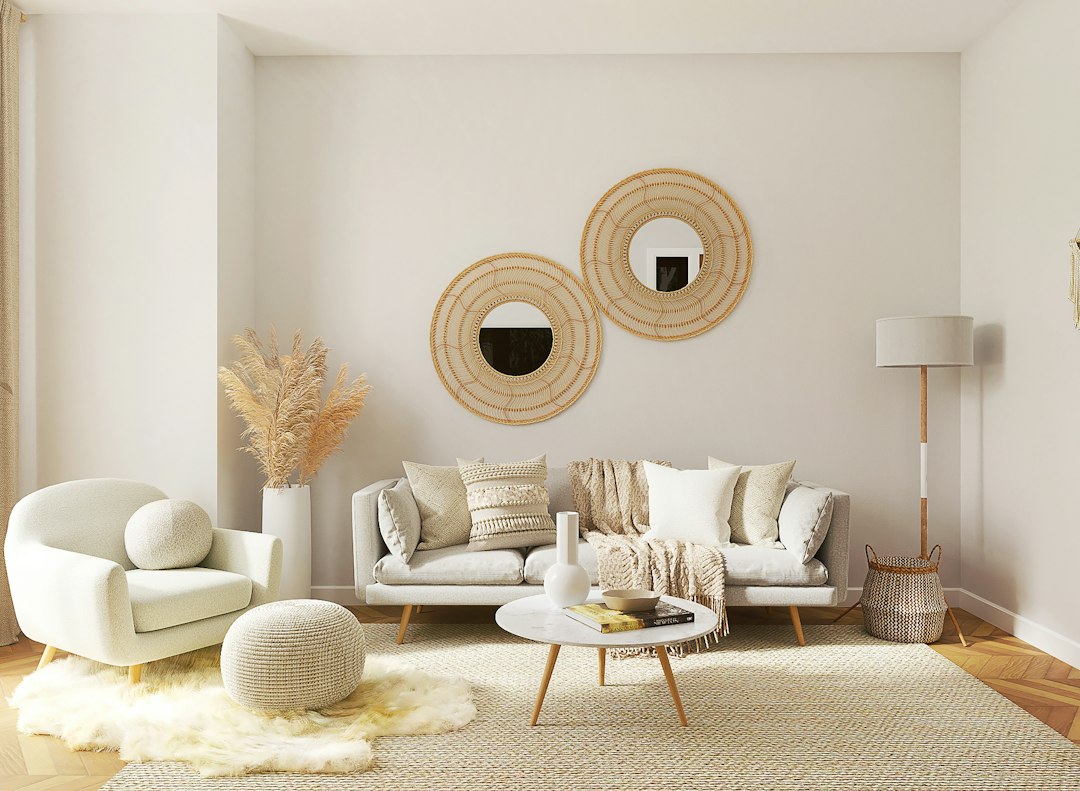
A cramped-feeling room isn’t always a square footage problem. More often, it’s a series of small decorating decisions working against each other: the wrong rug size, furniture pushed against the wrong wall, curtains hung in the wrong place. These mistakes are so common that most homes have at least a few of them without anyone noticing.
The good news is that nearly all of them are fixable without a renovation. Here are twelve of the most common culprits.
Hanging Curtains Too Close to the Window Frame
Mounting curtain rods directly above the window frame, rather than higher up on the wall, visually shrinks both the window and the room around it. Curtains hung close to the glass block part of the window and draw the eye to where the wall and window meet, emphasizing the room’s actual boundaries rather than extending them. Hanging rods closer to the ceiling and letting curtains extend slightly wider than the window frame tricks the eye into perceiving a taller, wider opening. This simple adjustment costs nothing beyond moving a few brackets, yet it’s one of the most consistently overlooked fixes in small rooms.
Choosing a Rug That’s Too Small
An undersized area rug floating in the middle of a room, with furniture legs sitting entirely off it, breaks up the floor into disconnected segments and makes the space feel choppier and smaller than it is. The general rule is that at least the front legs of major furniture pieces should rest on the rug to visually unify the seating area. A too-small rug is one of the most common decorating mistakes precisely because people are trying to save money, but the visual cost of an ill-fitting rug often outweighs whatever was saved by sizing down.
Pushing All Furniture Against the Walls
It feels intuitive to shove every piece of furniture against the perimeter to maximize open floor space in the middle, but this arrangement often makes a room feel like a waiting room rather than a lived-in space, and it doesn’t actually make the room feel bigger. Pulling a sofa a few inches away from the wall and creating a more intentional conversation area, even in a small room, tends to feel more spacious because it creates layered depth rather than a flat perimeter of furniture. Floating furniture also allows for functional pieces like a slim console table behind a sofa, which adds storage without adding visual bulk.
Using Heavy, Dark Furniture in a Small Space
Large, dark, boxy furniture pieces absorb light and visually dominate a small room, making the walls feel like they’re closing in. Furniture with visible legs, lighter wood tones, or slimmer profiles allows sightlines to continue underneath and around the piece, which reads as more open even at the same physical footprint. This doesn’t mean every piece needs to be delicate or fragile-looking, but swapping one or two oversized, dark items for something with a lighter visual weight can noticeably change how spacious a room feels.
Cluttering Walls with Too Many Small Frames
A wall covered in numerous small, mismatched picture frames creates visual noise that makes a room feel busier and more closed-in than a few larger, more thoughtfully chosen pieces would. Small rooms benefit from restraint on the walls, since excessive visual information competes with the sense of openness you’re trying to create. Choosing one or two larger art pieces, or a tightly curated gallery wall with consistent framing, gives the eye a place to rest rather than constantly scanning a cluttered surface.
Skipping Vertical Storage in Favor of Floor Clutter
Storage solutions that stay low to the ground, like floor baskets and short bookshelves, take up valuable floor space and visually cap the room at a low height. Tall, narrow shelving units that draw the eye upward make better use of vertical space and leave more floor area visible, which reads as more open. Floor clutter in general, whether it’s shoes by the door or stacks of magazines, is one of the fastest ways to shrink the perceived size of any room, regardless of its actual dimensions.
Choosing the Wrong Paint Sheen and Color
Flat, dark paint colors absorb light rather than reflecting it, which can make a small room feel more enclosed, especially if natural light is already limited. Lighter colors with a slight sheen, like eggshell or satin, bounce more light around the room and can make walls feel like they recede rather than close in. This doesn’t mean dark colors are always wrong for small spaces, since a well-lit room with the right complementary tones can still feel cozy rather than cramped, but it does mean the choice deserves more thought in a space that’s already tight on square footage.
Blocking Natural Light Sources
Placing tall furniture, bulky curtains, or decorative items directly in front of windows cuts off natural light before it even enters the room, which is one of the fastest ways to make a small space feel dim and cramped. Even partially obstructing a window with a tall bookshelf or plant reduces the amount of light bouncing around the room throughout the day. Keeping the areas directly in front of and beside windows as clear as possible allows light to travel further into the space, which has an outsized effect on how open a small room feels.
Ignoring Ceiling Height in Design Choices
Low or standard ceilings paired with short curtains, low-hanging light fixtures, or horizontal design elements can emphasize a room’s compactness rather than disguise it. Vertical stripes, tall bookshelves, and pendant lighting hung at the appropriate height all draw the eye upward and can make a room feel taller than it actually is. Conversely, a low-hanging chandelier or a horizontal wallpaper pattern in a room with modest ceiling height tends to visually compress the space further.
Overcrowding with Too Much Furniture
Trying to fit every piece of furniture you own into a small room, rather than editing down to what the space can actually support, is one of the most direct ways to make it feel cramped. Every additional piece reduces circulation space and adds visual clutter, and a room that requires careful navigation to avoid bumping into things will always feel smaller than its actual square footage. Choosing multipurpose furniture, like an ottoman with storage instead of a coffee table plus a separate storage bench, can reduce the total piece count without sacrificing function.
Using Patterned Wallpaper or Fabric Inconsistently
Mixing several bold, unrelated patterns throughout a small room, on wallpaper, upholstery, and textiles, creates visual competition that makes the space feel chaotic and tighter than it is. A single well-chosen pattern used intentionally, paired with mostly solid complementary pieces, tends to read as more sophisticated and spacious than a room where every surface is fighting for attention. This isn’t an argument against pattern altogether, since a bold wallpaper can work beautifully in a small space, but it works best when everything else in the room is deliberately kept simple.
Forgetting Mirrors as a Design Tool
Skipping mirrors entirely in a small room means missing one of the simplest and most effective tools for creating a sense of depth and additional light. A well-placed mirror across from a window or light source reflects natural light back into the room and can create the illusion of a second window or an extended sightline. Many small rooms rely entirely on furniture and color choices to feel bigger while overlooking this straightforward addition, which costs relatively little compared to other decorating investments and delivers a noticeable visual payoff.
Leave a Reply