Kitchen design trends move fast, and plenty of storage solutions that dominate renovation photos and design boards are chosen primarily for how streamlined they look rather than how well they function day to day. The gap between a sleek kitchen and a livable one often comes down to storage decisions that prioritized appearance over the messy reality of actually cooking and cleaning up.
Here are seven storage choices that photograph beautifully but tend to frustrate the people using them every day.
Handleless, Push-to-Open Cabinets
Handleless cabinetry creates an uninterrupted, minimalist look that’s hugely popular in modern kitchen design, but push-to-open mechanisms require a firm, deliberate press to release, which becomes genuinely annoying when your hands are full, wet, or covered in flour. Over time, these mechanisms can also wear out or become less responsive, sometimes requiring multiple attempts to open a cabinet that used to release easily. Families with young children or anyone who cooks frequently often find themselves missing the simple reliability of a traditional handle or pull, especially on the cabinets used most often throughout the day.
Open Shelving Instead of Upper Cabinets
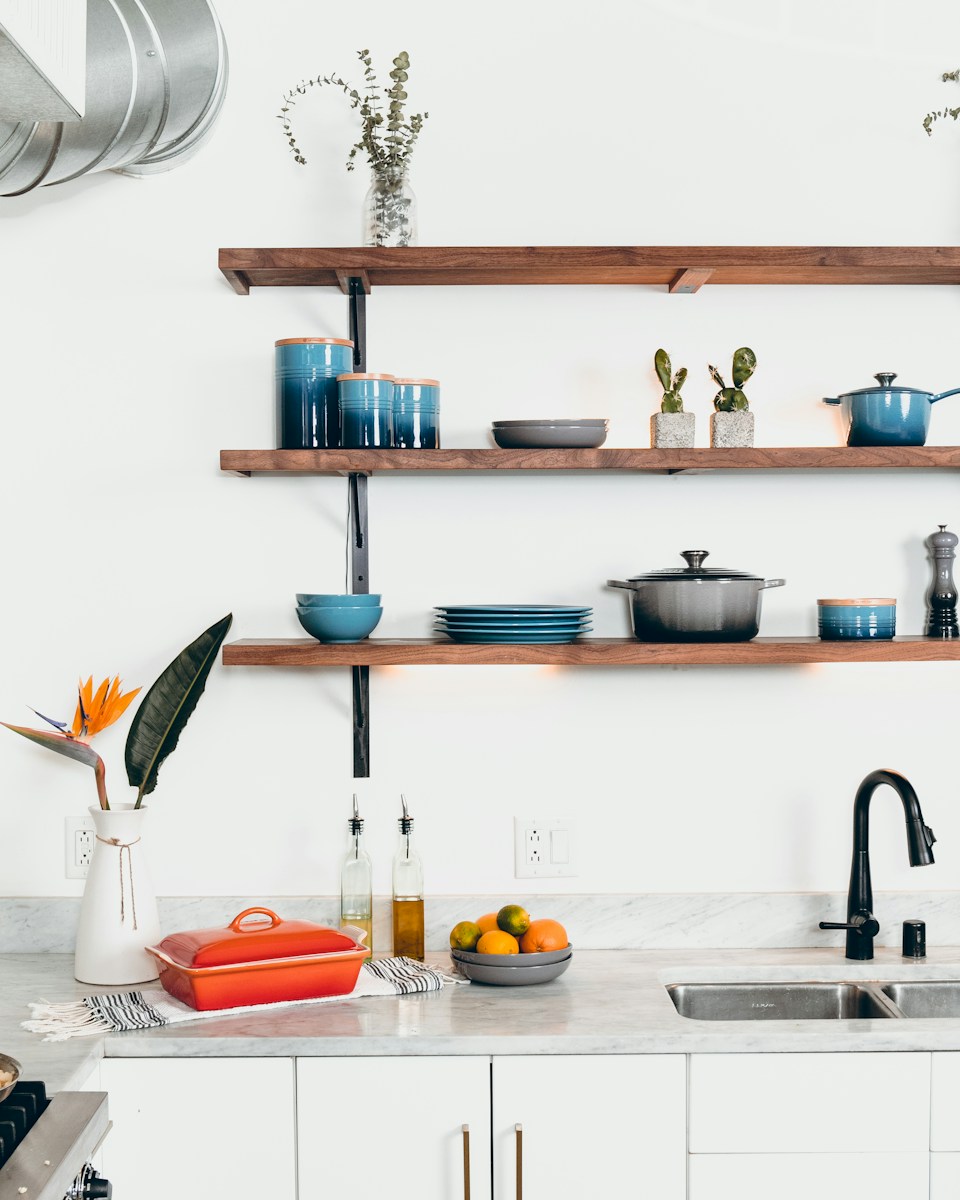
Open shelving displays dishware in a way that feels curated and airy, and it’s a design choice that photographs exceptionally well, but it also means everything stored there is exposed to kitchen grease, dust, and splatters, requiring far more frequent cleaning than enclosed cabinets. Open shelves also demand a level of ongoing styling discipline that most households don’t maintain consistently, since mismatched dishware or everyday clutter is on full display rather than tucked behind a door. What looks effortlessly organized in a staged photo often becomes a source of low-grade stress for the people actually using the kitchen.
Deep, Unorganized Drawers Under the Cooktop
Wide, deep drawers beneath a cooktop look clean and modern from the outside, but without internal dividers or organizers, they quickly become a jumble of pots, lids, and bakeware that’s hard to navigate. Lids in particular tend to slide around and get buried under heavier cookware, turning a simple task like finding a matching lid into a small excavation project. Retrofitting dividers after the fact is possible but adds cost, and many builder-grade installations skip this detail entirely in favor of the clean, uninterrupted look of an empty deep drawer.
A Single Oversized Pantry Instead of Distributed Storage
One large, striking walk-in pantry looks impressive, but consolidating all dry storage into a single space, especially one that isn’t close to where food is actually prepped, can mean extra trips back and forth during cooking that smaller, more distributed storage wouldn’t require. Without careful shelving and labeling, a single large pantry can also become a catch-all space where items get lost toward the back, leading to duplicate purchases and forgotten, expired goods. The most functional kitchens tend to pair a pantry with smaller, targeted storage near the actual cooking and prep zones.
Glass-Front Cabinets for Everyday Dishware
Glass-front cabinets create an elegant display effect, but they also mean everyday dishware needs to be kept perfectly organized and matched at all times, since any mismatched mugs or mismatched stacking is constantly visible. This adds a layer of tidiness pressure that plain cabinet doors simply don’t require, and glass fronts also show fingerprints and smudges more readily, meaning more frequent cleaning to maintain that polished look. Many homeowners with glass-front cabinets end up reserving them for special-occasion dishware rather than the everyday items they were originally intended to hold, which somewhat defeats the storage purpose.
Toe-Kick Drawers That Are Hard to Access
The slim drawers built into the toe-kick space at the base of cabinetry are a clever way to capture otherwise wasted space, and they look seamless when closed, but their shallow depth and low position make them awkward to use for anything beyond flat, infrequently accessed items like baking sheets or step stools. Bending down repeatedly to access a toe-kick drawer is far less convenient than reaching into a standard lower cabinet, and many homeowners report using these drawers far less than they anticipated once the novelty wears off.
Built-In Appliance Garages with Tambour Doors
Appliance garages, the countertop cabinets with roll-up tambour doors designed to hide small appliances like toasters and coffee makers, look tidy when closed, but the doors can be finicky, occasionally jamming or coming off track over time. Storing appliances that need to be plugged in also requires careful planning around outlet placement inside the garage, which isn’t always done correctly during installation. Many homeowners find themselves leaving the appliance garage door open most of the time simply because closing and opening it repeatedly throughout the day becomes more hassle than it’s worth.
Leave a Reply