A pressure washer can make a grimy driveway look brand new in an afternoon. That success convinces plenty of homeowners to aim it at everything else on the property.
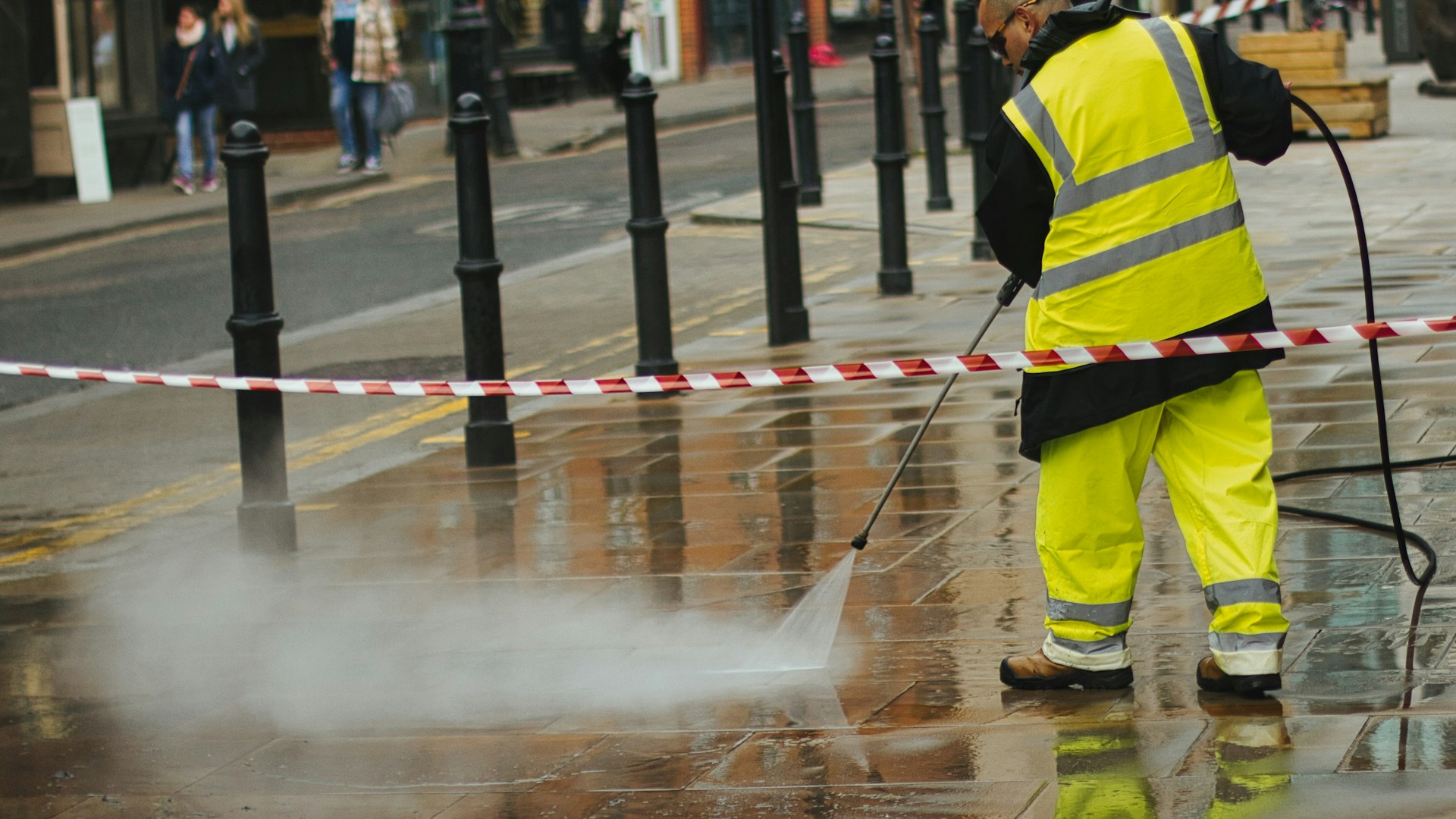
That is where the trouble starts. According to Consumer Reports in a 2017 report, cement walkways and driveways can withstand powerful cleaning, but a long list of other surfaces cannot.
Here are eight spots around the house where the wand can do more harm than good, with the reasons from Consumer Reports and Angi.
Roofs Are Dangerous And Potentially Destructive To Pressure Wash, Consumer Reports Said In 2017
Consumer Reports calls pressure washing a roof “dangerous and potentially destructive.” The spray can knock shingles loose and strip the granules that extend roof life.
Its alternative: a mold and moss cleaner or a 50/50 bleach-and-water mix, plus trimming overhanging branches to limit moss. Angi adds that stripped granules can lead to leaks and mold, and that the wand’s recoil on a ladder can cause a fall.
Aluminum Siding Can Dent Under A Concentrated Blast, Says Consumer Reports
Consumer Reports noted in 2017 that vinyl and fiber cement siding generally handle pressure washing, but aluminum siding can dent.
Its advice is to use the lowest pressure and a broad nozzle, saving concentrated blasts for problem spots.
Shingle Siding Can Be Knocked Loose, According To The 2017 Consumer Reports Advice
For shingle siding, the Consumer Reports guidance is blunt: don’t pressure wash it, since the pressure can knock shingles loose.
A garden hose and a soft brush may take longer, but they leave every shingle where it belongs. Patience with the brush is cheaper than a roofer’s repair visit.
Older Painted Wood Needs A Lead Test Before Any Spraying, Consumer Reports Says
For wood clapboard on homes built before 1978, Consumer Reports says to have the paint tested for lead by an EPA-licensed lead-remediation specialist first.
Angi lists lead paint among its own no-spray items, noting that it sprays hazardous lead particles into the air, where they can land anywhere.
Soft Pressure-Treated Pine Decks Need A Gentle Touch, Consumer Reports Advises
Wood decks are usually fine, Consumer Reports said, but pressure-treated southern yellow pine is soft. It suggests starting with a low-pressure nozzle on an inconspicuous spot and working with the grain.
The report also warns that high pressure can etch wood and some stones. Composite decks often need only light scrubbing.
Windows Can Break Or Blow In Under A Pressure Washer’s Spray, Angi Warns
Angi’s list of things you should never pressure wash includes windows, noting that the glass can break or blow in, leading to replacement and cleanup.
A standard garden hose delivers about 50 PSI, Angi says, while pressure washers operate at 1,500 to 4,000 PSI. That gap is why a hose is the better tool for glass.
Air Conditioner Units Have Delicate Fins That Bend Or Crush, Angi Says
According to Angi, a pressure washer can bend or crush an air conditioner’s delicate fins, causing malfunction and a shorter lifespan.
The outdoor unit may look rugged, but those thin fins are easy to flatten. Clear leaves and debris by hand instead.
Loose Or Old Mortar Can Be Knocked Out, Leaving The Wall Vulnerable, Says Angi
Angi says loose mortar can be knocked out, causing faster wear and leaving the home vulnerable. Its advice for brick is a very low PSI, avoiding the mortar, and a professional for heavily grimy brick.
On an older house, where the mortar is already soft, even a quick pass can do lasting damage.
Where does the washer belong? Consumer Reports says moldy cement is best pre-treated with suds at lower pressure, and that composite decks often need only light scrubbing. The same report says vinyl and fiber cement siding generally handle the job. Angi, for its part, says stained wood loses its stain under a pressure washer and wooden patio furniture can split, chip or splinter and lose its protective sealant, leading to warping and mold.
Safety matters as much as surfaces. Consumer Reports says to avoid a 0-degree nozzle, because the concentrated stream “poses an unnecessary safety risk” and can pierce protective boots, and to use a 15-degree nozzle instead. It also says never to use a pressure washer on a ladder, since blowback could cause you to lose your balance, and to wear hearing protection, protective footwear and gloves.
Angi’s list goes further. It also warns against spraying electric meters, because their covers may not withstand the force and water can get into the electrical system, and against solar panels, which can detach from the frame, with some manufacturers voiding the warranty. Light fixtures, gutter interiors and pool liners are on the list too, along with cars, which Consumer Reports says can be nicked and chipped.
Angi adds that a full face shield is recommended above 2,000 PSI and that a jet at 4,000 PSI can cut skin.
When you are unsure about a surface, test a small hidden area with the lowest setting, or choose a garden hose and a soft brush. The power washer is a great tool for concrete. For the rest of the house, a lighter touch protects your investment.
More Stories You May Like
- Flipper Skipped Inspections On A $135,000 House Then A Shot Sewer Line And Bad Roof Cut The Profit To Just Under $20,000
- PowRyte Pressure Washers Sold Online For Up To $320 Have No Shock Protection At The Plug And The Seller Has Gone Silent On A Recall
- Mobile Home Owner Finds A $6 Thrift Store Coffee Container That Sells For About $40 Online And Builds A Whole Coffee Bar Around It
Leave a Reply