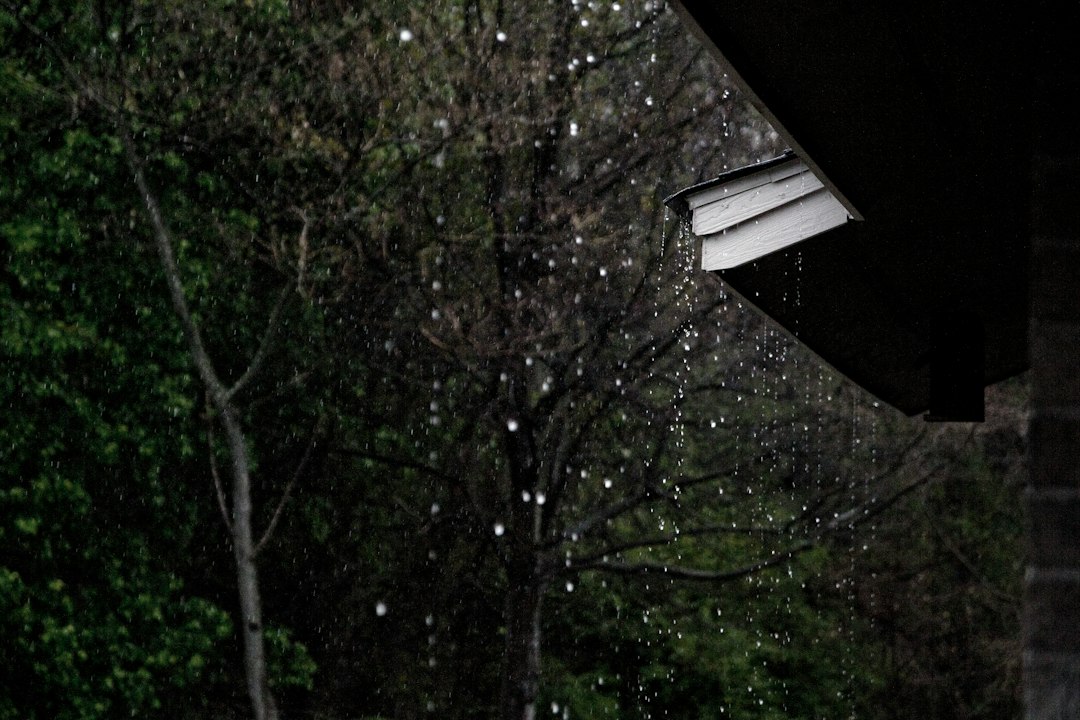
Sunny-day showings are the norm, but a house rarely shows you the truth about water until the sky opens up. If you can time a visit — or even just a slow drive-by — for a day or two after a heavy rain, you’ll learn things about a property that months of dry weather would never reveal.
Water problems are also among the most expensive to fix retroactively, since they often mean addressing grading, drainage, or foundation issues rather than a simple patch. Here’s what to look for once the rain has passed.
Standing water anywhere near the foundation
Walk the full perimeter of the house and note any spots where water is pooling against the foundation rather than running away from it. Proper grading should slope the ground away from the house for at least several feet. Standing water here is one of the clearest early warning signs of a future wet basement or crawl space, and it’s often fixable with regrading, but only if you know to ask for it before closing.
The basement or crawl space for dampness and smell
Even without visible flooding, a musty smell or faint dampness on basement walls after a rain points to moisture intrusion. Run your hand along the base of the walls and check for efflorescence — a white, chalky mineral residue left behind by water that has evaporated. This is a telltale sign of past water intrusion even if the space looks dry the day you visit.
How the gutters and downspouts are performing
Gutters that are overflowing, sagging, or dumping water directly next to the foundation rather than carrying it several feet away aren’t doing their job. Look at where each downspout empties, since a downspout that ends right at the base of the house is a common and easily overlooked contributor to basement leaks.
The yard’s low points and drainage patterns
Note where water collects in the yard itself, not just near the house. A low spot in the backyard that turns into a small pond after rain might be a minor inconvenience or could indicate a broader drainage problem affecting the whole lot, especially if it’s near a patio, shed foundation, or septic system.
Driveway and walkway cracking or heaving
Water that seeps beneath concrete and then freezes or shifts the soil underneath can cause cracking, heaving, or settling in driveways and walkways. Fresh cracks or noticeably uneven sections after a rainy stretch can be a sign of ongoing drainage issues beneath the surface rather than simple age-related wear.
Whether the sump pump, if there is one, actually runs
A sump pump sitting silent and dry during your visit tells you nothing. If it’s rained recently, ask whether the pump has been running and how frequently. A pump that’s constantly cycling suggests a high water table or persistent drainage issue that will likely require ongoing attention and electricity costs.
Street and neighborhood-wide flooding patterns
Sometimes a property’s water issues aren’t really about the property at all — they’re about the neighborhood’s overall drainage. If the whole street floods during heavy storms, that’s a municipal or watershed-level issue that a single homeowner generally can’t fix, and it’s worth asking neighbors and checking flood maps before assuming it’s solvable.
Any musty odor or discoloration in closets and lower-level rooms
Moisture doesn’t only show up in obvious places. Check closets on lower floors and any rooms adjacent to the exterior walls for unusual smells or faint discoloration on baseboards, which can indicate slow, chronic moisture intrusion that hasn’t yet become an obvious, visible problem.
Leave a Reply