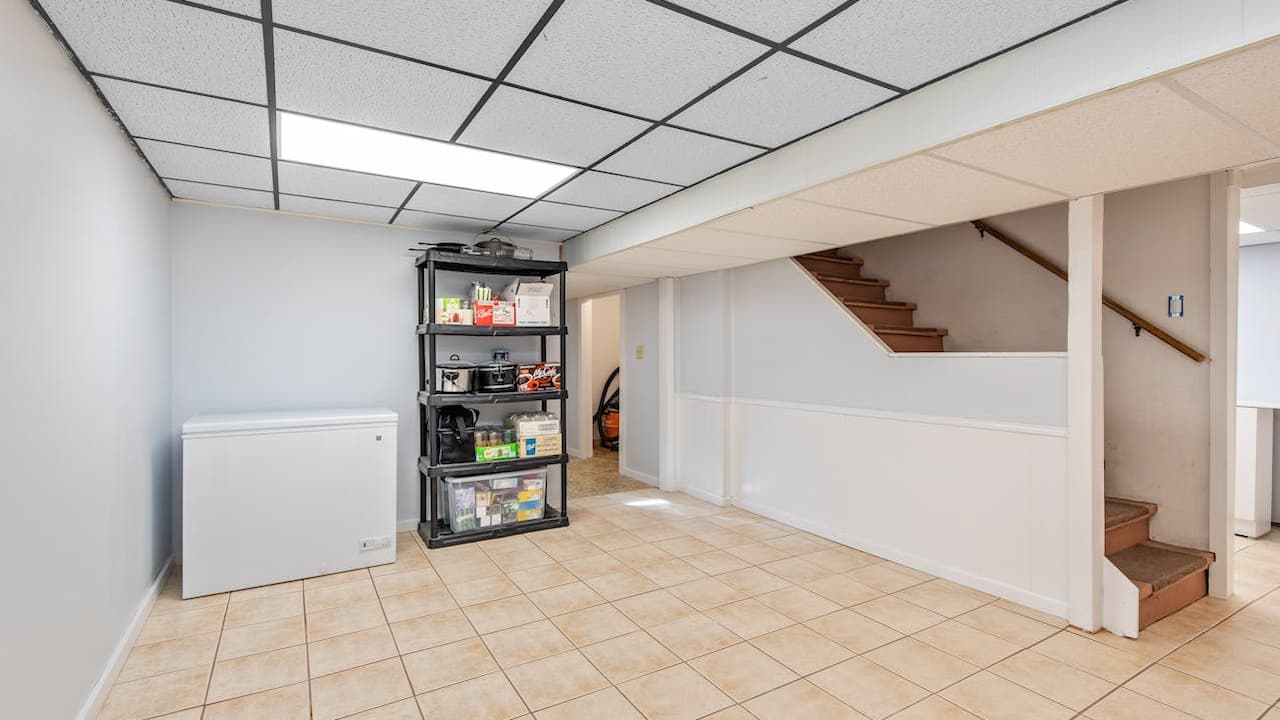
Water damage and freezing claims made up nearly 24% of all homeowners insurance claims in 2021, the third-most common category behind wind and fire, according to an analysis of industry data by ConsumerAffairs. The same analysis puts the average water-damage claim at roughly $12,514, and separate cost-survey data from Forbes Home puts the average basement flood repair specifically at around $4,300, with a typical range of $1,600 to $6,900 and structural cases running past $11,000. A sump pump that quietly failed sometime over the summer is the single most common reason a basement floods during a fall downpour, and most homeowners don’t find out it’s dead until the pump is already underwater and useless.
The Bucket Test, Step by Step
Testing a sump pump doesn’t require waiting for rain. Pour a few gallons of water directly into the sump pit, steadily, until the water level rises enough to lift the pump’s float switch. A working pump kicks on within a few seconds, drains the pit back down, and shuts itself off cleanly once the float drops again. If the pump doesn’t activate, activates but doesn’t move water, or shuts off while the pit is still mostly full, that’s a pump that needs service or replacement before the next storm rather than during one. It’s worth doing this with the discharge line visible too, since a pump can run perfectly while pumping water right back toward the foundation through a disconnected or frozen discharge pipe.

Why Battery Backup Is the Part People Skip
A primary sump pump only works when the power is on, and the same storms that flood basements are the storms most likely to knock out electricity. A battery-backup sump pump, wired to kick in automatically when the primary loses power or fails outright, closes that gap, but only if the battery itself is actually charged and holding a charge. Testing the backup means repeating the bucket test with the primary pump unplugged or physically disconnected, confirming the backup unit alone can lift and move water on battery power. Backup batteries lose capacity over time the same way a car battery does, so a unit that worked flawlessly two years ago can quietly fail a test today if it’s never been checked.
Two Failure Points That Aren’t the Motor
A sump pump can pass the bucket test and still fail during an actual storm for reasons that have nothing to do with the motor. The check valve on the discharge line, a simple flap that stops water from flowing back into the pit between pump cycles, can stick or fail with age, forcing the pump to fight against its own discharged water on every cycle and wearing it out faster than normal use would. The discharge line itself, if it runs above ground outside the house, can freeze solid during a hard cold snap even while the pump inside is working perfectly, backing water up into the pit with nowhere to go. Both are worth a quick visual check alongside the bucket test: confirm the check valve arrow points away from the pit, and make sure any exterior discharge pipe slopes away from the foundation without low spots where water can pool and freeze.
A battery-powered high-water alarm, mounted a few inches above the pump’s normal shutoff level, is a cheap add-on that closes the last gap: it won’t move water, but it will wake you up at 2 a.m. if the pit is filling faster than the pump can keep up, which is often the only warning before a finished basement takes real damage.
What Five Minutes Buys You
The full test, primary and backup, takes most homeowners under ten minutes and costs nothing beyond a few buckets of water and a little patience. Compare that to the numbers above: an average water-damage claim north of $12,000, or a basement flood repair bill that starts around $4,300 and can run into five figures once flooring, drywall, and mold remediation are involved. Fall is the right time to run this test specifically because it’s the last easy window before winter storms and spring snowmelt put real demand on a sump system, and because a failed pump discovered in October is a same-day fix, not a flooded-basement emergency at 2 a.m. during a storm.
The basements that flood aren’t usually the ones with no sump pump at all. They’re the ones with a pump nobody tested since it was installed, sitting quietly in a dry pit until the one week a year it actually has to work.
Leave a Reply