
Among homeowners whose professionally hired renovation went over budget, slightly more than a third spent at least 30% beyond their original estimate, according to Angi’s 2026 State of Home Spending Pulse. That’s a meaningfully different problem than the headline overrun rate itself. Running 5% or 10% over an estimate is close enough to call the original number roughly accurate; a 30% overshoot on a $40,000 kitchen means an extra $12,000 that wasn’t in anyone’s plan, financing, or savings account when the project started. Understanding why some overruns stay small while others balloon into a different budget category entirely comes down to a fairly specific set of causes, and they aren’t evenly distributed across renovation types.
Small Overruns and Large Ones Come From Different Places
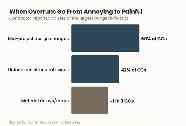
A modest overrun often comes from ordinary price drift: a tile pattern that costs slightly more per square foot than the initial allowance, a plumbing fixture upgrade, a few extra hours of labor. A 30%-plus overrun almost always traces back to something structural, either literally or in how the project was planned. Consumer Reports’ research into renovation budgeting found that 42% of general contractors identify unforeseen structural damage, problems hidden behind walls, under flooring, or beneath a foundation, as the leading cause of major scheduling and cost blowouts, and structural surprises are exactly the kind of finding that can’t be partially addressed. Once a contractor finds rot, outdated wiring, or a foundation issue, the project scope changes, and it changes for the whole budget, not just a line item.
Mid-Project Changes Are the Other Major Driver
The largest single factor Consumer Reports identified wasn’t a hidden defect at all: 60% of general contractors said the biggest mistake they see homeowners make is changing their mind mid-construction. A change that seems small in the moment, a different faucet finish, a wall moved six inches, an extra outlet added after drywall is up, forces re-work on every trade scheduled after that decision. On a project with five or six trades sequenced back to back, a single change made after materials are ordered and labor is scheduled doesn’t just cost the price difference between option A and option B; it costs the re-scheduling, the re-ordering, and often the original materials that now can’t be returned.
Older Homes Carry More of the Risk
The renovation projects most likely to land in the 30%-plus category tend to involve older housing stock, and there’s more of it every year: the median owner-occupied U.S. home is now 42 years old, up from 31 in 2005, and homes at least 45 years old climbed from 39% to 47% of the market between 2014 and 2024, according to NAHB’s Eye on Housing analysis. Older homes are more likely to hide the kind of structural surprise that turns a moderate overrun into a severe one, since electrical, plumbing, and framing decisions made decades ago frequently don’t meet current code and only surface once a wall comes down.
Materials Are the Third Point of Failure
Rounding out the causes, Consumer Reports found nearly a third of contractors reported project delays tied to damaged shipments or incorrectly ordered materials, each incident adding both direct replacement cost and idle labor time while a corrected order is placed and shipped. On a tight schedule, a single wrong-sized cabinet or a damaged countertop slab can stall an entire project for weeks, during which a contracted crew is either paid to wait or reassigned and has to be re-scheduled later, both of which show up as cost.
This severity split also helps explain a related figure from the same Angi report: 92% of professionally hired projects finished at or above their original estimate in the first place, meaning the 30%-plus group isn’t a fringe outcome layered on top of a mostly well-behaved category. It’s the tail end of a distribution where coming in on budget is already the exception. A homeowner comparing two contractor bids has almost no way to tell in advance which project will land in the “slightly over” majority and which will land in the roughly one-in-three group facing a genuinely different final number.
None of these causes are things a homeowner can fully budget around in advance, which is precisely why a standard piece of renovation advice, setting aside a contingency fund on top of the quoted price, keeps showing up in project planning even though most people ignore it until the first surprise hits. The pattern across every driver here, structural damage, mid-project changes, and material problems, is that severe overruns don’t come from bad estimates. They come from information that simply wasn’t available when the estimate was written.
Leave a Reply