
Ninety-two percent of homeowners who recently hired a professional for a home project finished at or above their original budget, and 43% blew past their initial estimate entirely, according to Angi’s 2026 State of Home Spending Pulse. Hiring a pro is supposed to be the safe, predictable option compared with DIY, the version of the project where someone experienced is pricing the job correctly from the start. The data says that safety is mostly an illusion. Almost every professionally managed renovation costs at least a little more than planned, and for a large minority, “a little more” turns into a materially different number by the time the crew packs up.
Budgets Aren’t Really Estimates Anymore
A 92% overrun rate doesn’t leave much room to call these numbers estimates in any meaningful sense. When the overwhelming majority of a category comes in at or above the quoted price, the initial number functions more like a floor than a prediction, the amount you can be confident you’ll spend at minimum rather than a number with real odds of landing on either side. Angi’s own report frames current homeowner behavior as increasingly practical in response: 63% of recent pro-hirers completed maintenance work rather than discretionary upgrades, and 58% completed a repair within the past month, a pattern the report ties to homeowners prioritizing essential fixes over big remodels as costs climb.
What’s Driving the Gap
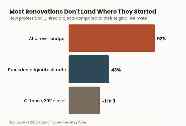
Separate research from Consumer Reports on renovation budgeting points to where that overrun typically originates. In a survey of homeowners and contractor interviews, 60% of general contractors said the single biggest mistake they see clients make is changing their mind mid-construction, whether that’s swapping a fixture, adding a room feature, or reworking a layout after demolition has already started. Another 42% of contractors named unforeseen structural damage, problems that only become visible once walls or flooring are opened up, as the leading cause of schedule and cost overruns. Material issues compound both: nearly a third of contractors in the same research reported delays tied to damaged shipments or incorrect orders, each one adding replacement costs and lost days to the schedule.
Kitchens and Bathrooms Carry an Outsized Share
Consumer Reports also found that kitchens and bathrooms alone account for more than $30 billion in annual U.S. renovation spending, more than every other room in the house combined, which means the rooms getting the most investment are also the rooms with the most trades stacked on top of each other: plumbing, electrical, cabinetry, tile, and appliances all touching the same square footage. That density is exactly what makes a mid-project change expensive. Swap a faucet finish after the plumber has already roughed in supply lines, or decide a wall needs to move after cabinets are ordered to a specific dimension, and the “small” change ripples through every trade scheduled after it.
Even Careful Homeowners Are Landing Over Budget
What makes the 92% figure notable isn’t that overruns happen; it’s that they’re happening to homeowners who did the “right” thing by hiring licensed professionals instead of gambling on DIY. A separate Consumer Reports survey of more than 1,000 homeowners found 29% said their renovation took longer than expected, a delay that almost always shows up on the final invoice as extra labor days, extended equipment rental, or a contractor’s crew getting pulled to another job and coming back later at a higher rate.
Affordability Pressure Is Shaping the Response
Angi’s report also captured what would actually move the needle for homeowners who are delaying projects: 59% said cheaper materials would make them more likely to act, and 54% pointed to lower inflation, both squarely outside any individual homeowner’s or contractor’s control. That helps explain why 23% of homeowners who’d been putting off a project said an emergency repair ultimately jumped the queue ahead of it; when nearly every discretionary project is priced with built-in uncertainty, the projects that finally get greenlit tend to be the ones that stopped being optional. It’s a rational response to an environment where the quoted number and the final number are, for 92% of people, two different figures.
The throughline across this data is that a home renovation budget is really a starting bid in a negotiation with reality, one where structural surprises, material logistics, and a homeowner’s own second thoughts all get a vote in what the project actually costs. Hiring a professional narrows the range of outcomes. It doesn’t close it.
Leave a Reply