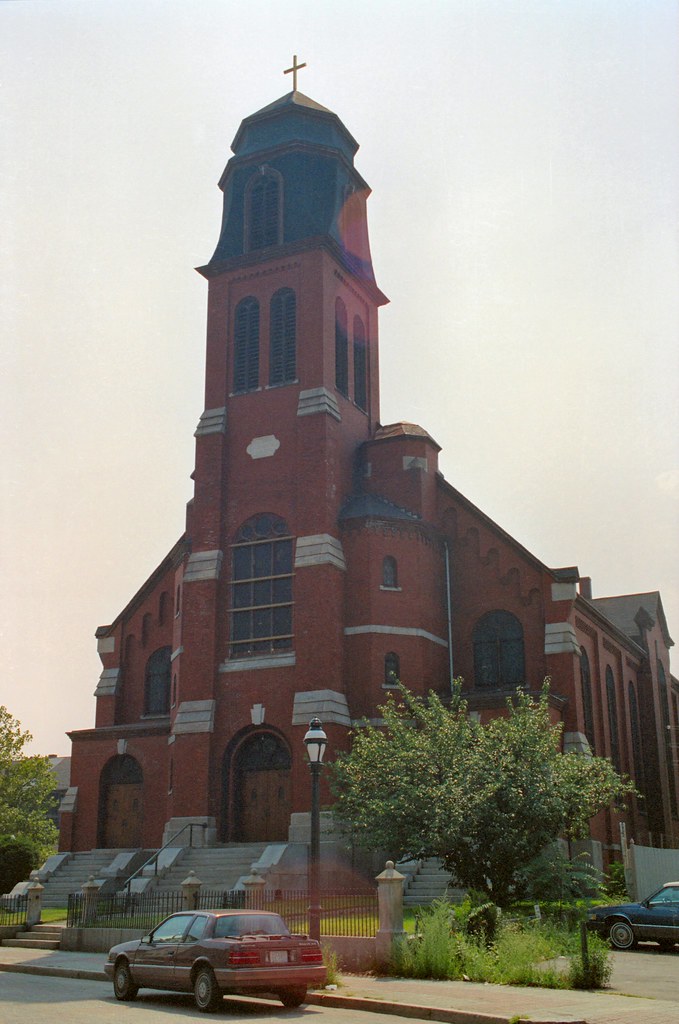
For more than a century, the building at 255 Washington Street in downtown Binghamton has changed identities more than once without ever really leaving. It opened in 1917 as Kalurah Temple, later served as a temporary home for the forerunner of SUNY Broome Community College in the early 1950s, and by 1957 had become a house of worship again as First Assembly of God, eventually rebranded as City Church. When City Church moved out to a former shopping complex on Main Street in September 2025, the century-old building sat empty, and after failing to sell at its original million-dollar asking price, it’s now headed to online auction with a starting bid of just $150,000.
A building most locals assumed was permanently stuck
A landmark this size sitting vacant in a downtown core tends to become part of the local scenery, the kind of building people stop noticing is actually for sale. City Church listed the property for roughly $1 million after relocating, a price that reflected the building’s scale and landmark status more than what the local market was actually willing to pay for a century-old temple with no obvious next use. The city’s own landmark listing describes it as “one of the most outstanding structures in the City,” a designation that speaks to its architectural value but does nothing to make redevelopment cheaper or easier. Downtown Binghamton has been working for years to fill vacant storefronts and upper floors left behind as regional retail and industry contracted, and a landmark-status building sitting dark for a full year sends exactly the wrong signal to anyone considering investing nearby.

From a million-dollar ask to a $150,000 starting bid
Roughly a year after the building emptied out, it’s headed to an online auction handled by Marcus and Millichap, with bidding scheduled to begin June 22, 2026, according to WNBF. A $150,000 starting bid on a property that once carried a seven-figure price tag is a steep drop, but auctions for large, single-use historic buildings often work this way: the opening number exists to generate interest and competitive bidding rather than to reflect what the seller actually expects to walk away with. It’s also a far more realistic entry point for a broader range of buyers, including smaller developers or preservation-minded groups who would have been priced out entirely at the original ask. Marcus and Millichap markets these online auctions nationally rather than just to local buyers, which widens the pool considerably beyond whoever happened to drive past the building and wonder what was inside.
Not the first big property to change hands nearby
This isn’t the only piece of City Church’s former real estate portfolio moving through the market. In May 2024, the Family Enrichment Network purchased two other City Church properties along with adjoining parking lots for $2.5 million, a transaction that suggests there is real institutional appetite for property in this part of downtown Binghamton, even if the temple building itself has proven harder to place. That prior sale also underscores that the neighborhood isn’t struggling for buyers generally; it’s this specific building, with its scale and its narrower range of practical uses, that needed a very different pricing approach to move.
Why the low starting bid is the actual headline
A building constructed in 1917 as a fraternal temple, repurposed for higher education, and then run as a church for roughly seven decades has already proven it can be reused more than once. The auction format, rather than a traditional listing, suggests the ownership group concluded that finding the right buyer required opening the door wider rather than holding out for a number closer to the original ask. For a city working to keep its downtown core occupied and active, seeing a landmark building move through a real transaction process, even at a steep discount from where it started, beats another year of it sitting dark. Whoever wins the June auction will inherit both a genuinely distinctive piece of architecture and the practical headache of figuring out what a century-old temple actually becomes next. Given the building’s history of shifting uses roughly every few decades, from fraternal temple to classroom space to sanctuary, there’s a reasonable argument that reinvention is simply what this particular address does, and the auction is just the next chapter rather than a last resort.
Leave a Reply