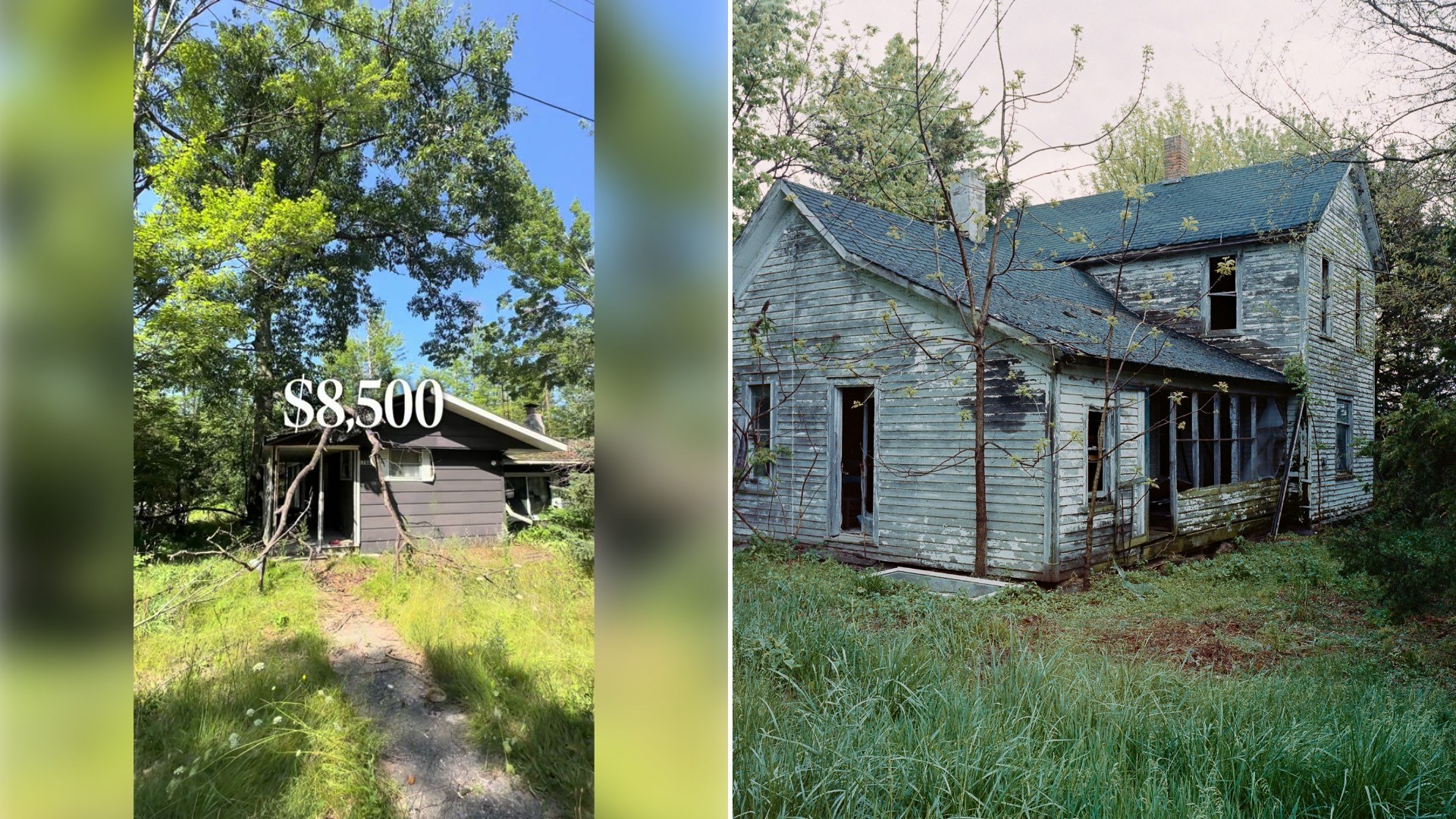
A couple stands in front of a heavily overgrown, run-down house they just won at a tax auction for $8,500, explaining the purchase and beginning to plan out what it will cost to bring the property back to livable condition. It’s a small story on its face, but it’s told with enough specificity, real numbers, real rooms, real reactions, that it ends up saying something bigger about how people actually live.
The footage leans on specifics rather than vague gestures, exact figures, exact rooms, exact before-and-after beats, and that attention to detail is exactly what keeps a clip like this from blurring together with the dozens of similar videos competing for the same scroll.
@kristin_fletcher Now the real question is, how much is it going to cost us? 🤫 #fixerupper ♬ original sound – Fletch and Kristin
As @kristin_fletcher shows it, the appeal isn’t really about the size of the number or the scale of the transformation on its own, it’s about the willingness to document the process honestly, warts and all, instead of only posting the polished result once everything was already finished.
A tax auction sale is a fundamentally different transaction than a standard real estate purchase, and that distinction is doing a lot of quiet work in this video. These properties typically end up at auction because a previous owner stopped paying property taxes, which means the home has usually sat neglected, sometimes for years, well before the overgrowth in this particular yard ever took hold. The $8,500 price tag isn’t a bargain in the usual sense; it’s a reflection of exactly how much deferred maintenance and legal complexity comes attached to a property nobody wanted to keep current on.
Buying at a tax auction also comes with risks that a conventional home sale doesn’t carry, since many jurisdictions sell these properties with limited or no interior inspection beforehand, no guarantee against existing liens, and sometimes a redemption period during which a previous owner can still reclaim the property by paying back taxes. None of that complexity shows up in a thirty-second clip, but it’s the invisible backdrop against which this couple’s low purchase price actually makes sense.
The gap between the $8,500 purchase price and whatever the eventual renovation budget turns out to be is really the entire story here, more than the auction win itself. A property can be won for next to nothing and still end up costing six figures to make livable, depending on the state of the plumbing, electrical, and structural systems hidden behind that overgrown yard, which is exactly the uncertainty the caption’s “how much is it going to cost us” line is gesturing toward.
Couples who take on a property like this together are also taking on a specific kind of shared risk that a solo renovation project doesn’t carry in quite the same way. Every unexpected cost becomes a joint decision, every delay becomes a shared frustration, and the relationship itself becomes part of what’s being tested alongside the house, which is part of why so much of this genre of content centers on couples rather than individual flippers.
For anyone considering a tax auction purchase themselves, the unglamorous first steps this couple is clearly about to face, getting a proper inspection after the fact, pulling permit history, budgeting for the worst-case scenario on major systems, are the parts of the process that rarely make it into a viral clip but that ultimately determine whether a deal like this turns out to be a bargain or a money pit. Experienced auction buyers often budget as if every major system, roof, foundation, electrical, plumbing, will need full replacement, treating any system that turns out to be salvageable as a pleasant surprise rather than something they counted on from the start.
Tax auctions have become their own small corner of real estate content precisely because the entry price looks so dramatically different from a traditional listing, and that gap between sticker price and reality is exactly what pulls viewers in. A conventional buyer scrolling listings in the same market might see nothing under six figures, which makes an $8,500 purchase read almost like a typo until the overgrown yard and the unknown interior condition put the number back in context.
There’s also a practical lesson in here for anyone drawn to the idea of a tax auction purchase without fully grasping what it entails. The due diligence that a traditional home sale builds in automatically, inspections, title searches, seller disclosures, either doesn’t exist or has to be pursued separately and aggressively at auction, which means the kind of couple who succeeds at this isn’t just lucky, they’re usually the kind who did the unglamorous legal homework before ever showing up to bid.
Comment sections under a reveal like this one tend to fill quickly with viewers asking the same practical questions: what state or county this was, whether the previous owner had any recourse, and what the first renovation priority is going to be once the legal dust settles. That specificity in the questions says something about how seriously people take the financial mechanics behind a clip like this, even when the overgrown yard is what initially stopped the scroll.
Whatever this particular house ends up costing to finish, the video has already done the more interesting work of showing viewers what a genuinely cheap home purchase actually looks like in practice, overgrown yard, uncertain condition, and all, rather than the sanitized version of a “deal” that usually gets marketed online.
Leave a Reply