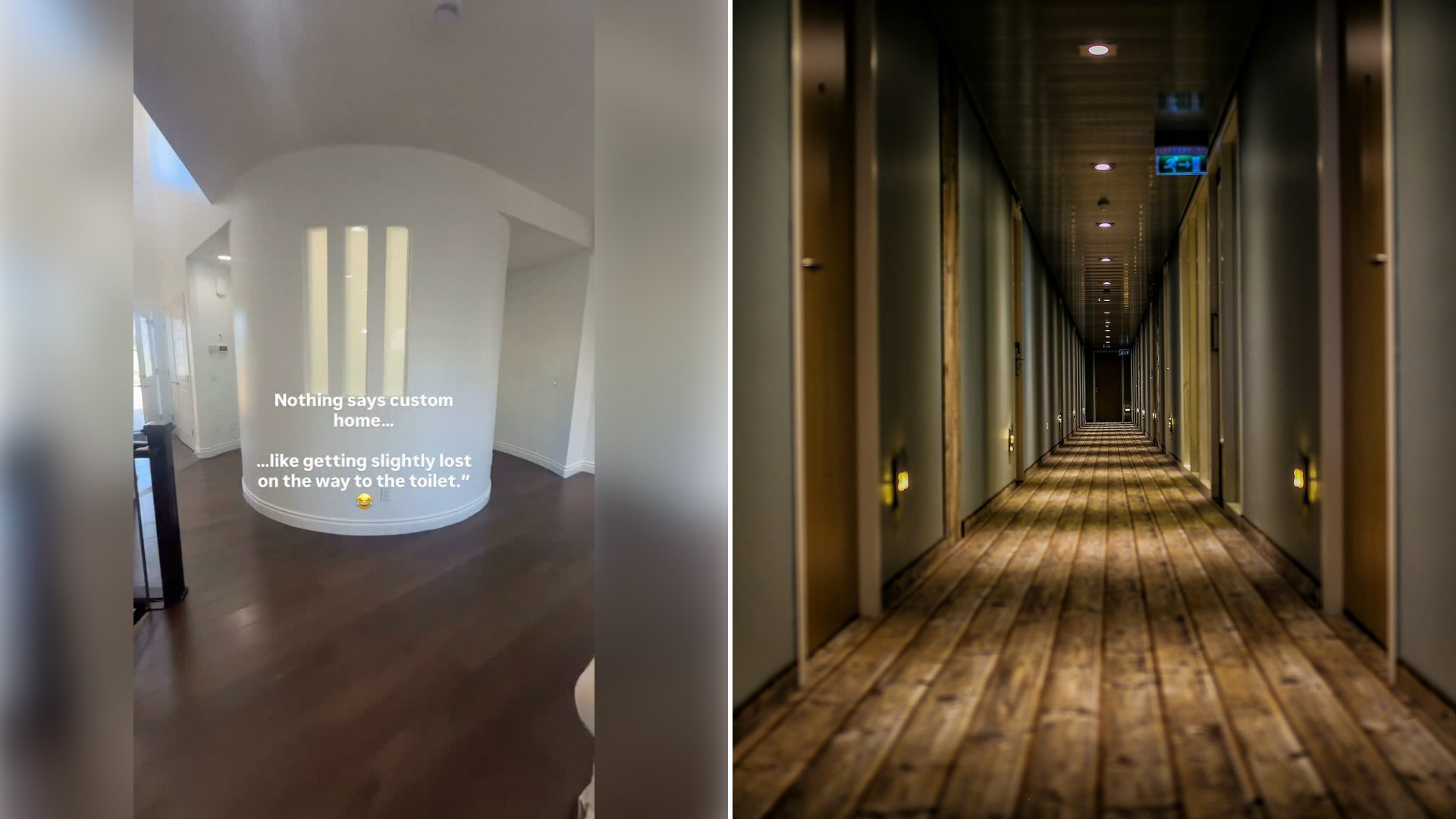
A real estate agent walks a winding, architecturally elaborate hallway in a listing, building suspense with on-screen text about a “custom home” before the walk ends at a toilet — the punchline being how impractical the layout is despite the home’s high-end finishes. It’s a small story on its face, but it’s told with enough specificity, real numbers, real rooms, real reactions, that it ends up saying something bigger about how people actually live.
The footage leans on a single, specific, walkable path rather than a quick cut from room to room, and that choice to let the hallway’s actual length play out in real time is exactly what keeps the punchline from feeling exaggerated once the toilet finally comes into frame.
View this post on Instagram
As @louisejamesrealestate frames it, there’s no attempt to smooth over the messier parts of the story, and that candor is a large part of why the post has resonated with people well beyond the creator’s usual audience.
What makes the hallway itself worth filming is the sheer amount of square footage spent getting somewhere. A winding, architecturally elaborate corridor photographs beautifully in a listing, all curves and sightlines and custom millwork, but square footage spent on circulation space is square footage not spent on a bedroom, a closet, or a second living area, and that tradeoff rarely gets mentioned in a listing description that’s busy selling the drama of the design instead.
Realtors who film walkthroughs like this one occupy an interesting position: they’re paid to help a home sell, which usually means highlighting strengths, yet a video built around a layout’s biggest weakness still works in their favor, because it signals an agent willing to be straight with buyers rather than one who only shows flattering angles. That kind of candor tends to build more trust with an audience than a purely aspirational tour ever could.
“Custom” is a word that gets used loosely in real estate marketing, often standing in for expensive rather than well-planned. This hallway is a useful illustration of the gap between those two things: a huge amount of design attention clearly went into the curve, the finishes, and the proportions of the space, but comparatively little went into asking whether a long, winding approach to a bathroom actually serves anyone living in the house day to day.
Floor plan flow is one of those details that’s nearly impossible to evaluate from listing photos alone, since a photographer can make almost any room look good with the right lens and lighting, but a hallway’s actual length, and how often someone has to walk it, only becomes obvious once you’re standing in it or, in this case, watching someone else walk it in real time.
For buyers touring custom or architect-designed homes, the lesson embedded in this clip is less about avoiding winding hallways specifically and more about asking a simple question before falling for a dramatic design element: what did this choice cost in terms of the rooms and function that could have existed in that same footage instead.
Comment sections under videos like this tend to split between people admiring the hallway’s design and people doing quick mental math on how many steps a trip to that particular bathroom would require at two in the morning, a split that captures exactly the tension the video is built around: a space that’s visually striking and, depending on who’s living there, a little impractical to actually use.
Whatever this particular listing sells for, the clip has already done something a static photo tour couldn’t: it gave prospective buyers a genuine sense of what moving through the house actually feels like, drama, impracticality, and all.
There’s a broader pattern worth noting in homes built with this kind of architectural flourish, where a single dramatic gesture, a sweeping staircase, an oversized foyer, a winding hallway, gets prioritized during the design phase without much thought given to how often an occupant will actually traverse it. Those choices tend to look spectacular in renderings and listing photos, precisely the moment when a buyer’s decision is most likely to be made on feeling rather than function, and only reveal their practical cost once someone is actually living with them day after day.
It’s also worth considering who a layout like this one was originally designed for. A hallway built for visual drama rather than convenience often signals a home designed primarily to impress visitors passing through rather than to serve the people living there daily, a distinction worth paying attention to for any buyer trying to tell the difference between a house built to be shown and a house built to be lived in.
For agents filming content like this, there’s also a quiet lesson about what actually earns engagement. A straightforward listing video showing every room in sequence rarely generates the same reaction as one built around a specific, almost absurd detail, which suggests that buyers respond less to comprehensive information and more to the kind of memorable, slightly ridiculous specifics that make a house easy to describe to a friend afterward. A thirty-second clip built around one genuinely odd detail will almost always outperform a dutiful, room-by-room tour, simply because it gives people something specific to repeat, and a “walk to the toilet” is exactly the kind of specific that sticks.
Leave a Reply