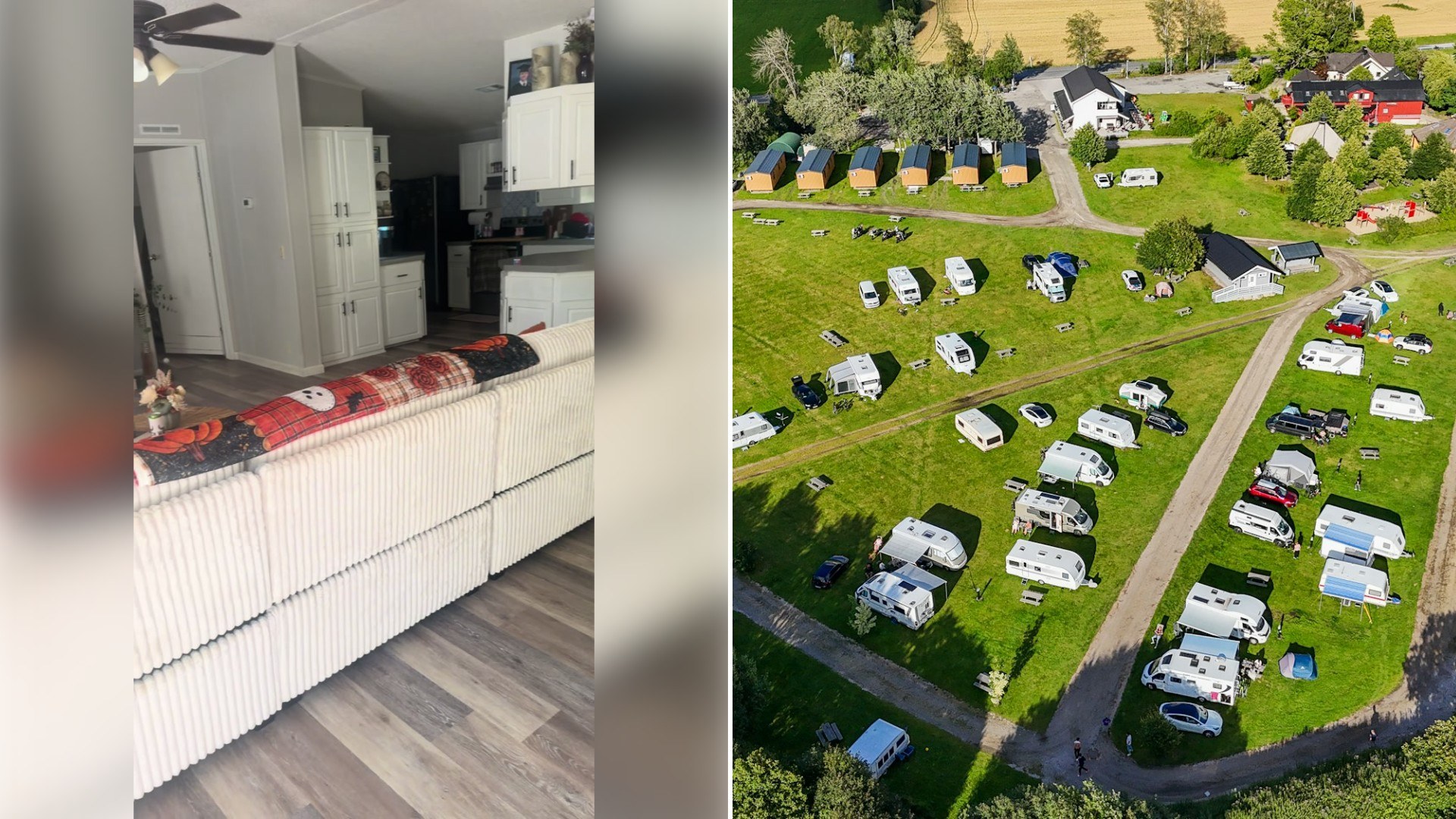
After being mocked for buying a secondhand double-wide mobile home, a creator documents the full interior renovation, cutting from the dilapidated original condition to the finished, updated home as a clapback to the initial criticism. It is the kind of clip that stops a scroll not because of a dramatic twist, but because of how ordinary its starting point is, right up until the moment everything changes on camera.
Clapback renovation content works on a slightly different engine than a standard before-and-after, since the emotional payoff depends as much on the mockery being referenced as it does on the finished space itself. A viewer who never saw the original criticism still gets the gist instantly from the caption, which does the work of setting up exactly what the reveal is supposed to silence.
@hayfi_ yep sure did 😮💨 #doublewide #mobilehome ♬ original sound – rand6m11
As @hayfi_ frames it, there’s no attempt to smooth over the messier parts of the story, and that candor is a large part of why the post has resonated with people well beyond the creator’s usual audience.
Double-wide mobile homes occupy a strange place in the broader housing conversation, often dismissed sight unseen by people who’ve never actually set foot in a well-maintained one. A double-wide typically offers close to the square footage of a modest site-built ranch house, assembled from two manufactured sections joined on site, and the stigma attached to that construction method has more to do with decades-old assumptions than with what a renovated unit can actually look and feel like once the work is done.
The “mocked for buying it” framing in the caption points to a specific and fairly common experience among manufactured-home buyers: the assumption, often voiced by friends or family before anyone has seen the property, that a mobile home purchase represents a step down rather than a deliberate, often financially savvy choice. Manufactured housing typically costs a fraction per square foot of comparable site-built construction, which can make it one of the few realistic paths to homeownership in markets where traditional house prices have climbed out of reach for a lot of first-time buyers.
Renovating a double-wide comes with its own specific set of considerations that don’t map directly onto a typical site-built remodel. Manufactured homes are built on a steel chassis with construction methods and materials standardized under federal HUD code rather than local building codes, which affects everything from how walls can be opened up to what kind of flooring and fixtures hold up best over time. Interior walls in older manufactured homes are also more likely to be load-bearing in places a site-built house wouldn’t be, which means a renovator has to be more careful than usual before knocking anything down, even a wall that looks purely cosmetic.
What tends to make the biggest visual difference in a mobile home renovation, and likely accounts for a lot of the “silences every critic” reaction this video is getting, is updating the elements that read as most dated at a glance: fixtures, flooring, and paneling. Swapping out dark, narrow paneling for painted drywall or a lighter finish alone can transform how a space reads, and updated lighting and flooring tend to erase the visual cues that make an older manufactured home immediately identifiable as one, even before any structural changes are made.
There’s also a financial logic behind choosing to renovate rather than walk away from a secondhand double-wide, one that the mockery in the caption seems to misunderstand. A well-built manufactured home with good bones, sound flooring, intact plumbing, a solid roof, can often be transformed for a fraction of what an equivalent renovation would cost in a site-built house, simply because the base purchase price was so much lower to begin with. That math tends to be invisible to critics reacting to the idea of a mobile home in the abstract, rather than to the specific unit and its actual condition.
Financing and insurance are two areas where manufactured housing genuinely does diverge from a conventional purchase, and they’re worth understanding before anyone follows this creator’s path. Some lenders treat a manufactured home titled as personal property differently than one permanently affixed to owned land, which can affect loan terms, and insurers typically price a manufactured-home policy using its own separate underwriting criteria rather than a standard homeowner’s policy. None of that makes a double-wide a bad buy, but it does mean the paperwork side of the purchase deserves the same attention this creator clearly gave the renovation itself.
Community lot fees are another detail that rarely comes up in a renovation reveal but can shape the overall cost picture of owning a double-wide over time. A unit placed in a manufactured-home community typically carries a monthly lot rent on top of the purchase price, covering shared amenities, road upkeep, and sometimes utilities, which is worth budgeting for separately from the renovation itself. Buyers who place a double-wide on owned land instead sidestep that monthly fee entirely, trading it for property taxes and the upfront cost of the land, a tradeoff worth running the numbers on before assuming either path is automatically cheaper long term.
Mobile home renovation content in general has built a genuinely devoted online audience precisely because of moments like this one, a skeptical or dismissive reaction followed by a reveal that directly contradicts it. For viewers who’ve faced similar judgment about an affordable housing choice, watching someone else’s finished result land hard enough to shut down the criticism entirely offers a particular kind of vindication that a conventional renovation reveal, without the mockery as a setup, simply doesn’t carry.
Whatever came next for this particular double-wide, the before-and-after already did the real work of the clapback, letting the finished space answer the critics more effectively than any caption could on its own.
Leave a Reply