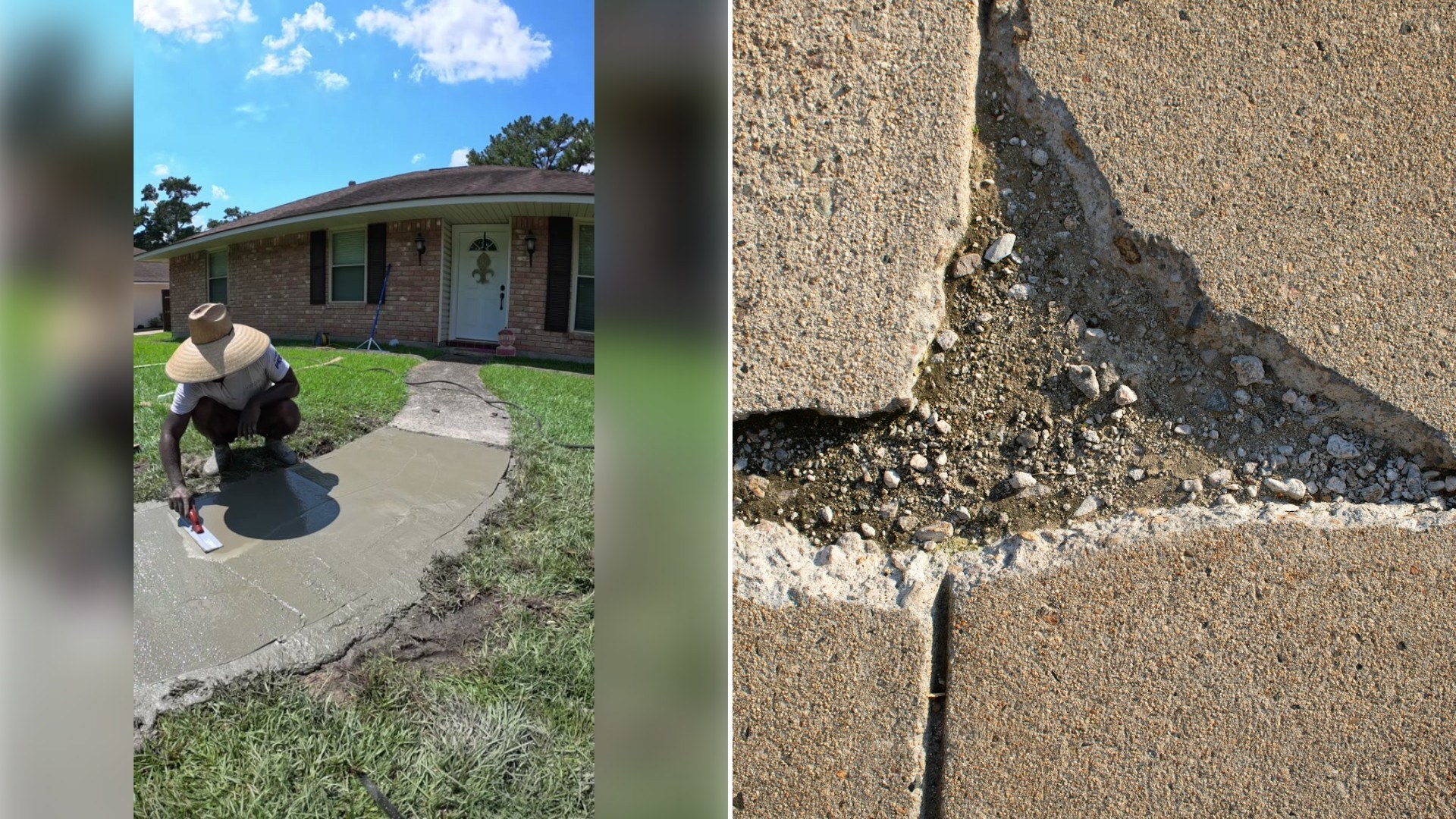
While out walking, a creator notices a neighbor’s badly cracked sidewalk and decides on the spot to fix it himself, documenting the process of mixing and pouring concrete to repair the walkway as an unprompted act of neighborliness. The video works less like a highlight reel and more like a short, honest documentary, the kind that earns its ending by actually showing the unglamorous steps that led there.
Fixing a stranger’s sidewalk on impulse, with whatever tools and materials happened to be on hand that day, is a meaningfully different gesture than planning a repair in advance. There’s no quote, no scheduled appointment, just someone noticing a hazard mid-walk and deciding the fix was worth doing right then rather than mentioning it to the homeowner and moving on.
@unclejhonnI just poured a DIY walkway because I ain’t have never else to do.
As @unclejhonn frames it, there’s no attempt to smooth over the messier parts of the story, and that candor is a large part of why the post has resonated with people well beyond the creator’s usual audience.
Concrete work in particular tends to perform well in this corner of content because the transformation is immediate and visible within the length of a single clip, unlike a renovation that stretches over weeks or months. Viewers get to watch a cracked, uneven slab become a smooth, freshly poured walkway in something close to real time, which gives this kind of footage a built-in before-and-after payoff that slower, more involved projects simply can’t replicate as cleanly.
It’s worth remembering that what makes it onto a feed is almost always a fraction of the full story behind a home. The permits, the contractor calls, the returned materials, the arguments over paint swatches, none of that survives the edit, and what’s left is a condensed version that trades completeness for clarity, choosing the handful of beats that actually read on a small screen.
Homeownership content like this also functions as a kind of informal education for an audience that might never otherwise see the inside of a renovation in progress. For a lot of viewers, especially those who rent or haven’t yet bought a first home, these clips are the closest thing to a hands-on tutorial in what a given project actually costs, how long it actually takes, and what it actually looks like while it’s underway.
A cracked public sidewalk technically falls under a patchwork of responsibility that varies by city, sometimes the homeowner, sometimes the municipality, and that ambiguity is often exactly why a hazard like this one can sit unrepaired for years. Nobody wants to pay to fix a problem that might not even be theirs to fix, which is part of what makes a stranger simply deciding to handle it feel notable.
Sidewalk cracks this severe usually aren’t just cosmetic, uneven slabs are one of the more common causes of trip-and-fall injuries in residential neighborhoods, particularly for older pedestrians or anyone pushing a stroller. A repair like this one is solving a safety problem as much as an aesthetic one, even though the caption frames it almost entirely as a way to kill time.
For viewers scrolling past a clip like this one for the DIY value rather than the feel-good angle, the real substance is in the technique shown, how the old cracked slab gets broken out or built over, how the forms get set, how the fresh pour gets leveled and finished, details that matter more to someone planning their own repair than the backstory of why this particular sidewalk got fixed.
The off-the-cuff tone of the caption, “I just poured a DIY walkway because I ain’t have never else to do,” undercuts the generosity of the gesture itself, framing an unprompted repair job as little more than a way to pass an afternoon rather than the kind of good deed that would usually be announced with more fanfare.
Pouring concrete correctly is not a casual task, even for someone experienced with basic home repair. The work requires precise measuring of the forms, timing the pour before the mix begins to set, and then waiting through a curing period that can stretch well beyond the length of any video, which is part of why most sidewalk repairs are left to professionals or to a municipal crew rather than tackled by a passerby on a whim.
Small, unprompted acts of repair like this one tend to land differently than renovation content built around a homeowner’s own property, because there’s no personal stake in the outcome beyond the satisfaction of having fixed something that was bothering a neighbor. That absence of self-interest is often exactly what audiences respond to, even when the actual skill on display, mixing and finishing a usable concrete surface, is just as demanding as any paid job.
Neighborhood maintenance of this kind, a cracked sidewalk, an overgrown hedge, a fence that’s started to lean, rarely gets addressed until someone decides it’s worth the effort regardless of whose property line it technically falls on, and clips like this one tend to resonate because they capture that decision being made in real time rather than being talked about after the fact.
A gesture this small costs relatively little in materials, a bag or two of ready-mix concrete runs a fraction of what hiring a contractor for the same patch job would, which is part of why a video like this one tends to generate as many “I should do this for my own street” comments as it does simple appreciation for the finished result.
Whatever prompted this particular walk to turn into an impromptu repair job, the clip has already made its point without needing to say it outright: sometimes the easiest way to fix a problem nobody else is going to fix is just to start mixing the concrete yourself.
Leave a Reply