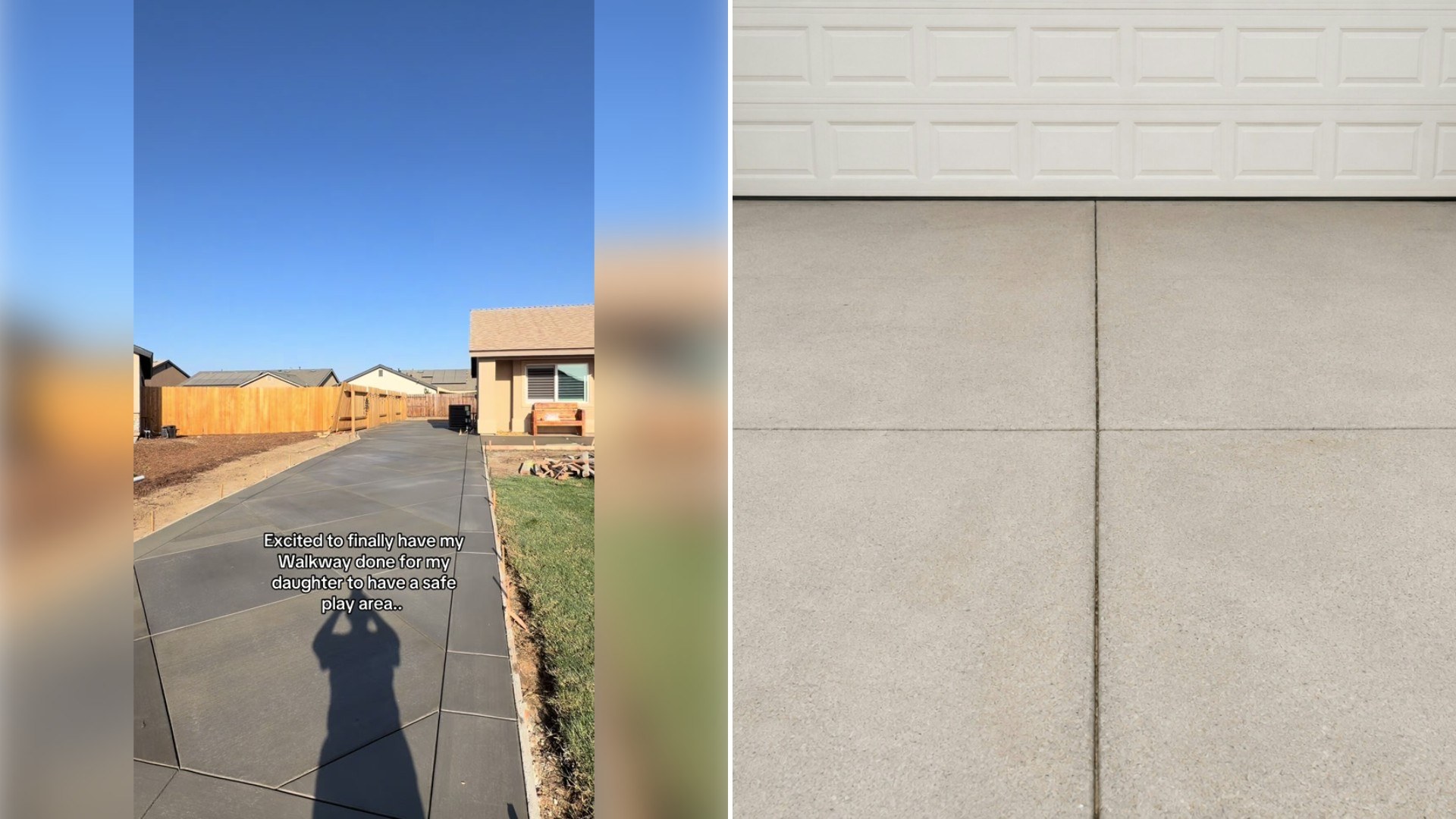
A homeowner in McFarland, California pours a new concrete walkway/driveway extension for her daughter’s play area, only to have a city building inspector arrive days later on her Ring doorbell camera with a “Stop Work” red tag, claiming the third-car driveway isn’t permitted — even though it had already been poured. The homeowner films neighboring houses with identical driveway extensions to argue she’s being unfairly singled out, and posts a lengthy statement accusing the inspector and city hall of targeting her family specifically. The video works less like a highlight reel and more like a short, honest documentary, the kind that earns its ending by actually showing the unglamorous steps that led there.
A stop-work red tag arriving on a Ring camera, rather than through a certified letter or a scheduled visit, changes the entire tone of an inspection encounter. The homeowner wasn’t present to respond in person, which means the first version of the story she could tell was built entirely from secondhand doorbell footage rather than a face-to-face exchange with the inspector.
@lllleslieeee It’s a complete joke. There’s plenty of more houses with the same style or even more concrete or driveways that people actually park cars on and ours is not intended for that reason why we did not put rebar under the walkway. But we are not being heard instead we are being laughed at by the girls in the city hall office which is so disrespectful and disgusting. Even more with this guy who is being racist to my partner & I and it’s not okay. I’ve NEVER felt like someone was being racist towards me or anyone in my life until now. I don’t appreciate it at all. Just because we are young does not mean we won’t stand up for ourselves. We won’t be bullied by anyone. City of McFarland DO BETTER. #fypシ゚viral #trending ♬ original sound – Noah
As @lllleslieeee shows it, the appeal isn’t really about the size of the number or the scale of the transformation on its own, it’s about the willingness to document the process honestly, warts and all, instead of only posting the polished result once everything was already finished.
Encounters like this one, caught partway through on a doorbell or phone camera, reportedly reflect the poster’s own experience of a brief and tense exchange, but the fuller context behind any official visit or on-site decision typically involves more back-and-forth than a short clip can capture, and it’s worth keeping that in mind.
The decision not to install rebar under the walkway, mentioned directly in the caption, is presented as evidence the homeowner never intended the extension to function as a true vehicle driveway in the first place. Rebar reinforcement is typically what separates a slab rated for regular car weight from one poured mainly for foot traffic, which is the exact distinction this dispute appears to hinge on.
There’s also a structural reason clips built around a single room, a single number, or a single surprise tend to travel further than more general home content. Algorithms on platforms like Instagram and TikTok favor the kind of clear payoff a viewer can process at a glance, and a video with one obvious before-and-after beat gives the platform exactly that kind of hook to push toward a wider audience.
Home-related content occupies a strange place in the broader landscape of viral video, sitting somewhere between real estate marketing, personal diary, and a kind of modern folk storytelling about what it means to build or fix up a place to live. It’s rarely the most polished content on a feed, but it’s often the most durable, since a finished room or a solved problem doesn’t go out of style the way a trend-driven dance or meme does.
Part of what keeps audiences coming back to this kind of footage is the sense that they’re watching a decision get made in something close to real time, rather than being handed a tidy conclusion after the fact. Even a short clip carries traces of the uncertainty that surrounded the choice when it was first made, and that uncertainty is exactly what a heavily edited, fully resolved story tends to lose.
Filming neighboring houses with what the homeowner describes as identical driveway extensions is a specific kind of evidence-gathering, the sort of comparison that’s easy to show in a thirty-second clip but much harder to verify from the outside, since permit history for a neighboring property isn’t something a viewer scrolling past can check for themselves.
A municipal stop-work tag typically follows a specific process on the city’s end, a permit review, a field inspection, and a written notice, even when the resident’s experience of receiving it feels abrupt and informal. The gap between that formal process and how suddenly it can land on a homeowner’s door is part of what makes a moment like this feel so disorienting to the people living through it.
Comments sections on this kind of video tend to split in a familiar, almost predictable way, one group asking for specifics, cost breakdowns, contractor names, timelines, while another group simply reacts to the emotional beat of the reveal itself. Both responses point to the same underlying appeal, which is that the video manages to work on two levels at once, as both a piece of practical information and a small piece of storytelling.
It’s also worth remembering that platforms reward clips that resolve cleanly, even when the underlying situation is still ongoing. A video can capture a single tense visit from an official and still leave the larger dispute, and its eventual outcome, unresolved off camera, which means viewers are often reacting to a chapter rather than a conclusion, however definitive the footage might feel in the moment.
It’s worth pointing out how much a viewer’s own history shapes their read of a clip like this. Someone who has been through a similar dispute tends to watch with a very different eye than someone encountering the situation for the first time, filling in details from their own experience that the video itself never explicitly shows.
A disagreement over what a poured slab is actually rated for, foot traffic versus vehicle weight, is the kind of technical distinction that rarely makes it into a thirty-second caption, yet it’s often exactly the detail a permitting office is weighing when it decides whether a project needs a formal review before or after concrete goes down.
For anyone watching a dispute like this unfold without a resolution yet in hand, the more durable lesson isn’t the specific city or the specific tag color, it’s the reminder that a permit question caught after concrete has already cured is a far more expensive problem to untangle than the same question asked before the pour.
The exchange captured here has already done what this kind of footage tends to do, turn a private disagreement over a permit into a much more public conversation about how consistently a city enforces its own rules from one driveway to the next.
Leave a Reply