A home gym is supposed to be a space people look forward to using. For this homeowner, that feeling turned to dread fast once he realized something had been growing behind the walls of his gym this entire time, completely out of sight until it wasn’t anymore.
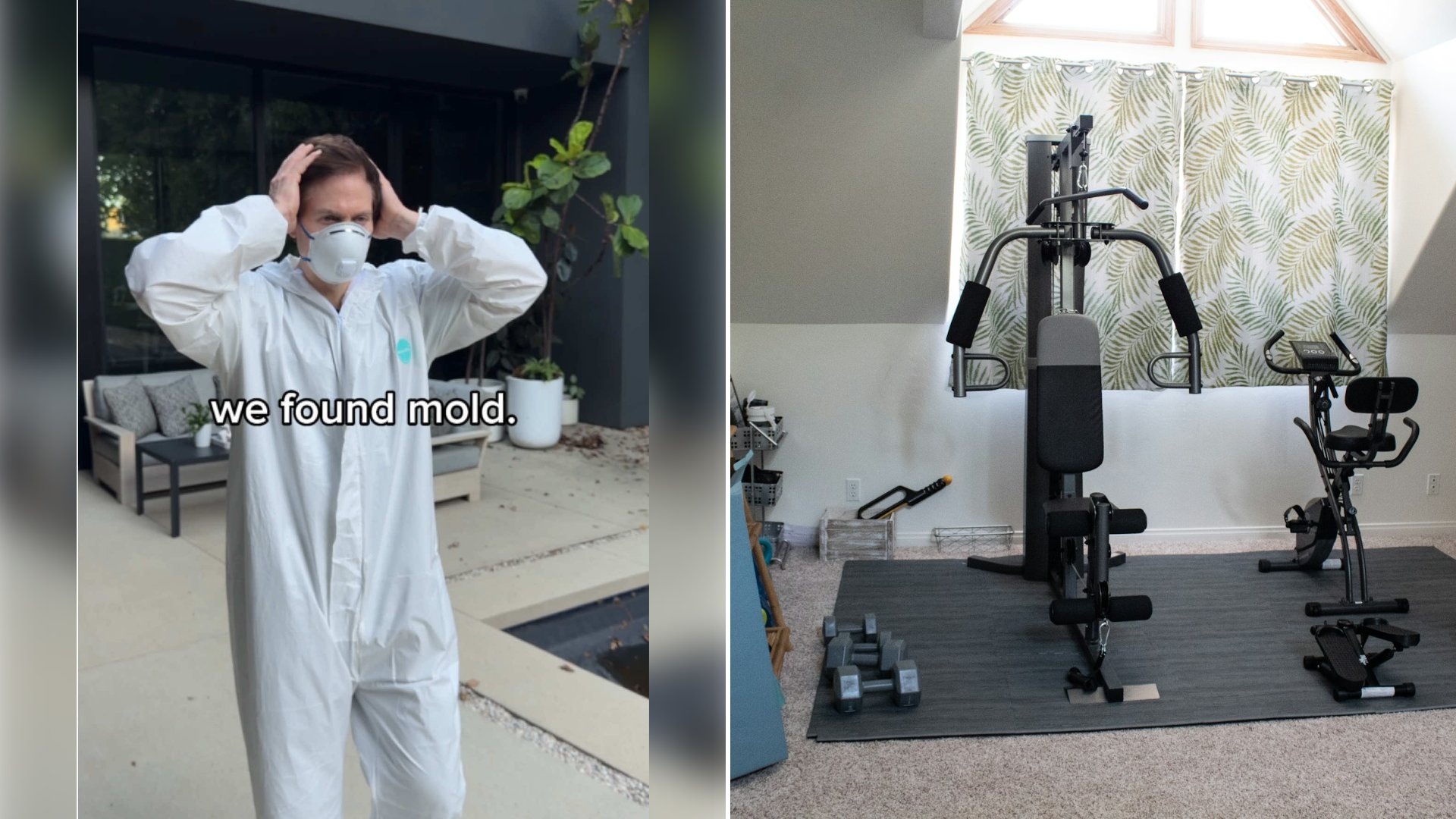
Creator @_bryan_johnson_ captured his own dramatic reaction to the discovery, then documented the removal of the damaged walls in full protective gear, gloves, a respirator mask, and sealed-off plastic sheeting, the kind of setup that makes clear this wasn’t a problem he could scrub away with a bottle of bleach and a paper towel.
@_bryan_johnson_
Hidden mold growth is one of the most common problems homeowners miss until it’s already extensive, largely because the early warning signs are easy to dismiss as something else entirely. A persistent musty odor in one specific area of a home, even without any visible staining, is often the first and most reliable sign that moisture is sitting somewhere it shouldn’t be. Discoloration on walls or ceilings, particularly yellow, green, or dark patches that seem to spread slowly over weeks or months, is another signal worth investigating immediately rather than simply repainting over.
Peeling or bubbling paint and wallpaper is frequently mistaken for a cosmetic issue, when it’s actually a sign that moisture is trapped behind the surface, creating exactly the damp, dark environment mold needs to spread. Homeowners and family members developing unexplained respiratory symptoms, coughing, sinus irritation, or allergy-like reactions that only flare up at home and ease elsewhere, is a less obvious but well-documented indicator that indoor air quality has been compromised by hidden mold growth, even when nothing is visibly wrong with the walls themselves.
Humidity is the root cause behind nearly all of these cases. Indoor relative humidity consistently above 60 percent creates ideal conditions for mold to take hold, and rooms that run warm and humid without adequate ventilation, exactly the profile of a home gym generating heat and sweat during regular workouts, are particularly vulnerable if moisture isn’t being properly vented out. A simple hygrometer placed in a higher-risk room can flag a humidity problem well before it turns into the kind of wall-opening remediation this homeowner is now stuck managing.
Once mold is confirmed behind drywall, removal has to be handled carefully to avoid spreading spores further through the home, which is exactly why the protective gear and plastic containment in this video aren’t overkill, they’re the standard approach. For any homeowner noticing even one of these early signs, addressing it immediately is far cheaper and far less disruptive than the full wall demolition this discovery ultimately required.
More from Willow and Hearth
- Mold Remediation Contractor Says a Landlord Left the Shower Running for Two Weeks and Shows Gutted Drywall, Tossed Doors and Trim and a Ceiling Fan Beyond Saving
- Home Inspector Jabs a Knife Into a Brick Wall and Says Painted Masonry That Stays Wet Turns to Butter, Then a Commenter Who Has Painted Brick for 25 Years Pushes Back
- U.S. Fire Administration Counts 27,900 Home Heating Fires in 2023 and Its Latest Cause Breakdown Points to Heat Sources Placed Too Close to Things That Burn
Leave a Reply