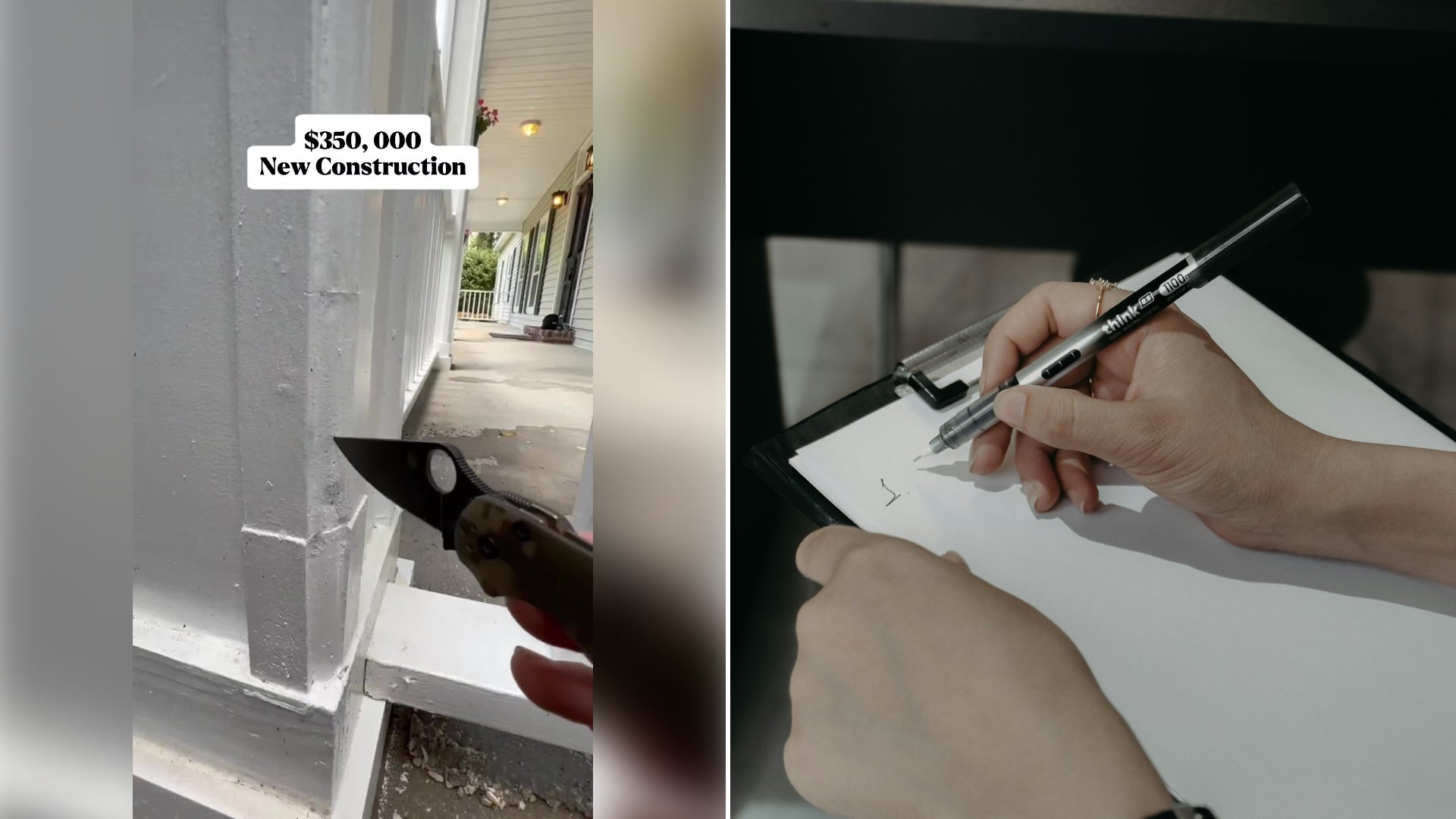
From the outside, the house looked like exactly what $350,000 should buy in new construction: crisp paint, new flooring, nothing obviously wrong. Home inspector @housecheckpro changed that impression in seconds with one simple test, pressing an ordinary knife into a section of wall and watching the blade sink straight in with almost no resistance.
@housecheckpro
The knife test is a simple, low-tech way inspectors check whether building material underneath a finished surface has lost its integrity. In a healthy wall, a knife blade meets real resistance almost immediately, whether it’s pressing into drywall over solid framing or into properly cured masonry. In this case, the blade met almost nothing, sinking in the way it would into wet cardboard, a sign that whatever is underneath that fresh paint has already been compromised, likely by trapped moisture that never had a chance to dry out properly before the finish work went on top of it.
For a home this new, that kind of hidden softness points to a construction sequencing problem: material installed while still wet, inadequate waterproofing before finishes were applied, or a moisture intrusion issue, like a roof or window leak, that started before the homeowner ever moved in and has been silently degrading the wall from the inside ever since. None of it is visible from a normal walkthrough, which is exactly why the visual appeal of fresh paint and new floors can be so misleading on a brand new build.
What It Costs to Fix Compromised Wall Material After the Sale
Repairing structurally compromised wall material discovered after closing is a markedly different financial proposition than catching it beforehand. When soft or water-damaged material like this is identified before a sale finalizes, it typically becomes part of the builder’s punch list, repaired under the original construction contract at no direct cost to the buyer. Once the sale has closed, the homeowner is generally left navigating the builder’s limited warranty, and workmanship issues like compromised finish material commonly carry a much shorter coverage window than structural defects, sometimes expiring within the first year of ownership.
If the warranty has lapsed or the builder disputes coverage, the homeowner is looking at an out-of-pocket repair that typically involves more than just patching the visible wall. A proper fix means cutting open the affected section, assessing how far the moisture damage extends into the framing, removing and replacing any compromised studs or sheathing, addressing whatever source let moisture in to begin with, and then rebuilding the wall finish from scratch. Remodeling cost guides commonly used by contractors put localized wall repair involving framing replacement in the range of several thousand dollars per affected section, and that figure climbs quickly if the moisture has spread to adjoining walls or the subfloor.
Buyers evaluating new construction, or any recently finished renovation, can protect themselves with a few concrete steps:
- Schedule an independent inspection before closing, specifically asking the inspector to check wall integrity in areas near plumbing, windows, and the roofline, where moisture intrusion is most common.
- Ask about the construction timeline, since material installed during wet weather without adequate drying time is a recurring cause of exactly this kind of hidden softness.
- Request documentation of any moisture barrier or waterproofing steps taken before finish work was applied.
- Get the builder’s warranty terms in writing before closing, noting precisely how long workmanship defects remain covered.
A knife that sinks into a wall with no resistance is about as clear a red flag as a buyer can get, and it’s exactly the kind of defect a pre-closing inspection is designed to catch before it becomes the new owner’s expensive problem to solve alone.
More from Willow and Hearth
- Home Inspector Jabs a Knife Into a Brick Wall and Says Painted Masonry That Stays Wet Turns to Butter, Then a Commenter Who Has Painted Brick for 25 Years Pushes Back
- Home Inspector Walks Through a 5000 Square Foot Abandoned House Where Finished Rooms Open Onto Piles of Lumber and Old Roofing and Warns It Gets Crazier the Longer You Watch
- Mold Remediation Contractor Says a Landlord Left the Shower Running for Two Weeks and Shows Gutted Drywall, Tossed Doors and Trim and a Ceiling Fan Beyond Saving
Leave a Reply