Homeowner @room_by_room_by_gv posted a September 21 video that captures the DIY experience with brutal honesty: the physical toll of installing her own flooring, delivered with the kind of self-deprecating humor that makes it instantly shareable. Her joke lands because it’s true for almost anyone who has attempted serious floor work — every dollar saved by skipping a contractor seems to come right back out the door in painkillers, heating pads, and sore knees.
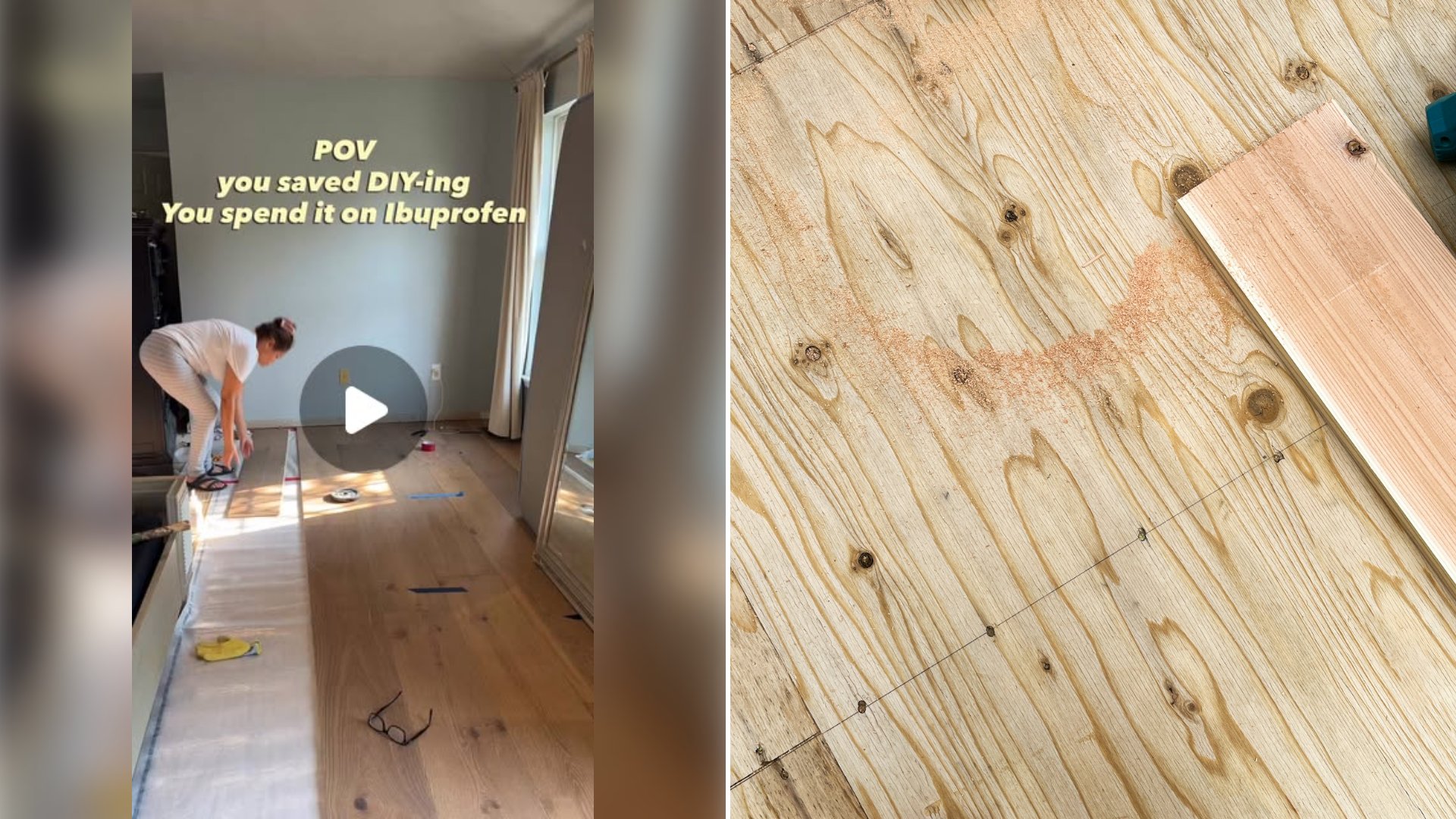
Her caption ties the joke specifically to going through perimenopause while DIYing, which adds a layer most home-improvement content skips entirely — the reality that physical recovery from a weekend of kneeling, cutting, and hauling materials looks different depending on age, hormones, and overall physical condition, not just how physically demanding the project itself is on paper. It’s a refreshingly specific angle in a genre that usually just shows the satisfying time-lapse and skips the part where the homeowner can’t stand up straight for three days afterward.
The underlying math of DIY flooring savings is real, even accounting for the physical cost. Professional flooring installation labor, separate from materials, typically runs $3 to $8 per square foot depending on the flooring type and region, according to pricing data regularly published by home improvement marketplaces. For a mid-sized room of around 200 square feet, that puts professional labor alone somewhere between $600 and $1,600, on top of whatever the flooring material itself costs. A homeowner comfortable handling the installation themselves keeps that entire labor line item in their own pocket, which is exactly the kind of savings that makes DIY flooring one of the more consistently popular home-improvement projects, even among people who don’t consider themselves especially handy.
What that savings calculation tends to leave out is the physical cost that videos like this one are putting front and center. Flooring work involves sustained kneeling and crouching, repetitive cutting and fitting, and often hours of work on hard subfloor before any cushioning goes down — the kind of physically repetitive strain that occupational therapists note disproportionately affects knees, lower backs, and wrists, especially for anyone tackling it over a single weekend rather than spreading the labor out. That strain doesn’t show up in a materials receipt, but it’s a real cost nonetheless, whether that cost is a trip to urgent care, a few days of over-the-counter pain relief, or simply a much slower following week than planned.
The practical lesson most contractors and physical therapists agree on isn’t to avoid DIY flooring altogether — it’s to budget time, not just money. Pacing a flooring project across several days rather than racing to finish it in one marathon session, using knee pads and a stool for low-level work, and taking regular breaks to stand and stretch all meaningfully reduce the physical toll without adding real cost to the project. For homeowners weighing the decision, the honest version of the math isn’t just materials versus labor dollars — it’s dollars saved versus days of recovery, and knowing that tradeoff going in tends to make the whole project a lot more bearable than finding out the hard way, one sore knee at a time.
More from Willow and Hearth
- Homeowners Pull Kitchen Cabinets Out of the Middle of the Room, Build IKEA Cabinets, Flip the Doors on a Fridge and Rework the Window Over the Counter
- Homeowner Quoted $18k by a Contractor for a Dining Nook Answers No Thanks I Got It and Builds the Bench, Cushions, Table and Hanging Plants in Five Steps
- Homeowner Who Calls Her 90s House Boring Whitens the Brick Front, Adds a Timber Covered Porch and Lays a Herringbone Brick Floor in a Three Minute Time Lapse
Leave a Reply