A homeowner who posts as @leonalifts on Instagram documented her own version of building a defense case against her HOA, one branch at a time. Facing a $1,000 fine over alleged tree branch clearance violations, she pulled out a tape measure and filmed herself methodically checking branch heights against her HOA’s stated rules, building a visual record meant to prove, before the dispute went any further, that her trees were actually in compliance all along.
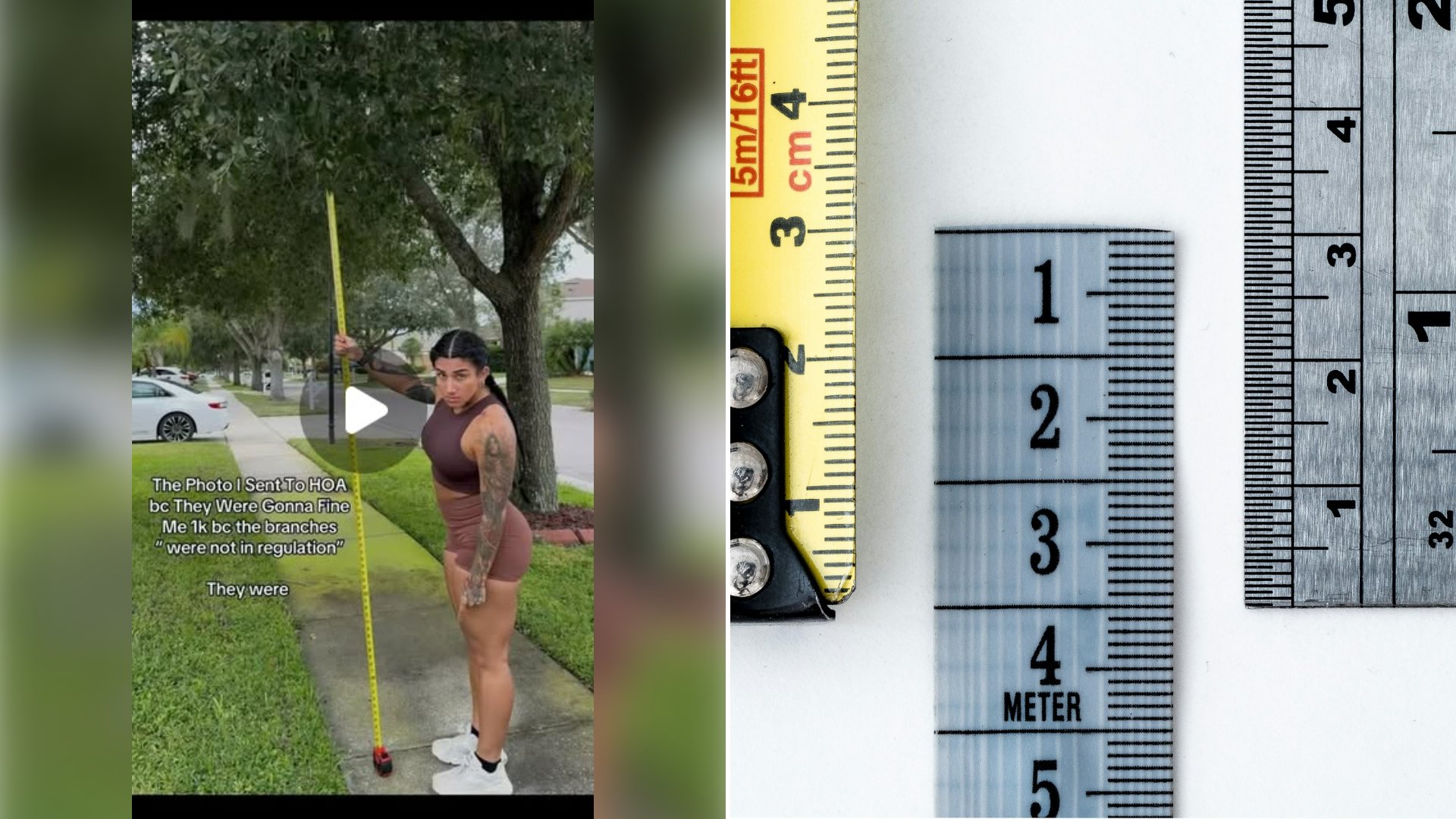
The appeal of this video is the DIY evidence-gathering itself: rather than simply arguing with the HOA or paying the fine to make the problem go away, she’s shown going branch by branch with an actual measuring tool, essentially building her own inspection report before anyone from the HOA does. That underdog energy, a single homeowner methodically out-documenting the organization trying to fine her, is a satisfying watch regardless of how the dispute ultimately resolves, and it taps into a broader frustration plenty of HOA residents share about fines that feel arbitrary or poorly substantiated.
Landscaping and tree-related fines are one of the more common categories of HOA enforcement nationally, covering everything from overgrown lawns and dead trees to exactly this kind of branch-clearance violation, where limbs are required to stay above a certain height over sidewalks, streets, or neighboring yards for safety and visibility reasons. HOAs collectively enforce an enormous volume of these violations every year across the country, and fines for landscaping infractions, while often starting in the range of a few hundred dollars, can escalate significantly for repeat or unresolved violations, sometimes compounding weekly or monthly until the issue is corrected, which is exactly the kind of escalation a fine like this $1,000 figure often represents by the time it reaches a homeowner.
What makes self-documentation like a tape-measure video genuinely useful, beyond the social media appeal, is that HOA violation notices are not always accurate. Inspections are sometimes done quickly from a vehicle or a distance, measurements can be eyeballed rather than actually taken, and a homeowner who can produce clear, dated evidence that a cited violation doesn’t actually exist has real leverage in disputing a fine, whether that’s through a direct appeal to the board, a formal hearing process most HOA governing documents require before a fine becomes final, or in more serious disputes, a small claims filing challenging the fine itself.
Most state HOA statutes and standard governing documents require some form of due process before a fine sticks, typically written notice of the alleged violation and an opportunity for the homeowner to respond or request a hearing before the board can finalize and collect a fine. That process exists precisely so homeowners have a path to contest an inaccurate citation, and a video record like this one, timestamped and methodical, is about as strong a piece of evidence as a homeowner can bring to that kind of hearing.
Clips like this resonate because they turn a bureaucratic, often opaque process into something concrete and relatable, and plenty of HOA residents watching along have their own story of a fine they felt was unfair and never quite knew how to fight.
More from Willow and Hearth
- Homeowner Says His HOA Called the Police Over the Strange Vehicles in His Driveway, So He Bought a Plain Tesla and Fitted It With a Train Horn He Can Set Off by Remote
- Arkansas Court of Appeals Let an Old Fence Stand as the Property Line in One 2026 Ruling and Went the Other Way in 2024, Showing Why a Fence Alone Does Not Decide Who Owns the Land
- Neighbor Back From Holiday Finds the Planter She Built to Stop Cars Crossing Her Front Lawn Has Been Moved and Rubber Slabs Laid Down With a Brick on Top
Leave a Reply