Home inspectors see plenty of questionable DIY work, but some discoveries stand out even among the usual parade of mismatched wiring and amateur plumbing. Licensed home inspector @inspectordavetn documented one such find on Instagram: a dryer vent that a previous homeowner had routed, in its entirety, directly into a plastic storage tote sitting inside the crawlspace, rather than venting it outside the home as code requires.
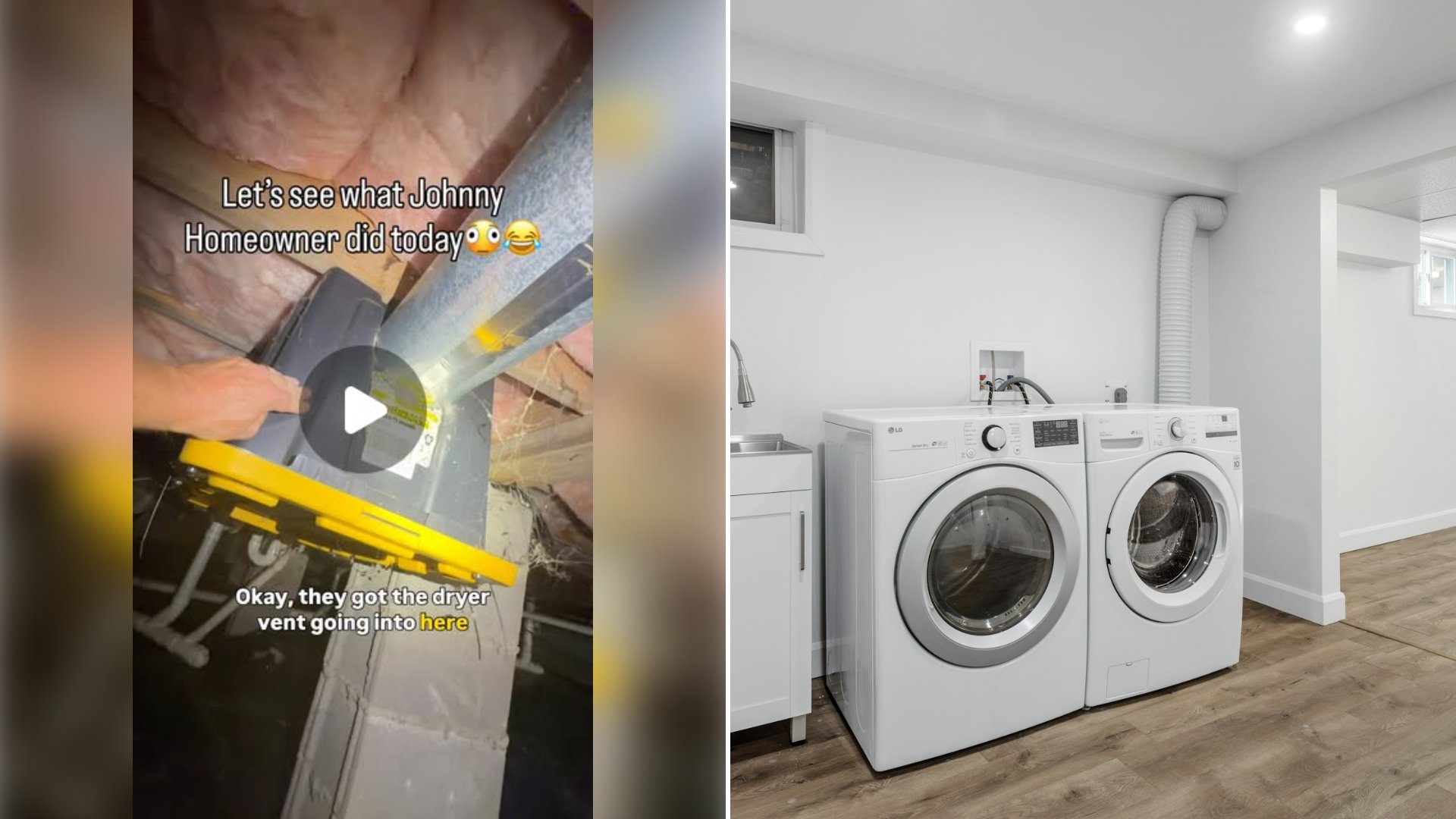
In the footage, the inspector crawls through the tight, dark space beneath the home and finds the vent duct simply terminating inside a plastic tote, apparently as an improvised lint catch rather than an actual venting solution. It’s the kind of shortcut that might seem harmless at first glance, since the tote does, in a crude way, catch loose lint. But dryer venting exists for reasons that go well beyond collecting fuzz, and routing it into an enclosed container inside a crawlspace creates real risks that a previous owner likely never considered.
Dryers push out a mix of hot, moist air and fine lint with every cycle. When vented properly to the exterior, that combination disperses harmlessly outside. When it’s trapped inside an enclosed space like a crawlspace, two problems compound each other: the moisture has nowhere to go, raising humidity levels in an area that’s already prone to dampness, and the lint itself keeps accumulating in a confined, poorly ventilated space, right next to floor joists and other wood framing.
Why Improperly Vented Dryers Are a Genuine Fire Risk
Dryer lint is highly flammable, which is precisely why fire safety organizations treat dryer vent maintenance as a priority topic every year. The U.S. Fire Administration and the National Fire Protection Association have both published data for years identifying failure to clean dryers as a leading contributing factor in home clothes dryer fires, with lint buildup cited as the single most common cause. A vent that terminates inside an enclosed container rather than venting outside removes the one safeguard that would normally let accumulated lint disperse into open air instead of concentrating in one spot.
Beyond the fire risk, trapped dryer moisture inside a crawlspace creates ideal conditions for mold growth and wood rot. Crawlspaces are already vulnerable to humidity problems because of their proximity to soil moisture, and adding a steady stream of warm, wet air from every laundry cycle on top of that can accelerate decay in floor joists, subfloor sheathing, and any insulation present. Over months or years, that kind of chronic moisture exposure can lead to the exact structural softening that inspectors frequently flag in older homes with unknown DIY histories.
Homeowners who want to check whether their own dryer venting is set up safely can look for a few key signs:
- Confirm the vent actually terminates outside the home, with a proper exterior vent cover or hood, not inside an attic, crawlspace, or any enclosed interior space.
- Check vent length and material. Rigid or semi-rigid metal ducting is strongly preferred over flexible plastic or foil ducting, which traps lint more easily and poses a higher fire risk.
- Clean the vent duct annually, not just the lint trap inside the dryer itself, since lint accumulates along the entire length of the duct over time.
- Watch for longer drying times, which often indicate a partially blocked or improperly vented duct restricting airflow.
- Have a home inspection before buying any home with an unknown renovation history, since vent routing is exactly the kind of hidden detail that’s easy to miss without crawling into the actual space.
For the home in this video, correcting the issue means running proper rigid venting from the dryer location all the way to an exterior wall, a job that’s straightforward for a qualified contractor but one that clearly should have been done the first time rather than improvised with whatever plastic tote happened to be sitting in the crawlspace.
More from Willow and Hearth
- Home Inspector Jabs a Knife Into a Brick Wall and Says Painted Masonry That Stays Wet Turns to Butter, Then a Commenter Who Has Painted Brick for 25 Years Pushes Back
- Mold Remediation Contractor Says a Landlord Left the Shower Running for Two Weeks and Shows Gutted Drywall, Tossed Doors and Trim and a Ceiling Fan Beyond Saving
- U.S. Fire Administration Counts 27,900 Home Heating Fires in 2023 and Its Latest Cause Breakdown Points to Heat Sources Placed Too Close to Things That Burn
Leave a Reply