Home services account @promes_construction posted an October 10 video documenting a mishap that will make any homeowner who has hired cheap, inexperienced help wince in recognition: a high school student brought on to help with a simple project drives a screw straight through a wall, with absolutely no idea what’s waiting on the other side until it’s too late.
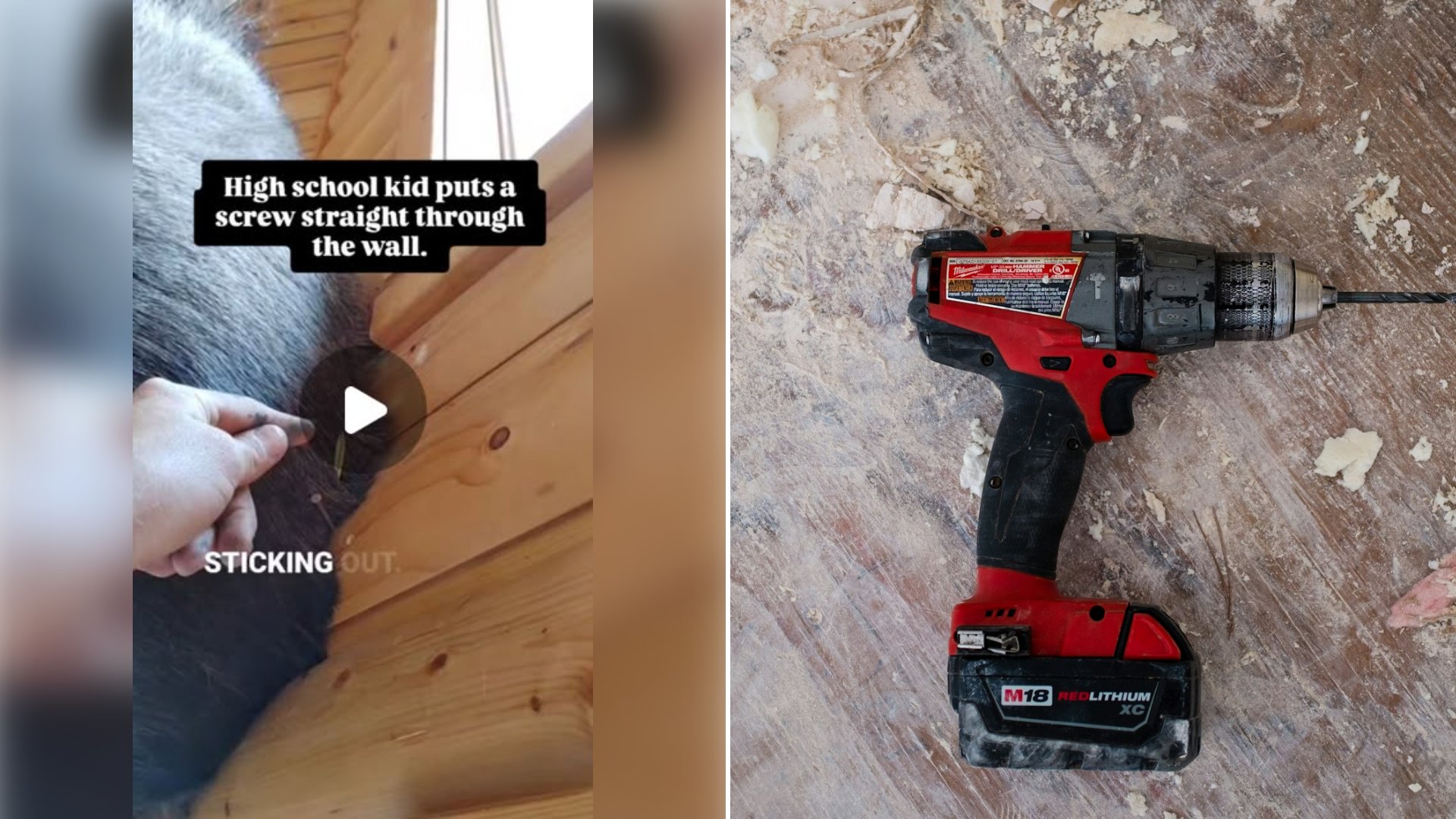
The caption behind the video is blunt about what happened: a high school kid puts a screw straight through the wall. It’s the kind of mistake that happens fast and is instantly obvious the moment it does — one second you’re hanging something simple, the next there’s a visible puncture clean through drywall that wasn’t there before, and the homeowner is left calculating exactly how big a repair job just landed in their lap.
Drywall repair costs scale almost entirely with the size and depth of the damage, and a single screw puncture is, fortunately, one of the cheapest categories of drywall repair that exists. According to pricing data regularly compiled by home services marketplaces, a small hole under about two inches — the typical size left by a screw or nail gone wrong — usually costs somewhere between $50 and $150 for a professional to patch, sand, and repaint if the homeowner hires it out, or well under $20 in materials for a confident DIYer willing to handle spackle, sandpaper, and a touch-up of paint themselves. That cost climbs quickly as hole size increases: a fist-sized hole typically runs $150 to $300 professionally, while damage spanning multiple studs or requiring a full drywall panel replacement can climb into the $300 to $700 range or higher, especially if texture-matching or ceiling work is involved.
What actually determines the real cost of a stray screw through a wall, though, often isn’t the hole itself — it’s whatever the screw hit on its way through or on the other side. A screw that punctures a wire inside the wall cavity can create an electrical hazard requiring an electrician before any drywall work even begins, typically adding $100 to $300 to the job. A screw that clips a water line can mean a far more expensive plumbing repair layered on top of the patch. And a screw that damages something mounted on the opposite side of the wall — anything from a piece of art to a fixture to a decorative item — adds the cost of repairing or replacing that object entirely, independent of the wall repair itself, which is exactly the kind of compounding cost that turns a five-minute mistake into a genuinely expensive afternoon.
It’s also a useful reminder of why experienced contractors almost always check a wall before driving any fastener into it, using a stud finder with wire and pipe detection, or simply asking what’s mounted on the opposite side before starting. For homeowners bringing on inexperienced help to save money on a simple job, that one habit — confirming what’s on the other side of a wall before anyone picks up a drill — is often the cheapest insurance available against turning a quick task into a repair bill nobody budgeted for.
More from Willow and Hearth
- Indiana Venue Renovators Follow Local Advice, Open a Drywalled Wall and Find 15 Foot Pocket Doors Said to Be 100 Years Old, Then Rebuild the Missing Panels
- Homeowner Quoted $18k by a Contractor for a Dining Nook Answers No Thanks I Got It and Builds the Bench, Cushions, Table and Hanging Plants in Five Steps
- Homeowner Who Bought a House Knowing the Bathroom Was Dated Fixes Cracked Yellow Tile With Crayons and a Hair Dryer and Plans Cartoonish Pink Stripes
Leave a Reply