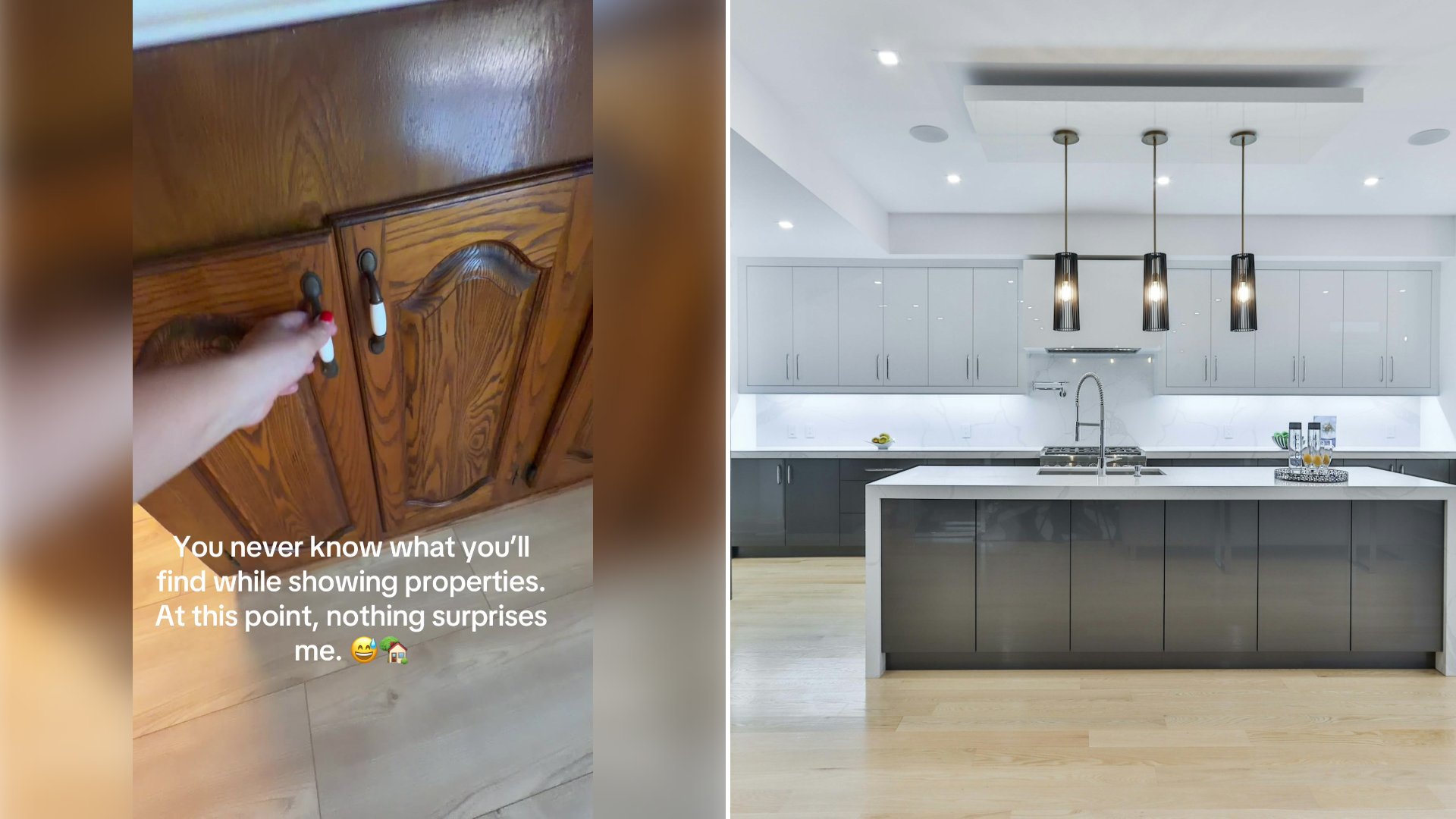
Six years into her real estate career, @heather.kerrrealtor figured she’d seen just about every staging trick in the book. Then came a showing where she reached for a set of kitchen cabinet doors, pulled, and discovered they weren’t cabinets at all. The doors were purely decorative fronts bolted to a section of empty wall, with nothing behind them but open space.
@heather.kerrrealtor
The moment plays out exactly as awkwardly as it sounds: a confident reach for a handle, a pull, and then the slow realization that the cabinet door simply swings open onto drywall rather than shelving. Whoever staged or flipped the kitchen apparently decided a full run of cabinetry looked better in photos than a half-finished one, and solved the gap with trim pieces rather than actual storage. For a six-year veteran who says nothing in a showing surprises her anymore, it was clearly a new one.
Cosmetic staging shortcuts like this fall into a category real estate professionals sometimes call surface-level flipping: updates that photograph beautifully and create a strong first impression during a showing, but that don’t hold up to a closer look or, in this case, a basic cabinet-opening test. Fresh paint, trendy hardware, and strategically placed furniture can mask a lot in listing photos, which is exactly why in-person showings and professional inspections exist.
How Buyers Can Spot Cosmetic Shortcuts Before Making an Offer
Real estate agents and inspectors who regularly walk through recently flipped or staged homes point to a handful of checks that catch the kind of shortcut seen in this video before a buyer ever gets to the closing table:
- Physically open every cabinet and drawer during a showing. It sounds basic, but fake or non-functional cabinetry, like what’s shown here, only gets caught by actually testing it.
- Check that cabinet boxes are attached to real plumbing, electrical, or structural elements where appropriate, rather than simply mounted to open wall space.
- Look underneath and behind large furniture or rugs, which staging companies sometimes use to cover flooring transitions, damage, or unfinished sections.
- Ask for permits on any recent kitchen or bathroom renovation. A legitimate remodel typically has a paper trail; a rushed cosmetic flip often doesn’t.
- Bring in a licensed inspector who tests fixtures, not just looks at them, since a visual walkthrough alone can miss exactly this kind of non-functional installation.
- Compare listing photos closely against the in-person walkthrough, watching for camera angles that seem to avoid certain areas of a room entirely.
Real estate trade publications and consumer protection resources have long warned buyers about the gap between a staged listing and the home underneath the staging, particularly in competitive markets where sellers are incentivized to maximize visual appeal with minimal investment. A set of fake cabinet fronts is a relatively low-cost trick for a seller to pull off, especially compared to the cost of actually finishing out a section of cabinetry, which can easily run into several hundred dollars per linear foot once materials and installation are factored in.
For buyers, the practical takeaway is simple: treat a showing as a hands-on inspection, not a passive tour. Open the cabinets, run the faucets, check that outlets actually have power behind them. As this agent’s six years of experience proved, even seasoned professionals can still be caught off guard by how far some sellers will go to make a kitchen look finished on camera.
More from Willow and Hearth
- Realtor Shares a Clip of a Man Fighting a Glass Shower Door Wedged Beside a Toilet in a Pretty Renovation and Asks What Else the Builder Is Hiding From Buyers
- Realtor Reacts to a Painter Rolling White Paint Over a Bathroom Coated in What She Says Is Decades of Cigarette Smoke and Warns That Cleaning Has To Come First
- House Painter Knocks on 10 Doors Offering a Free Paint Job, Finds One Homeowner Who Says Yes, Then Uncovers Peeling MDF Siding, Bees and Four Squirrels Living in the Soffit
Leave a Reply