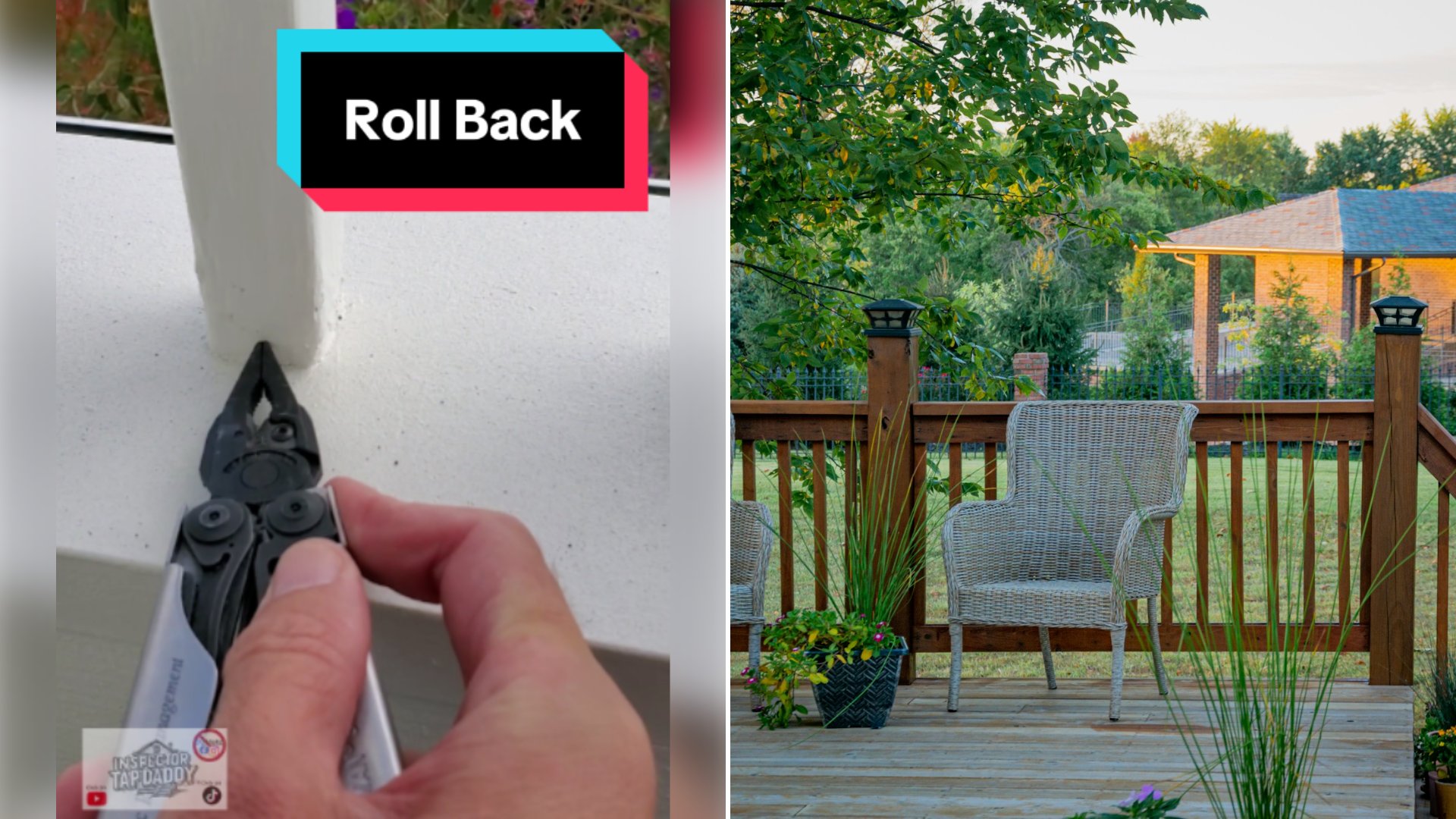
From a few feet away, the deck railing and trim looked completely intact: solid wood, no visible cracking, nothing that would make a homeowner think twice. Then home inspector @inspectortapdaddy pulled out a simple pair of pliers and jabbed them straight through the surface, exposing soft, rotted wood hiding just beneath a thin shell that had looked perfectly sound.
@inspectortapdaddy
The inspector moves across several points on the property, puncturing trim and railing in multiple spots to demonstrate just how widespread the hidden rot actually is. It’s a dramatic but genuinely useful demonstration technique: wood rot caused by fungal decay often eats away at the interior of a board while leaving a surprisingly intact-looking outer layer, especially where paint or sealant has trapped moisture underneath rather than kept it out. A quick visual scan misses it almost every time; a simple pressure test with a pointed tool catches it in seconds.
Exterior wood trim and deck components are especially vulnerable to this kind of hidden decay because they’re exposed to repeated cycles of rain, sun, and temperature swings that painted or sealed interior wood never experiences. Once moisture gets trapped under a paint layer, whether through a small crack, a failed caulk joint, or just years of wear, it has nowhere to evaporate to, and the wood underneath starts breaking down from the inside while the painted surface continues to look fine for months or even years.
A Seasonal Self Check for Exterior Wood Rot
Homeowners don’t need a full inspector’s toolkit to catch early signs of rot before it spreads. A basic seasonal routine, ideally done each spring and fall, can catch most of what matters:
- Press firmly with a screwdriver or similar blunt tool at multiple points along deck railings, posts, and trim, especially near ground contact, joints, and anywhere water tends to pool or run off.
- Check areas where two pieces of wood meet, such as where a railing cap meets a post, since these joints trap moisture more than flat, open surfaces.
- Look for paint that’s bubbling, cracking, or flaking in a way that suggests moisture pushing out from underneath rather than normal weathering.
- Tap along railings and listen for a hollow or dull sound compared to solid sections, a quick way to flag soft spots without puncturing anything.
- Inspect the underside of deck boards and railings, not just the visible top and front surfaces, since rot often starts on the side that stays damp longest.
- Pay extra attention to any wood within a few inches of the ground or soil contact, where moisture wicking from below is a near-constant threat regardless of how well the top surface is sealed.
Catching rot early matters because the repair scope grows quickly once decay spreads past a single board. A localized soft spot caught early might only require replacing one section of trim or railing. Left unaddressed, rot can spread into connecting structural members, compromising the safety of a railing or stair system entirely and turning a simple trim repair into a full railing or deck rebuild.
The pliers test in this video is a blunt but effective reminder that exterior wood, no matter how fresh the paint looks, deserves a hands-on check at least twice a year. A few minutes with a screwdriver in the spring can save a homeowner from discovering, the hard way, that a railing they’ve been leaning on for years was never as solid as it looked.
More from Willow and Hearth
- Home Inspector Jabs a Knife Into a Brick Wall and Says Painted Masonry That Stays Wet Turns to Butter, Then a Commenter Who Has Painted Brick for 25 Years Pushes Back
- Realtor Shares a Clip of a Man Fighting a Glass Shower Door Wedged Beside a Toilet in a Pretty Renovation and Asks What Else the Builder Is Hiding From Buyers
- Idaho Builders Show a Grain Bin in a Dry Open Field Becoming a Finished Home With Tall Windows, a Loft Staircase and a Bedroom in 11 Seconds
Leave a Reply