The clip opens on a stretch of open land, quiet except for the rumble of a flatbed truck easing down a dirt access road. Creator @breshajeanae stands at the edge of her property, phone raised, watching a small white tiny house inch toward the exact spot she had marked out months earlier. The caption reveals this is actually a two-year-later throwback, but the raw excitement in her face reads like it happened five minutes ago.
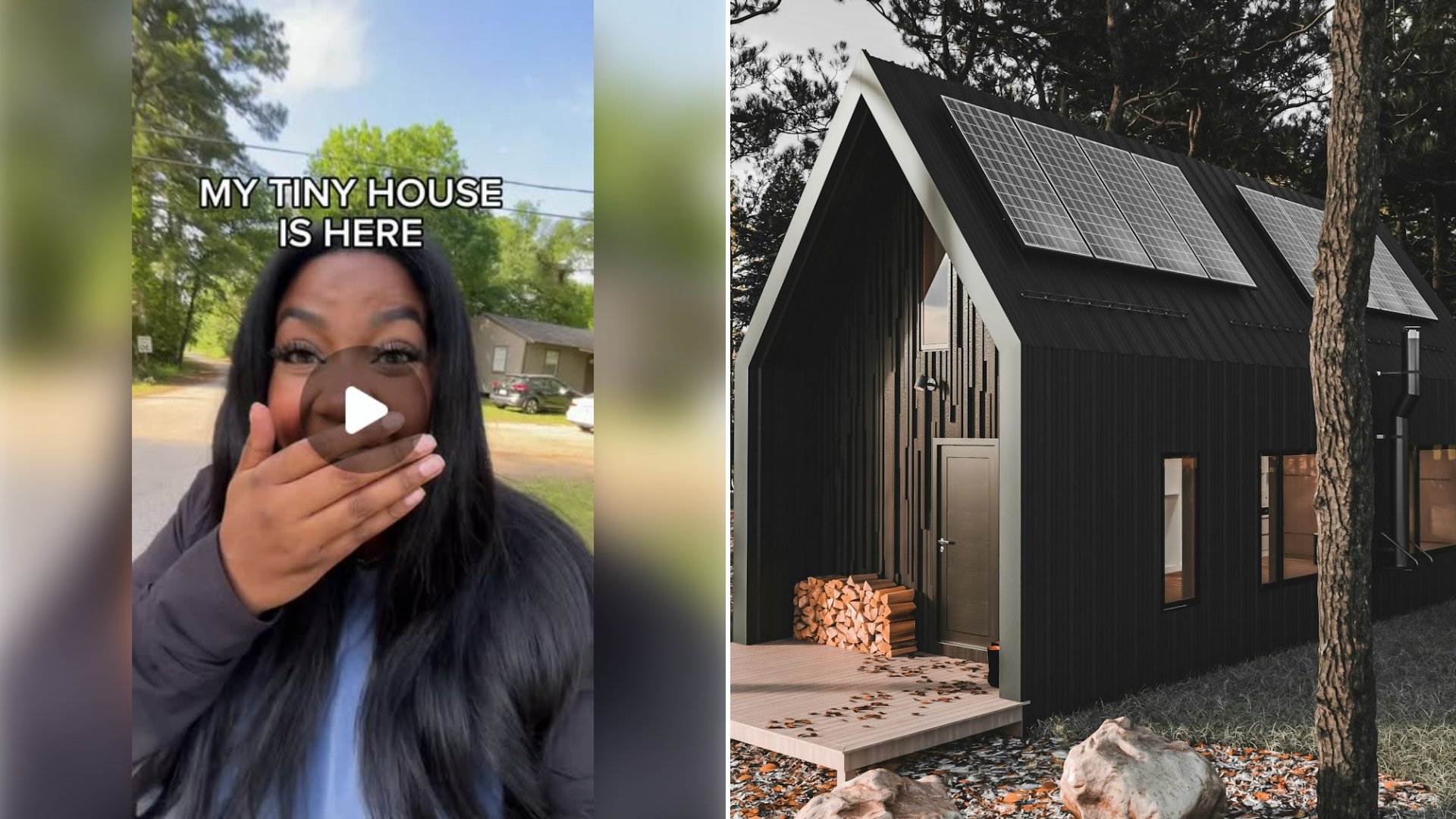
She narrates the moment almost breathlessly, pointing out the window placement and the little front step as the house is lowered onto its foundation piers. It is the kind of unscripted, unfiltered joy that is hard to fake, and it is exactly why the clip has resurfaced and kept circulating two years on.
What the video does not show is everything that happened before that truck ever showed up. Getting a tiny house legally placed on a piece of land is a multi-step process, and the land itself is often the biggest line item buyers underestimate.
Raw rural land suitable for a tiny home can run anywhere from under ten thousand dollars an acre in remote areas to well over six figures per acre near growing suburbs, and price is only the starting point. Before a tiny house can be dropped onto a lot, most counties require a perc test to confirm the soil can support a septic system, and that test alone typically costs a few hundred dollars. If the land passes, installing a conventional septic system generally runs between three thousand and fifteen thousand dollars depending on soil conditions and tank size, while drilling a private well for water can add another five thousand to fifteen thousand dollars or more.
Then there is the electrical hookup. Running power from the nearest utility pole to a tiny house site can cost very little if the house sits close to the road, or it can climb into the thousands of dollars if the utility company has to trench a long distance or set new poles. Many tiny house owners also need to grade and compact a pad, pour or set piers for a foundation, and in some jurisdictions pull a separate permit for an accessory dwelling unit or manufactured structure, each with its own fee and inspection timeline.
Zoning is the piece that trips up the most buyers. Plenty of counties still have minimum square footage requirements for a permanent residence that a tiny house cannot meet, which pushes some owners to register their home as a recreational vehicle or accessory structure instead of a primary dwelling. That distinction affects everything from financing to insurance to whether the home can be lived in year round, so it is worth confirming with the local planning department before buying land, not after.
None of that paperwork shows up in a thirty second clip of a house rolling onto a lot, but it is the reason that moment feels like such a milestone. By the time the truck arrives, the buyer has usually already cleared a long list of tests, permits, and installations most people never think about until they are standing in the middle of it.
More from Willow and Hearth
- Land Buyer Compares Two 40 Acre Parcels Side by Side and Explains Why the One With a Dirt Road Leading Into It Is the One He Would Never Buy, Because It Is Landlocked
- Idaho Builders Show a Grain Bin in a Dry Open Field Becoming a Finished Home With Tall Windows, a Loft Staircase and a Bedroom in 11 Seconds
- Homebuyers Announce They Are Officially Homeowners as a Man Carries a Woman Through a Kitchen Full of Silver Balloons and She Holds Up the Keys While Two Men in Suits Dance In
Leave a Reply