The video follows @therealmikenovak walking through an empty, modern home, the kind of blank slate that usually signals good news for a buyer. Instead, he uses the quiet, stripped down space to lay out a cautionary scenario: a seller who, out of spite or carelessness, shuts off the power to the house six weeks before closing. His own caption is upfront that this is a hypothetical story built on a very real risk, not a documented case he personally worked, which is worth keeping in mind as the numbers add up.
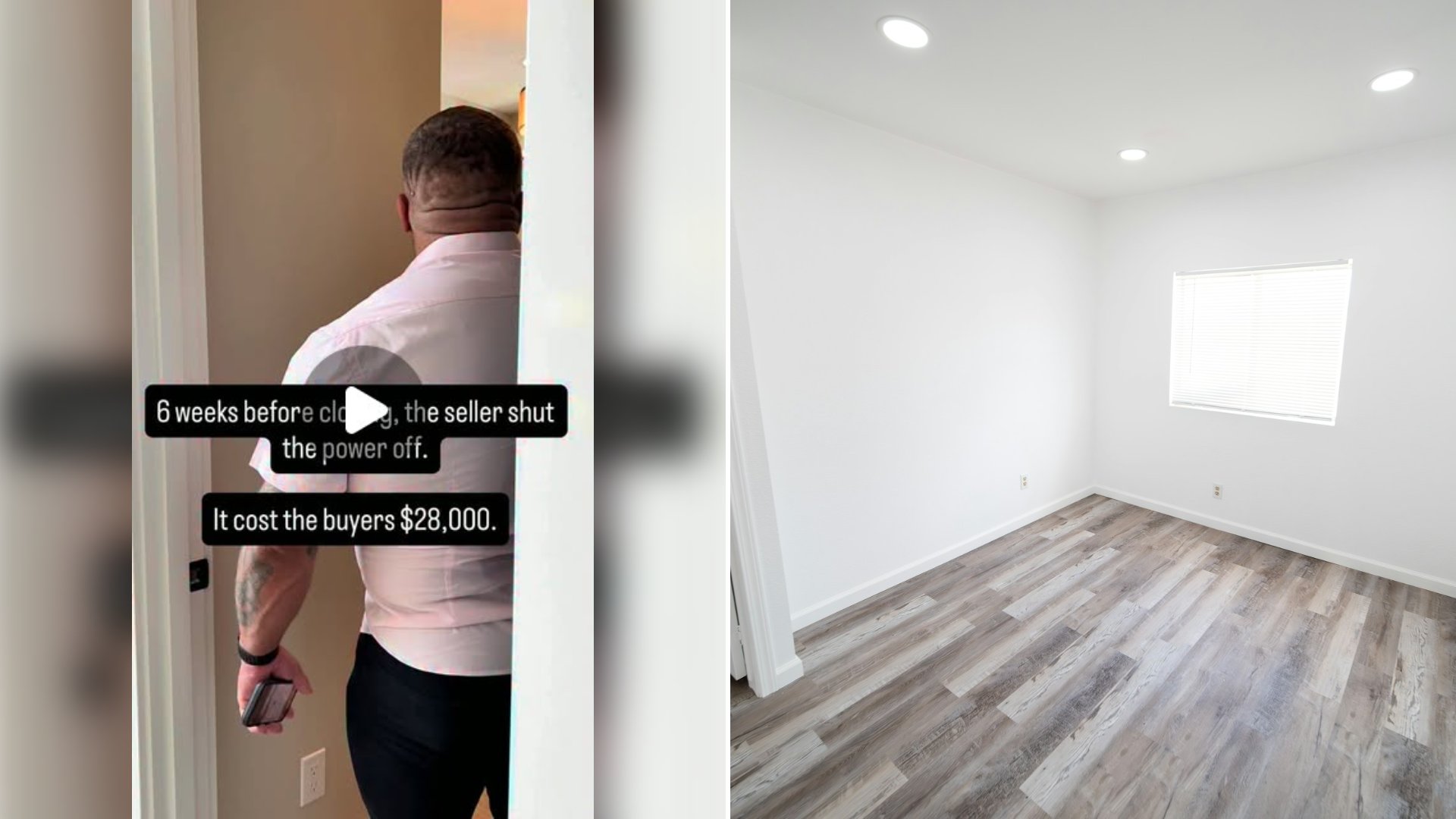
In his scenario, the power outage leads to a burst pipe that goes unnoticed for days, causing water damage that is only discovered during the final walkthrough. The repairs, the delay, and the renegotiation that follows add up to the twenty eight thousand dollar figure he cites, a number meant to illustrate just how fast a seemingly small decision can snowball into a serious financial hit for buyers.
Whether or not this exact chain of events ever played out for one specific family, the underlying risk is real, and it points to a genuine gap in what many buyers assume sellers are required to do between contract and closing.
Most standard purchase agreements require the seller to maintain the home in substantially the same condition it was in when the buyer made their offer, right up until closing. That generally means keeping utilities running, especially in colder climates where a loss of heat can cause pipes to freeze and burst within as little as six to twelve hours once temperatures inside drop low enough. Sellers are typically also required to keep the home insured until the title actually transfers, and most contracts include a final walkthrough clause specifically so buyers can confirm nothing has changed, and nothing has broken, since the inspection.
If a seller deliberately shuts off utilities or otherwise lets the home fall into disrepair before closing, buyers generally have a few paths available. A real estate attorney can demand specific performance, meaning the seller must fix the damage before closing proceeds, or negotiate a credit at the closing table to cover repairs. In more serious cases, buyers can walk away from the deal entirely and recover their earnest money deposit, since the seller’s own actions would typically count as a breach of the purchase agreement’s maintenance requirements.
The practical lesson experienced agents pull from stories like this one is simple: never skip the final walkthrough, and schedule it as close to closing as the timeline allows, ideally within twenty four to forty eight hours. A walkthrough that happens a week or more before closing leaves a wide window for something to go wrong without anyone noticing until it is too late to easily unwind the sale.
It is a dramatic example built to make a point, not a verified case file, but the point itself holds up. The gap between the inspection and the closing table is exactly when a house is most vulnerable, and it is exactly when buyers tend to be paying the least attention.
More from Willow and Hearth
- Consumer Financial Protection Bureau Says to Compare Three Groups of Fees on Your Loan Estimate and Closing Disclosure Because Some Can Never Rise and Others Can Change by Any Amount
- Federal Rules Tell Mortgage Servicers to Work With the Relative Who Inherits a Home After the Borrower Dies, and the CFPB Defines Who Counts as a Successor in Interest
- Buyers Who Purchased a House Sight Unseen Say They Arrived With Police to Change the Locks and Learned a Woman Had Lived Inside for 12 Years
Leave a Reply