The video opens with @jaketherealtor grinning straight into the camera, warning viewers before he even shows the first room that this listing is going to make people furious. He is right. The 350 square foot house he walks through packs a kitchen, a bathroom, and a sitting area into a space smaller than most people’s living rooms, and the sleeping loft is only reachable by a straight up wooden ladder bolted to the wall.
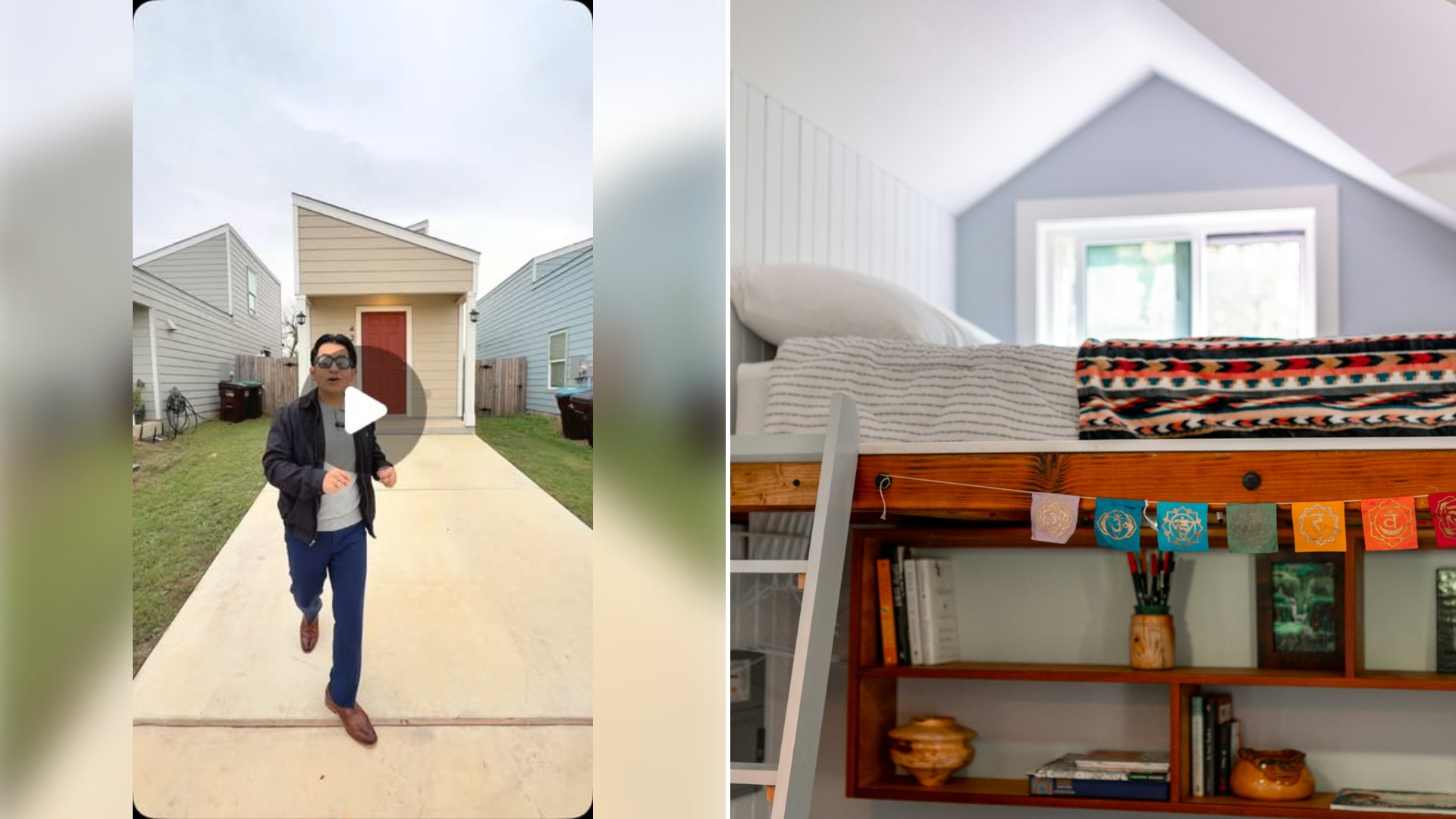
He leans into the controversy on purpose, pointing the camera right at the ladder and asking viewers if they could really see themselves climbing it every single night to get to bed. It is a deliberately polarizing listing, built to split a comment section down the middle, and it does exactly that.
Setting the ladder debate aside, the listing is a useful jumping off point for a question a lot of would be tiny house buyers never think to ask: how does a bank even finance something this small.
Traditional mortgages are built around minimum property standards that many tiny houses simply do not meet, including minimum square footage and a permanent foundation. A tiny house under about 400 square feet, especially one built on a trailer chassis rather than a poured foundation, often cannot qualify for a conventional 30 year mortgage at all. That pushes buyers toward a handful of alternative paths. Some finance a tiny house the same way they would finance an RV, through a personal loan or an RV loan, which typically carries a shorter repayment term, often ten to fifteen years, and a higher interest rate than a conventional mortgage.
Others go the builder financing route, where the manufacturer offers in house loans similar to financing a car, again usually at a higher rate than a traditional mortgage but with less stringent qualification requirements. Buyers who already own land outright have another option: a construction loan or a home equity line against the land itself, which can sometimes unlock mortgage style rates even though the structure being financed does not meet standard lending criteria on its own.
Insurance follows a similar split. A tiny house classified as a recreational vehicle typically needs RV insurance rather than a standard homeowners policy, while one permanently affixed to a foundation on owned land may qualify for traditional homeowners coverage. That classification, decided by local zoning and how the structure is titled, ends up affecting financing, insurance, and resale value all at once, which is exactly the kind of detail that gets buried under a viral debate about whether a ladder to the bed is charming or unlivable.
The comment section will keep arguing about the ladder. But for anyone seriously eyeing a listing like this one, the financing question is the one actually worth answering first.
More from Willow and Hearth
- Land Buyer Compares Two 40 Acre Parcels Side by Side and Explains Why the One With a Dirt Road Leading Into It Is the One He Would Never Buy, Because It Is Landlocked
- Idaho Builders Show a Grain Bin in a Dry Open Field Becoming a Finished Home With Tall Windows, a Loft Staircase and a Bedroom in 11 Seconds
- Homeowner Says His HOA Called the Police Over the Strange Vehicles in His Driveway, So He Bought a Plain Tesla and Fitted It With a Train Horn He Can Set Off by Remote
Leave a Reply