“A contractor told us this original wrought iron fence could not be salvaged.” The owners of a historic estate heard that verdict, took one look at the rusted, bent iron that had stood on the property since 1927 and politely disagreed. Then they set out to prove it could be saved.
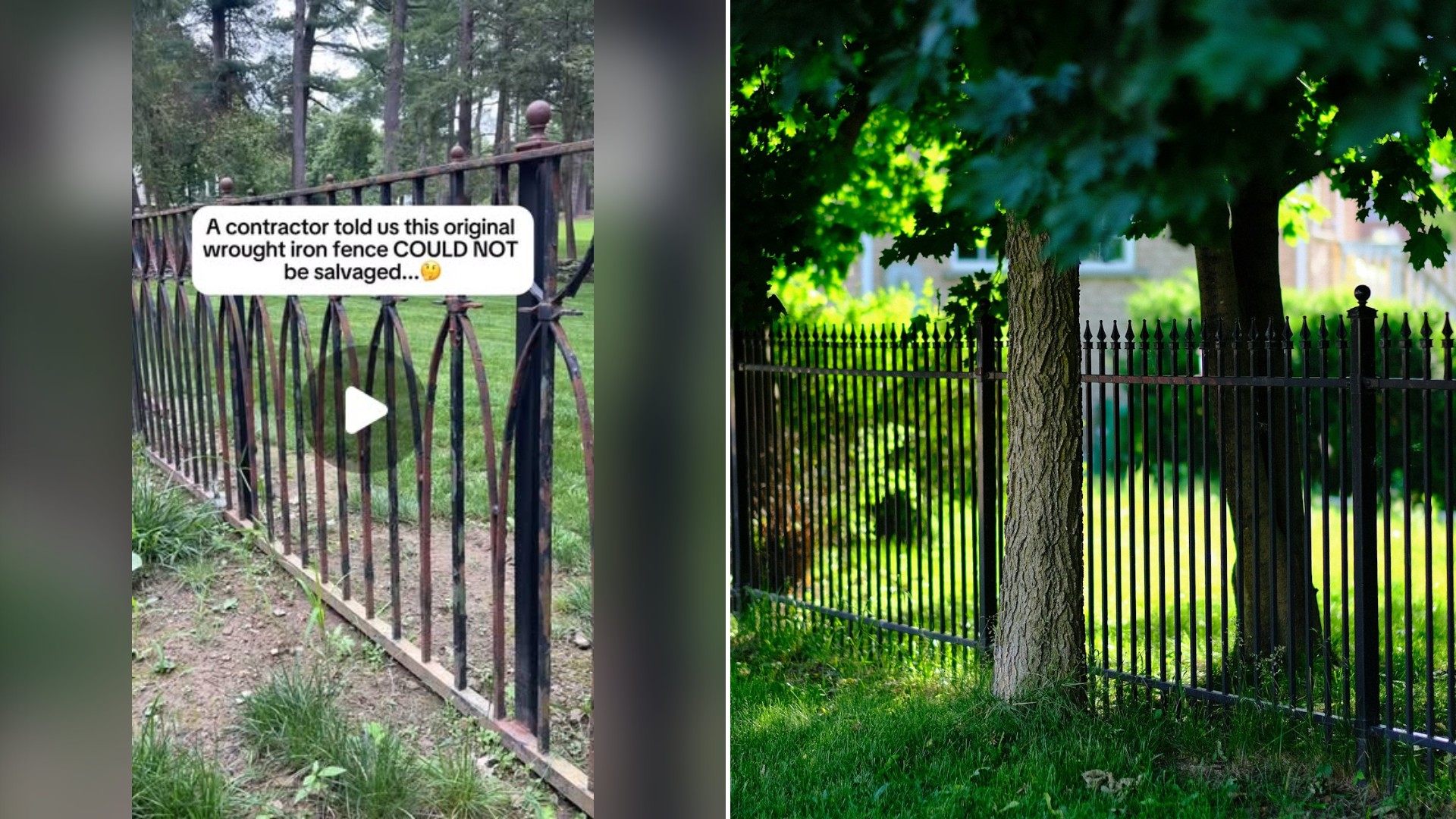
The restoration is shared by @mansiononwaverlyhill, and it is a satisfying example of repair beating replacement.
View on Instagram
A fence in rough shape
The story opens with a slow pan along the weathered fence. A hand touches the flaking, rusted joints of the decorative metalwork. A text overlay gives the contractor’s opinion in three short phrases: too rusted, too bent, not worth saving. In the next shot, old fence panels sit overgrown with vines and weeds beside a large tree, with a manor home in the background.
Welding the past back together
Instead of tearing it out, the owners hired a worker in a welding helmet and gloves to rejoin the broken pieces. Close ups show the ornate scrollwork at the top of a repaired section with its aged texture intact. The owners explain that every original section that could be saved was saved. Bare posts stand in the ground in the next shot, waiting for the panels to return.
Back where it belongs
The after shot is the payoff. The fully restored fence has been reinstalled around the pool and backyard, and the caption says it is back where it belongs. A pair of ornate double gates opens onto a sprawling green lawn, and the camera walks toward stone retaining walls and the historic house beyond. The owners finish by asking whether they are crazy for saving the fence, or whether the contractor was wrong.
Why old iron is often worth saving
Wrought iron made in the early twentieth century was typically forged by hand and assembled with joinery that is hard to match with modern mass produced fencing. Surface rust looks alarming, but it often sits on top of metal that is still sound. Metalworkers can cut out failed sections, weld broken joints, replace missing pickets with matching pieces and refinish the whole fence so it lasts for years. Replacing it with new material can cost a great deal and leaves behind a piece of the property’s history.
How to judge an old iron fence
- Tap and inspect. Flaking surface rust can be wire brushed away. Deep pitting that goes through the metal, or sections that crumble, are a bigger concern.
- Check the posts. Posts rusted at ground level or loosened in their footings may need new anchoring even if the panels survive.
- Photograph before you remove anything. Pictures of the layout and numbering of panels make reinstallation easier.
- Get more than one opinion. A general contractor and a metalworker or blacksmith may see the same fence very differently.
- Test old paint for lead. Historic iron may have layers of lead based paint. Ask a licensed professional about safe removal before sanding or blasting.
Common questions
What is the difference between wrought iron and modern steel fencing? True wrought iron is a traditional material worked by hand. Many fences sold as wrought iron today are steel, so an authentic old fence is worth a second look.
How do you keep a restored fence from rusting again? The usual approach is to remove loose rust, apply a rust inhibiting primer and finish with a quality exterior paint, then touch up chips promptly. Metal near a pool deserves extra attention because of moisture and chemicals.
Can a pool fence double as a safety barrier? Local rules set specific requirements for pool barriers, including height, spacing between pickets and self closing gates. Check with your local building department before relying on any fence for that purpose.
The takeaway
When someone says an old feature is beyond saving, it is worth asking a specialist before agreeing. In this case, a rusted fence with nearly a century behind it ended up back in its original place, and the owners kept something no catalog could supply.
Credit for the original post goes to @mansiononwaverlyhill on Instagram.
Leave a Reply