Buying an older house comes with a particular kind of suspense. Every closet corner and every stretch of carpet could be hiding something, and once in a while the house actually delivers. For one household settling into a newly purchased 1975 home, the clue was almost nothing at all: a spot in the carpet that dipped down and then came back up.
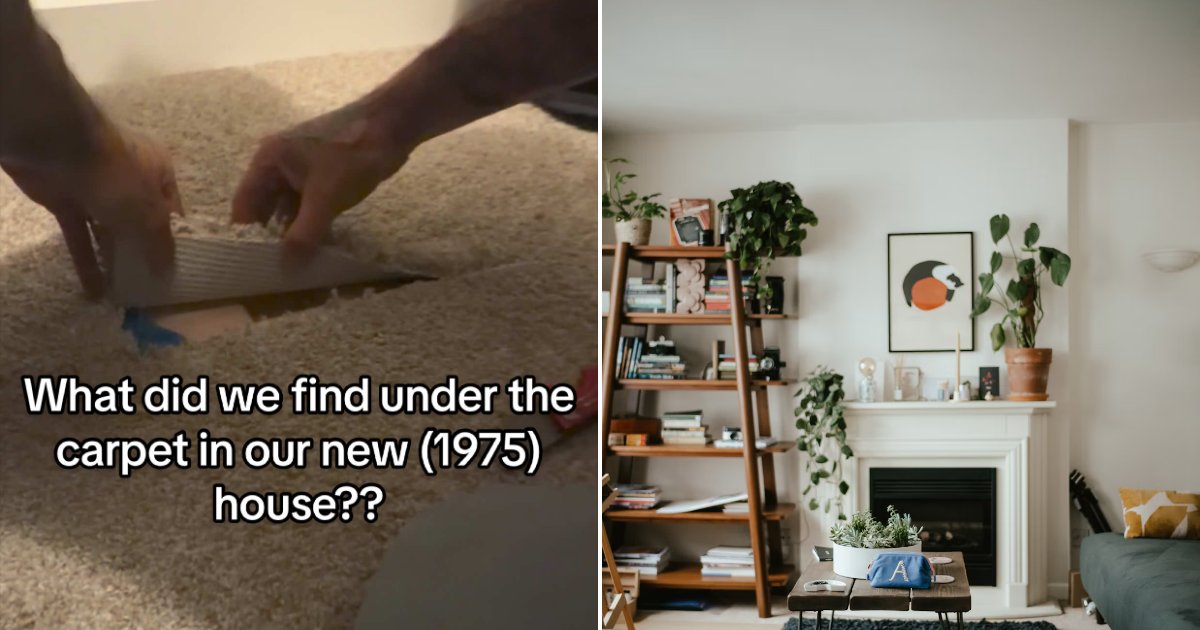
The discovery comes from @lifewiththelaudermilks, who asked whether anyone else has ever found a hidden gem inside their own house.
@lifewiththelaudermilks
Pressing on a floor that did not feel right
The scene opens close to a white baseboard, where a hand presses firmly into beige carpet. In a hushed voice the homeowner explains, “There is something under the floor. It dips down and then it’s back up.” On screen, the question hangs in the air: what did they find under the carpet in their new 1975 house? The soft spot is the entire mystery. A carpeted floor should feel evenly solid underfoot, and this one did not.
Cutting in and finding a safe
With a utility knife, a square flap of carpet is sliced open and folded back. Underneath sits a circular wooden cover, and when it comes out, a round in-floor safe dial appears. There is no music during this stretch, only the quiet sounds of the room, the carpet and the mechanical click of the handle. Then the heavy metal lid lifts, and paper contents are visible inside. The hesitation in the homeowner’s voice says it all, a mix of excitement and the feeling of opening something that belonged to someone else.
What makes the moment so compelling is how ordinary the setup looks. Nothing about beige carpet beside a baseboard announces a secret. The reveal depends entirely on someone noticing a small physical oddity and acting on it, the same instinct that leads renovators to open a wall or lift a floorboard when something does not line up with what they expected to find.
Why older houses keep secrets like this
A house that has stood since 1975 has almost certainly had more than one owner, and every owner leaves traces behind: changed flooring, patched walls, forgotten hardware, and sometimes a hiding place. Floor safes are built to sit flush with the floor and be covered by a lid, which makes carpet an easy way to conceal one. That is why a simple dip or hollow spot can be the only outward sign.
It also explains why new homeowners are often encouraged to walk through their house slowly after moving in. The things sellers forget to mention are rarely malicious. Previous occupants simply move on and leave a few mysteries behind.
What to do if you find something similar
- Stop and photograph the area before disturbing anything else, so you have a record of how it was found.
- Cut flooring carefully. Use a sharp blade, cut away from your body, wear cut resistant gloves, and keep your free hand clear of the line of the cut.
- Think about ownership. Anything left in a home you just bought may belong to a former owner or their family, so consider contacting your real estate agent or a local attorney before deciding what to do with valuables or documents.
- Check what could be under the surface before cutting deeper. Wiring, pipes or heating elements sit close to the floor in some homes, and if you are unsure, a licensed professional can tell you what is safe to open.
- If the safe is locked and you do not know the combination, a licensed locksmith is a better option than drilling or prying it open.
- Do not assume the contents are valuable. Old safes often hold ordinary papers, and that is perfectly fine.
Common questions
Is it normal to find a safe under the floor? It is not common, but it is far from unheard of in older houses, where owners often wanted a place to store documents and small valuables out of sight.
How can you tell if a floor hides something? Walk the rooms and press gently on carpet or flooring. Unexpected dips, soft spots, mismatched patches or a floor that sounds hollow when tapped are all worth a closer look, ideally before you cut or pull anything up.
Should you remove flooring yourself? Lifting carpet is a reasonable DIY job, but if you suspect the cause is moisture, rot or a structural issue, a licensed professional should take a look rather than guessing.
Takeaways for new homeowners
A small find like this also changes how a new house feels. A home stops being a blank set of rooms and becomes a place with a past, and that history is part of what makes older houses worth owning. Even when a hidden compartment turns out to hold nothing more than paperwork, it gives the new owners a story to tell for years.
The most useful lesson here is patience. Take your time during the first weeks in a new home, notice what feels off, and investigate calmly. Document what you find, think about who might own it, and treat every discovery as part of the home’s history. Most of the time the house is just an ordinary house, but occasionally a quiet dip in the carpet turns into the best story of the move.
Credit for the original post goes to @lifewiththelaudermilks on TikTok.
Leave a Reply