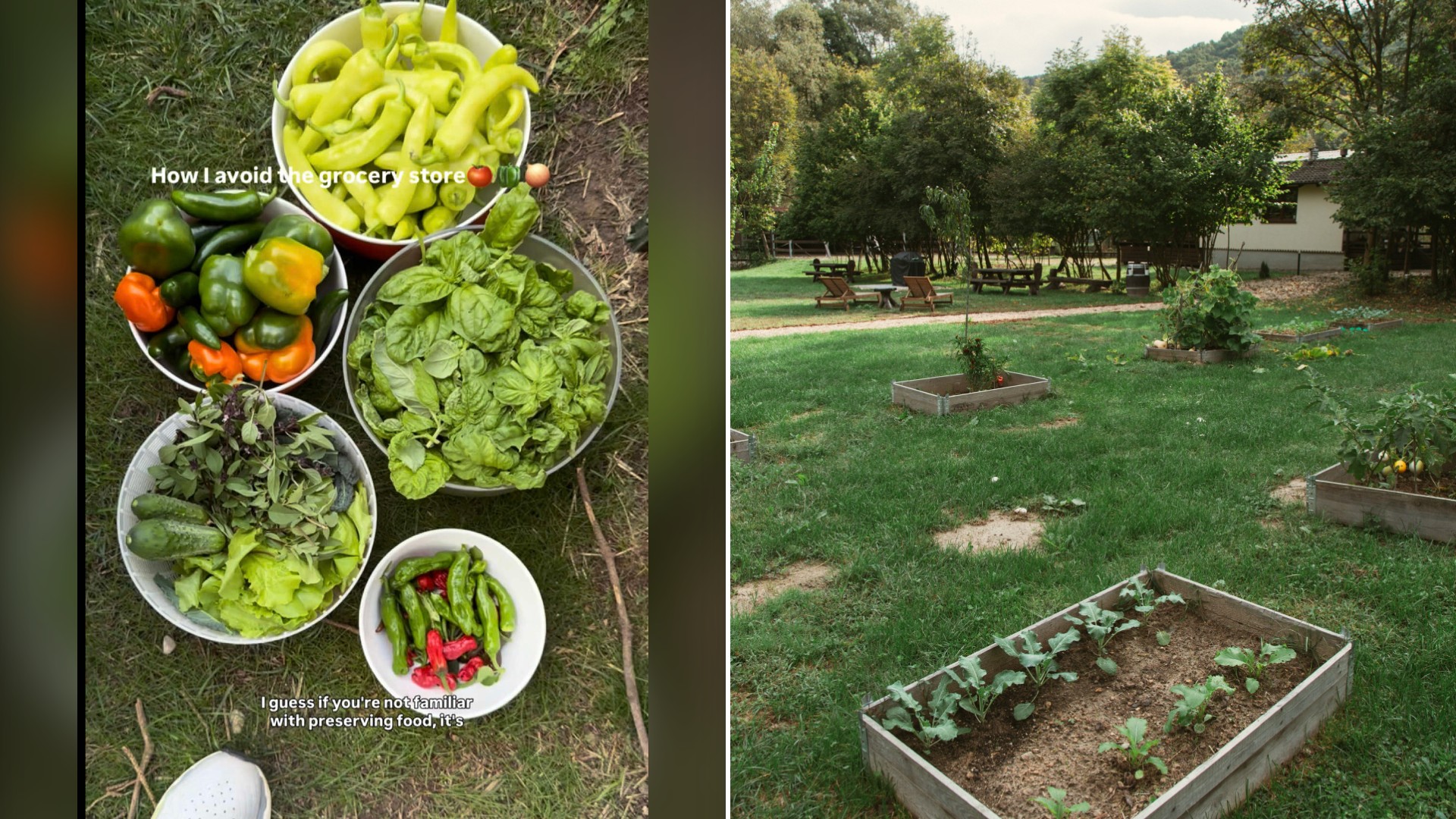
Fourteen raised beds, a handful of grow bags and one big goal. @morethangardening_ shared on social media how she grows and preserves food for a family of three, and she says that even with all that effort, it is still never enough to last the whole year.
@morethangardening_
Why all this food?
People always ask what she does with so much produce. Her answer is simple. She says, we eat it. Every season, her goal is to grow as much as she possibly can to keep her family away from the grocery store. Her garden is in zone 6a, according to her caption, and she grows in 14 raised beds plus some grow bags.
She admits it is a lot of work. But she says she would much rather grow a ton of vegetables in her backyard over a season, preserve them and eat them all year long than buy from a grocery store.
Tomatoes, the staple
Tomatoes are a staple for her family. She uses them to can up everything from salsa to pizza sauce, pasta sauce and barbecue sauce. Having those jars lined up on a shelf means a quick dinner can start with something she grew herself.
Peppers in four forms
Peppers get the same treatment. She turns them into pickled peppers that are shelf stable, red pepper flakes, cayenne powder and freeze dried peppers that the family uses throughout the year. One crop becomes four different pantry items, which is a smart way to avoid getting tired of the same flavor.
The easy one, onions
Onions, she says, are an easy one. All you have to do to preserve them is cure them. That means letting them basically dry out for a few weeks, cutting off the greens and the root ends, and storing them in bags in the basement. Hers last up to nine months.
Cucumbers and green beans
Cucumbers become pickles that she either keeps in the fridge or cans to make shelf stable. Green beans get pressure canned, put in the freezer or freeze dried, depending on the plan. Again, one vegetable, several options.
Tips for preserving your own harvest
Her method touches on nearly every popular way to put food by. Here is some general guidance for anyone who wants to try it, based on widely shared food safety practices rather than anything she specifically said.
Match the method to the food. High acid foods such as tomatoes with added acid, pickles and many salsas can be processed in a boiling water bath. Low acid vegetables like green beans must be pressure canned to be safe. Skipping this rule is one of the most serious mistakes home canners can make, so always follow tested recipes from a trusted source such as a university extension service or the National Center for Home Food Preservation.
Do not improvise recipes. In canning, the ratio of acid, vegetable and liquid matters. Changing quantities in a tested recipe can make a jar unsafe. Use the exact processing time for your altitude and jar size.
Cure onions properly. Curing means giving onions time in a warm, dry, airy spot until the outer skins feel papery and the necks are tight. Once cured, they keep best in a cool, dark, dry place with good airflow. A basement can work well if it does not get damp. Check them regularly and use any soft ones first.
Freeze drying is a different tool. A home freeze dryer removes water from food at very low temperatures, producing light, shelf stable items that can last a long time when stored properly in airtight containers. It is an investment, so many gardeners start with freezing, canning and drying before deciding whether it suits them.
Dry and grind peppers safely. Dried hot peppers can be turned into flakes or powders. Wear gloves when handling hot varieties, and be careful of dust when grinding because it can irritate the eyes and lungs.
Growing enough for a family
How much space does a household of three really need? Gardeners often point to a rule of thumb that suggests several hundred square feet per person for a good share of vegetables, more if you want to preserve for the winter. She says the answer for her is still not enough, which suggests that goals for self reliance can keep growing.
Raised beds help in several ways. They warm up earlier in spring, drain well and make it easier to control soil quality. Grow bags are useful for crops like peppers or potatoes, since they are portable and can fit in small spaces.
To get more from a given space, many gardeners practice succession planting, which means sowing a new crop where an early one has finished. Choosing varieties that store well, such as storage onions, can stretch a harvest into the winter months.
Planning your own preserving season
A realistic approach is to start small. Pick two or three crops your family already eats a lot of, such as tomatoes and cucumbers, and learn one preserving method well. Then add another method each year. Keep a simple notebook with what you planted, how much you harvested, and what you ran out of first. After a season or two, that record will show you where to expand.
Stock up on supplies before harvest peaks. Jars, lids, salt, vinegar and freezer space can run short when everything ripens at once.
A pantry built over a season
What stands out in her story is how every crop has a plan. Tomatoes become sauces, peppers become four different products, onions are cured and cucumbers become pickles. Nothing is left to chance.
She sums it up with honesty. It is a lot of work. But for her, the payoff is a pantry and freezer full of food from her own backyard. Even if the harvest never quite lasts all year, the effort shows what a family can do with some raised beds, a few jars and a lot of determination.
Leave a Reply