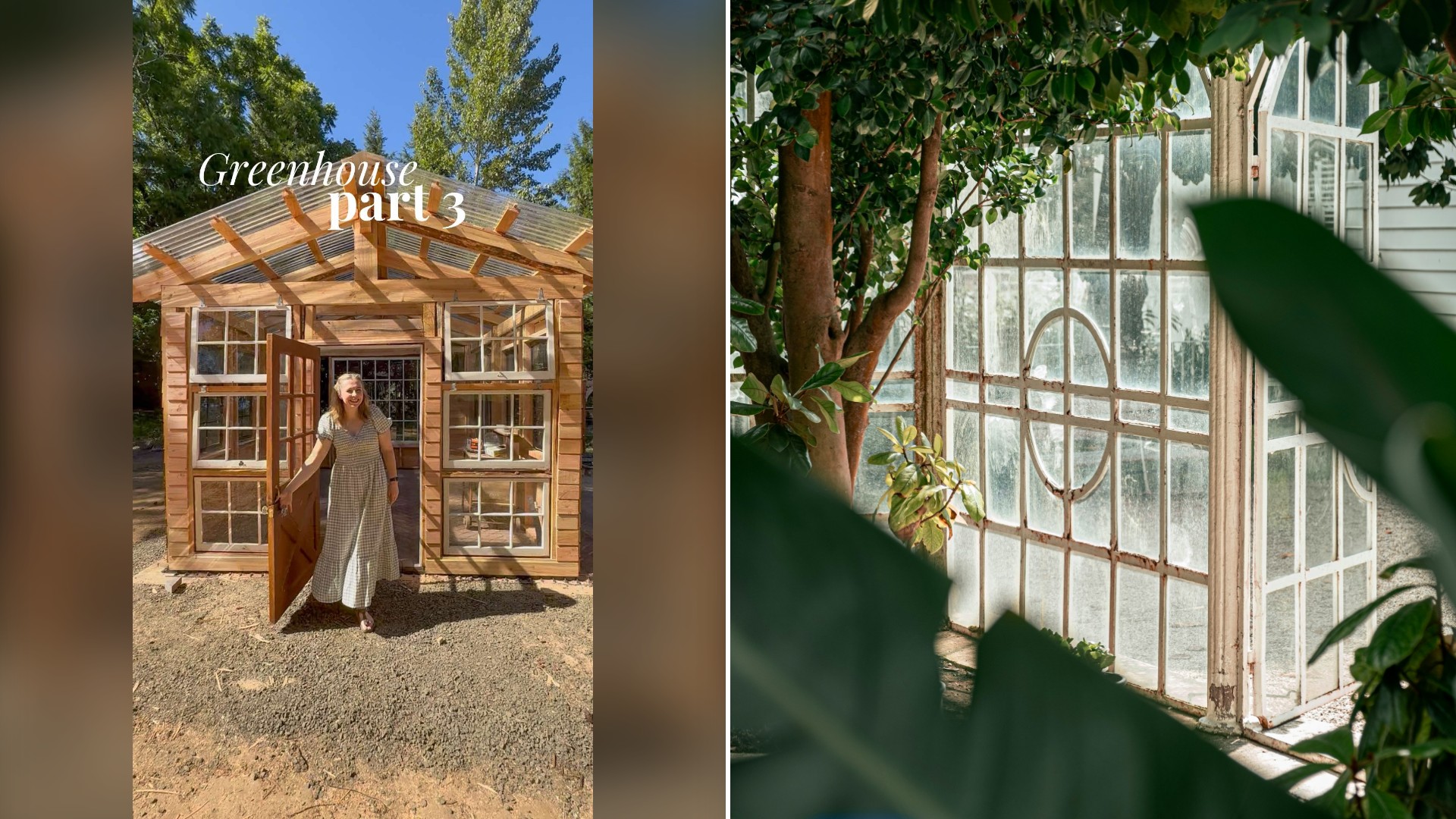
It started with a simple request. A wife asked her husband for a glass garden cottage, and he said okay. @theaverycottage shared on social media how the couple built their dream greenhouse from old windows and timber milled from trees in their own forest, and she calls it a dream come true.
@theaverycottage
Old windows and their own forest
The couple began by buying a bunch of old single pane windows. Then came the timber. They cut trees from their own forest and milled them into lumber. She says thinning the woods saved money, which is a double win, since selective cutting can also give remaining trees more room to grow.
Last summer, they put in an English garden.
Brick floor and salvaged doors
For the floor, they laid a herringbone pattern in brick. The walls were framed with the milled timbers, and she says they installed salvaged windows and doors. One huge window went in without cracking, which is no small thing with old glass.
Her husband drove four hours round trip to pick up a Dutch door from Facebook Marketplace. A Dutch door, with its top and bottom halves that open separately, is a perfect match for a garden room, letting in air while keeping the lower half closed.
Built to breathe
She notes that the windows were made to open, because greenhouses can overheat. The shiplap siding was milled from their own woods too, though along the way they ran out of shiplap and broke their planer. It is the kind of detail that feels real to anyone who has tackled a big wood project.
Inside, a long potting bench runs along one wall, complete with electrical and water hookups. Their little one is part of the picture too, as the couple has a baby.
What is still to come
The cottage is not finished. She says they still need to complete the shiplap, add custom glass in the gables, put up trim and paint everything white. After that come the plants and decor. She imagines a chandelier and a dining table so the space can host rainy garden parties.
How to build with salvaged windows
Her project is a good model for anyone dreaming of a glass house. The following is general advice, not specific to her build.
Old single pane windows are charming and often cheap, but they come with trade offs. Glass is heavy and fragile, so framing needs to be strong and carefully measured. Many builders collect all their windows first, then design the walls around the sizes they have, rather than the other way around.
Check for old paint. Windows from older buildings may have lead paint on the frames. Test before scraping or sanding, and use proper protection and cleanup methods if lead is present. Avoid dry sanding.
Plan for ventilation. A greenhouse can heat up quickly, even on a mild day. Operable windows, roof vents or a fan help prevent plants from cooking. Placing vents at both high and low points encourages natural airflow, since hot air rises.
Choose a solid base. A brick or paver floor drains well and can handle spills and watering. A herringbone layout, like the one she describes, is attractive and strong because the pattern locks pieces together. A compacted gravel base underneath helps keep bricks level.
Think about light. In most places, a spot with plenty of sun for most of the day is best, though shade cloth or paint can help during the hottest months. Glass gables, as the couple plans, can pour even more light into the space.
Milling your own lumber
Cutting trees and milling timber is an appealing way to save money, but it takes know how. Freshly milled wood contains a lot of moisture and needs to dry, usually stacked with spacers for airflow, before it is used for finished work. Lumber that is too wet can shrink, twist or crack after installation. Some builders use fresh wood for structural framing, where movement matters less, and dry wood for trim and siding.
Safety is critical. Felling trees and operating sawmills are risky tasks. Wear protective equipment, learn proper techniques, and consider hiring a professional for large or tricky trees.
Tools break, too. Her story about snapping a planer after running out of shiplap is a reminder to keep spare blades and budget time for repairs.
Finding secondhand treasures
A trip for a Dutch door shows how far builders will go for the right piece. When shopping on online marketplaces, ask for measurements and clear photos, bring a helper and a way to protect the item in transit, and check for rot, cracks and missing hardware. A four hour drive is a lot, but for a door that sets the character of the entire cottage, many people would say it is worth it.
Making the space last
A glass building is lovely, but it needs upkeep. Wash the glass at least once a year so plants get as much light as possible, and check seals and frames for gaps that let in cold drafts. Wood that is exposed to humidity benefits from a protective finish, and the white paint she plans to add will brighten the interior while giving the timber a layer of protection. Think about adding a rain barrel or simple watering system nearby, since a greenhouse is only as good as its water supply.
A dream, one board at a time
What makes this story charming is how personal it feels. Trees from the family’s own land became the walls. Old windows found new life. A baby, a potting bench and a future chandelier all share the same plan. She says it is a dream come true, even though the work is not done.
For anyone with a wish list item that feels too big, her story shows that it can start with a simple ask and a willing partner, then grow one window, one brick and one board at a time.
Leave a Reply