Plenty of people have a dream project they say they will start someday. The college student behind @countrytactical decided to start it right now. After hearing that his massive log cabin project was taking too long, he shared an overview of the past two years, and he opened with a simple reply: it is not as easy as you might think.
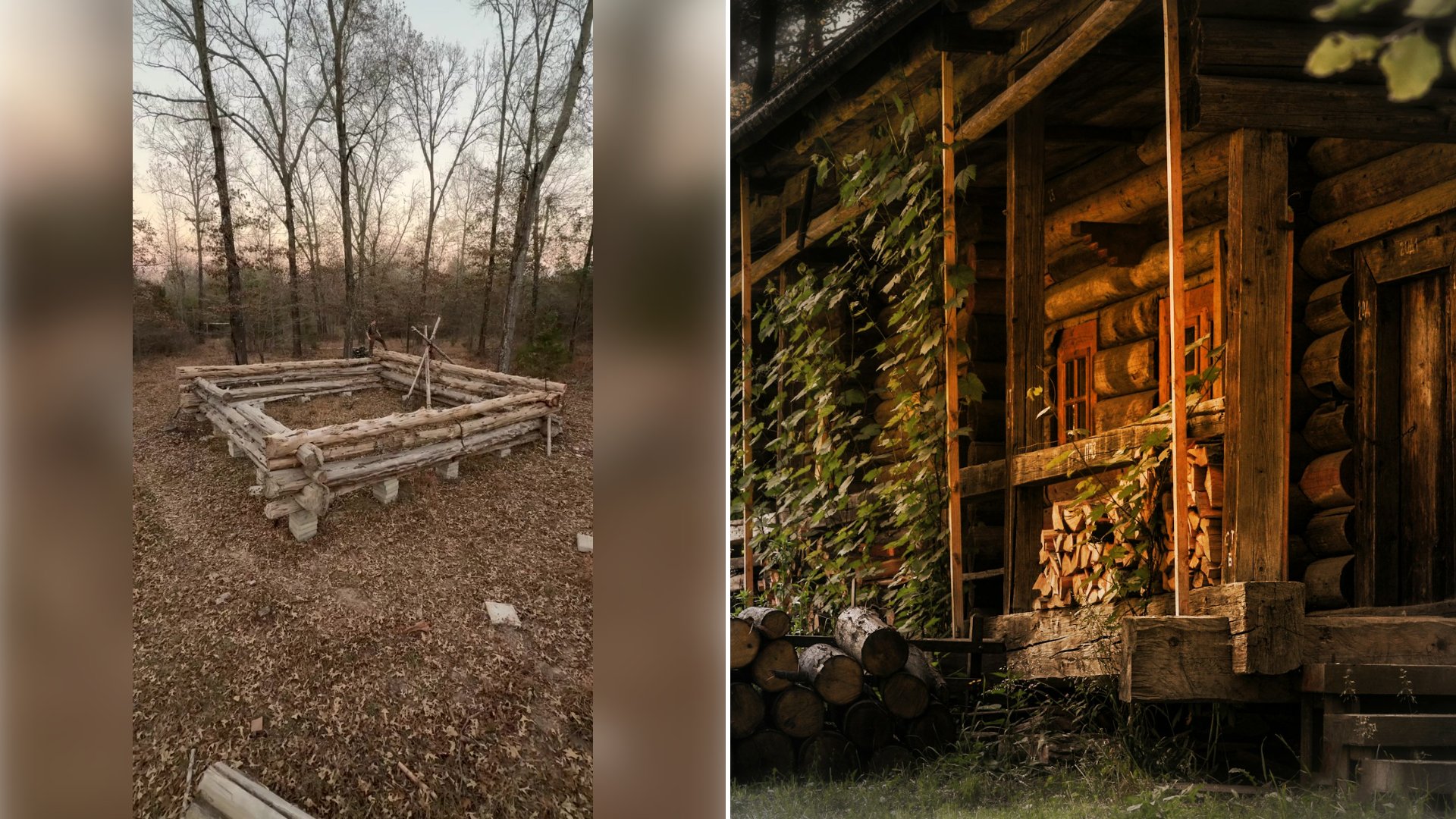
@countrytactical
Where It Started
He says the story began in early 2024, when he started felling eastern red cedar on land owned by his family in East Texas. He points out that the species is naturally rot resistant and common in that part of the state. The materials, as he puts it, cost nothing but time, patience and dedication.
Every chance he got away from college, he says, he went into the forest to fell these giants and debark them. Each log is 30 feet long. Anyone who has handled a tree of that length knows the work involved, from cutting it safely to stripping the bark by hand.
Foundations in Winter
Over winter break at the beginning of 2025, he marked out and poured concrete pads for the foundation. He explains that the frost line is practically nonexistent where he lives and that the sandy soil drains well, which makes pads a workable choice. He also threw together a quick shack out of scrap wood to hold equipment and give him a place to cook.
To make sure the pads were level with each other, he built a water level out of tubes. A tube water level works on a simple principle: water finds its own level at both ends of a hose, so two points can be compared across a distance with great accuracy. It is a low cost tool that has served builders for centuries.
Lifting 30 Foot Logs
He split 15 foot sections of cedar and set them on the pads. For the full size 30 foot logs, he made a tripod and used a chain hoist to lift them. A tripod and hoist is a classic way to raise heavy loads without a crane, but it needs careful setup and a respect for the weight overhead.
Shaping the logs was slow. He says he spent hours chopping a saddle notch with just an axe, until people who follow his project suggested a crosscut saw. That, he says, worked very well. It is a good reminder that asking for advice can save hours of effort.
Slow, Lonely and Grueling
He is honest about the cost of the project. Every chance he had, he says, he drove six to seven hours from college back home to work on the cabin. He describes the work as slow, lonely and grueling.
Over the summer of 2025 he felled more trees through the humid heat of East Texas. He also says he ended up on a survival television show and lost 28 pounds, and that after the fall semester of college he returned and continued stacking. He says he is halfway there.
His Message
He closes with words for anyone who has a goal of their own: if you have dreams of your own, stop waiting.
What Builders Can Learn From a Cedar Cabin
His project offers practical lessons for anyone considering a hand built log structure.
Choose the right wood. Eastern red cedar is known for its natural resistance to rot and insects, which is one reason people value it for posts and outdoor structures. Whatever species you pick, learn how it behaves as it dries, because logs shrink and settle over time.
Start with the foundation. Level, well drained pads protect the bottom course of logs from moisture. Take the time to check measurements more than once, since a small error at the base grows as the walls rise.
Make your own tools when it makes sense. A tube level, a tripod and a chain hoist are simple devices that can do a great deal. Always check the load rating of chains, hooks and hoists, and keep people clear of anything that is overhead.
Learn proper notching. Saddle notches, scribed fits and other log joinery take practice. Test your cuts on scrap logs first, and keep your tools sharp, because dull edges slip and cause injuries.
Work with the seasons. He poured concrete over winter break and felled trees in the summer heat, planning around school and weather. Dry conditions are best for foundation work, and felling in extreme heat is hard on the body, so drink water and take breaks.
Protect your body. Chainsaws, axes and heavy logs call for helmets, eye protection, gloves and sturdy boots. Never work alone in the forest if you can avoid it, and tell someone where you will be.
Check the rules. Before building any permanent structure, look into local permit requirements, setbacks and inspections. Even on family land, rules may apply.
Why Slow Progress Still Counts
Some people told him the build was taking too long. His reply is a reminder that large projects follow their own schedule, especially when they happen around classes, travel and long drives. Two years of progress, with foundations poured, a shack built, tools invented and logs stacked halfway, is a real achievement for a student working on weekends and breaks.
There is a lesson in the way he describes his own effort. He does not claim it was easy or fun. He calls it lonely and grueling, and he still says to keep going. That honesty is what makes his message land.
A Cabin Built by Patience
When the last log is in place, the finished cabin will have been felled, hauled, notched and lifted by one determined person with help from a few good suggestions. Whether you want to build a cabin, learn a craft or start a business, his story points to the same first step. Pick the project, gather what you have, and begin today.
Leave a Reply