Home inspectors are used to being the bearer of bad news, but they do not usually expect the news to follow them back to the street. When the inspector behind @jonny.eagle.eye finished inspecting a house, he left his company sign behind, which is a normal way to advertise. The next day, he went looking for it and found it, and his reaction made more than 3 million people stop and listen.
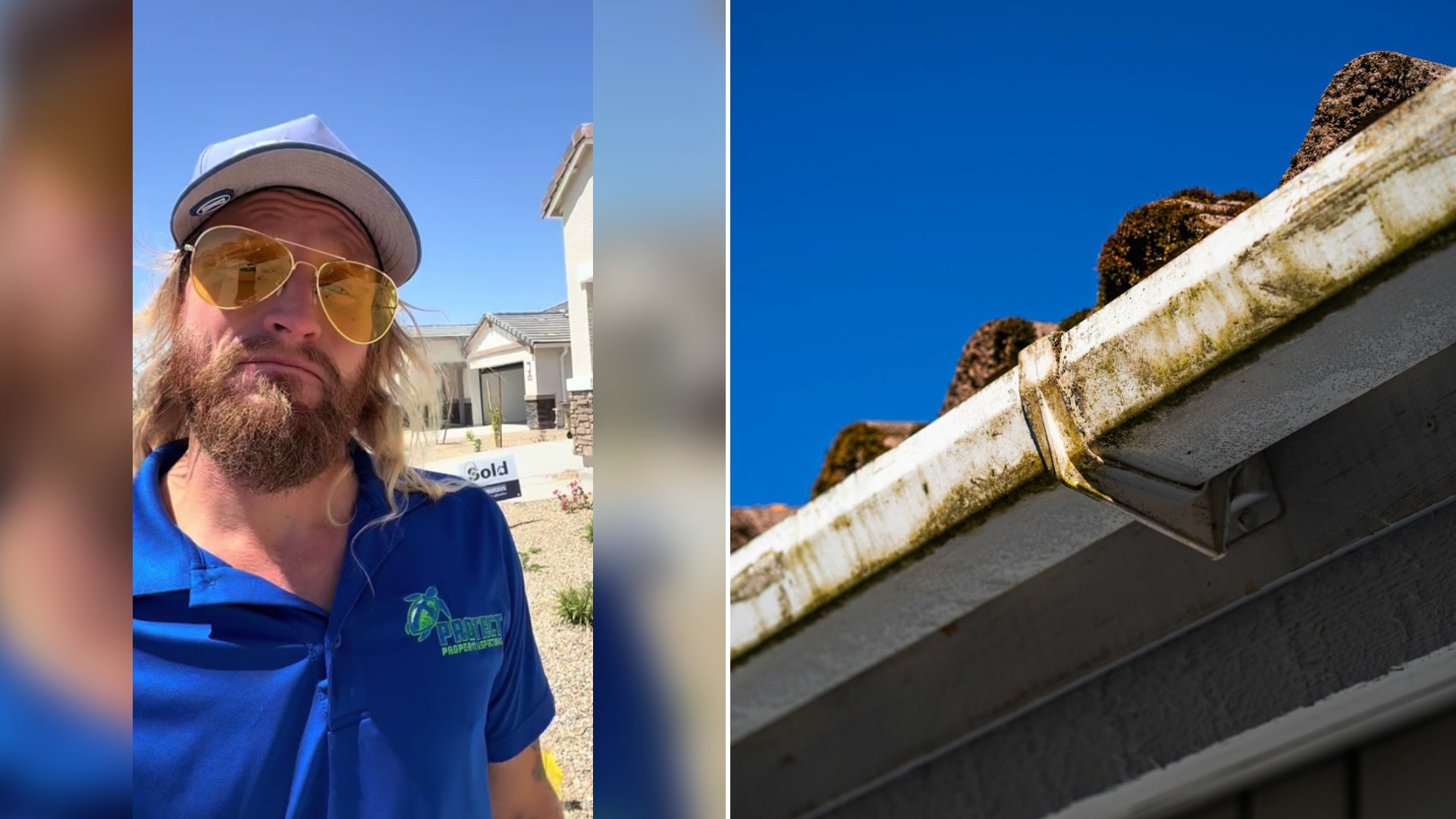
Standing near the house, he says he can’t name the builder, but that he inspected the house the day before and left his sign. His caption asks why anybody would want to do that, with a trash can emoji at the end. Then he gets to the real point: while he is there, he is happy to give a quick rundown of what he found.
@jonny.eagle.eye
A Sign Is Not Cheap
The inspector explains that he does not often leave a sign at a property, but he did this time. When he found it again, he says he was glad, because those signs are not cheap. He then speaks directly to whoever handled it, saying that he sees them and that there is not much respect there. He insists that he is simply trying to help his clients and will keep doing so.
It is worth saying that he does not claim to know who moved the sign or why, and he does not name the builder. His point is that the sign belongs to him, and that he has a job to do. Whatever the reason, he is clear that this will not change how he works.
What He Found at the House
With a touch of humor, he adds that since he is already there, he might as well give a little rundown on a few things. He starts at the roofline. He says he found probably one of the worst eaves he has ever seen. Eaves are the edges of the roof that hang over the walls. By his account, literally every rafter tail has damage or a nail sticking out of it. The rafter tails are the ends of the beams that support the overhang, and they are often visible from the ground.
He goes on to say that, on the whole house, there are nails sticking out of the fascia. The fascia is the long board running along the roof edge where gutters are usually attached. Nails that stick out are a sign of rushed work, and they can allow water in, damage paint and snag tools or gutters.
Next he turns to the laundry. The dryer vent, he says, is painted shut, which means it cannot work. A dryer vent has a flap or damper that has to open to let hot, moist air and lint out. If that flap is sealed with paint, the air has nowhere to go. The result can be longer drying times, moisture problems and, in the worst case, a fire hazard from trapped lint.
Finally, he mentions the exhaust vent for the water heater. There is a gap in it, and it is broken. A water heater that burns gas or other fuel has to send its exhaust outside through a sealed vent pipe. Gaps or breaks can let combustion gases escape into the house, which is why a vent problem should be taken seriously.
At the end, he notes that people nearby are giving him looks, so he decides to stop. He closes with a pointed line: if you are curious about the workmanship, you do not have to go very far to find your answer.
Why These Details Matter to a Buyer
None of these findings sounds dramatic in a headline, but each one affects a family living in the home. Here is what they can mean:
- Roof edges: Damaged or poorly finished eaves and fascia let moisture reach the wood, and over a few years that can lead to rot and pests.
- Dryer vents: A blocked vent is one of the more common causes of household dryer fires, according to fire safety groups, so it is worth confirming that it opens and closes freely.
- Water heater exhaust: Proper venting is a basic safety requirement. If you ever see gaps or rust around a flue, ask a licensed plumber to look at it.
Can a Builder Refuse to Work With Your Inspector?
Many buyers do not realize how much say they have. In most places, you have the right to hire the inspector of your choice, and the builder cannot stop you. A builder may have a policy about site access or safety gear, and they may ask to be present, but the buyer’s inspection is part of how a purchase works. If a builder pushes back, you can ask your real estate agent or attorney to get involved.
It also helps to know that an inspection is not an attack on the builder. A good builder wants to know what is wrong before the family moves in, because it is cheaper to fix a problem now than to handle a warranty claim later. Inspectors can also point out what was done well. The ones who do this work for a living tend to be fair, because their reputation depends on being accurate.
Tips If You Are Buying New Construction
- Schedule the inspection before the final walk-through. Builders often have a short window to fix items before closing.
- Walk the outside first. Look at the roofline, gutters, siding and vents. Problems at the roof edge are visible without a ladder.
- Test the dryer vent. Run the dryer and then go outside to see that air flows out and the flap opens.
- Get every promise in writing. If the builder agrees to correct something, the repair list should be signed and dated.
- Keep your own copy of the report. Hold on to it for as long as you own the home, since it can help with any later warranty discussion.
Leave a Reply