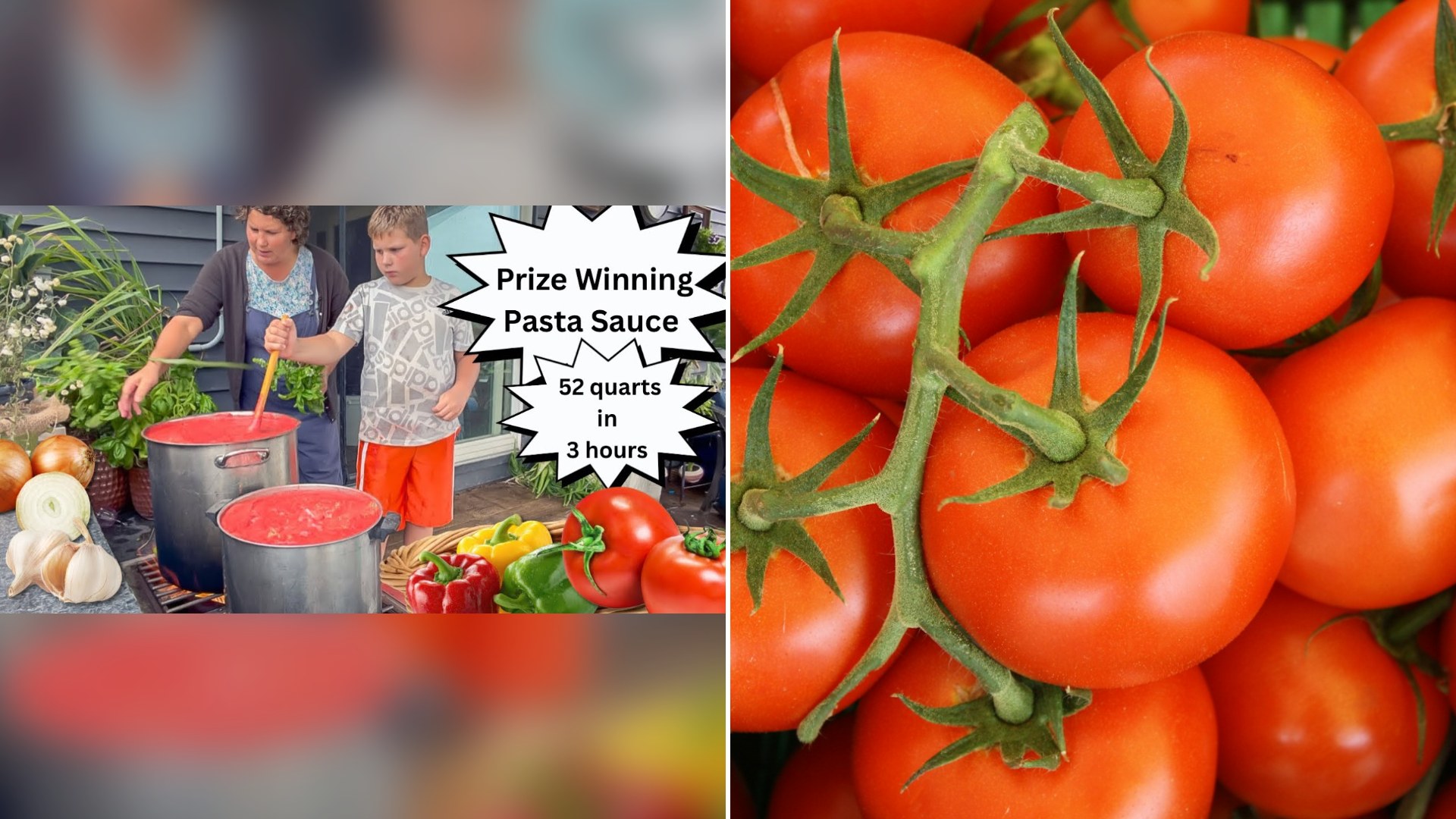
Few kitchen goals are as satisfying as a pantry shelf full of home canned sauce. RuthAnn Zimmerman of @Ruthannzimm says her family put up a year’s worth of pasta sauce in about three hours on one big canning day. She says the family works a 20 acre homestead in northern Iowa and draws on Old Order Mennonite roots.
Friday Dinner Comes First
RuthAnn explains that she had been freezing tomatoes from her garden for a couple of weeks, washed, cored and cut down. When it came time to can, it was Friday, family dinner night, and she did not want to be stuck at the stove. So the plan changed. One of her kids helped move the thawed tomatoes into the big refrigerator in the shop, which is normally used to cool milk, so they would not ferment. She notes it was about 62 degrees outside. She says a few bags had holes and lost some liquid. Canning became the priority the next day.
A Big Pot And A Short Pantry
On canning day she used a six gallon stainless lobster pot, and she points out that stainless steel is non porous. She says she was dangerously low on pasta sauce for the year after a couple of bad, wet summers. Because of that, she chose not to strain off the water from the tomatoes. Straining gives a thicker sauce but a smaller yield, and she wanted volume. She blended whole frozen tomatoes, peels and seeds included, in a blender and thickened the sauce afterward instead.
She says the big pot holds roughly eight gallons of juice, and she split the sauce into a second 16 quart pot as well, so that about four gallons went through in one stage. She decided to process every tomato that day rather than saving some for ketchup. Onions chopped earlier and frozen peppers went in too.
Tools, Helpers And A Boil Over
A custom long handled, flat bottomed canning spoon, made by a woodworker friend, helped scrape the whole pot floor, though its tall handle takes two hands. Her kids joined in. One accidentally ran the blender without a lid, and another sauteed garlic that was blended with fresh basil. At one point a pot splattered and boiled over because sauce had stuck to the bottom. Since they were outside, she says, they simply hosed it down.
How She Seasoned It
RuthAnn seasons by the gallon and tastes as she goes. She says she uses one to two teaspoons of oregano, half a cup to a cup of sugar because the family prefers sweet sauce, fresh basil with its blossoms, garlic, bay leaves and about a cup of olive oil per gallon. She uses a salt without anti caking agents, which she says suits canning. For thickening she uses a modified cornstarch, which she also calls clear gel, mixed with cold water. She adds that tomato paste is another option, though she did not have homemade paste this year.
Canning And The Final Tally
Instead of hot packing, she water bath processed the jars, because past jars had failed to seal. She filled quarts and some pints, with a ten minute boil. A few pints were reused peanut butter jars, which she sent to family living out of state. She used hot water from the hose to match the jar temperature. When the kids said they could not find any more empty quart jars, she took it as the sign of a good summer.
The total came to 52 quarts, counting pints, which she says is enough for roughly one quart a week for a year. It was probably the last big canning day of 2026, with apples and carrots still to come. She says she believes the family has between 500 and 600 quarts of food in cold storage and plans to take stock.
Lessons From A Big Canning Day
RuthAnn’s day shows how a few smart choices can make a huge batch manageable.
Prepare in stages. Freezing tomatoes as they ripen spreads out the work. Frozen tomatoes also release plenty of juice as they thaw, so expect a thinner sauce unless you strain or thicken it.
Match your pot to your batch. A heavy bottomed stainless steel pot resists scorching, and a flat bottomed spoon helps keep sauce from sticking.
Choose volume or thickness. Straining water off gives a thicker sauce and a smaller yield. Blending everything and thickening afterward gives more jars, which is what she needed.
Mind the safety rules. Home canning guidance from extension services stresses using tested recipes, since changes to ingredients, acidity and thickeners can affect safe processing times. Tomatoes are borderline in acidity, so tested recipes call for added lemon juice or citric acid. Follow current instructions for your altitude and jar size, and check every seal after cooling.
Reuse jars wisely. Specialty canning jars and new lids are the safest choice. Reusing other jars can work for shelf storage only if you understand the risks, so consider using them for gifts that will be refrigerated.
A Pantry Worth Planning For
The real lesson is in her goal, simple and practical: more pasta sauce. After a couple of wet summers she was running low, and one long, messy, joyful day set her up for the year. For anyone thinking of starting, begin with a recipe, a clear plan and a day with plenty of helping hands, and try to leave Friday dinner for the family.
Leave a Reply