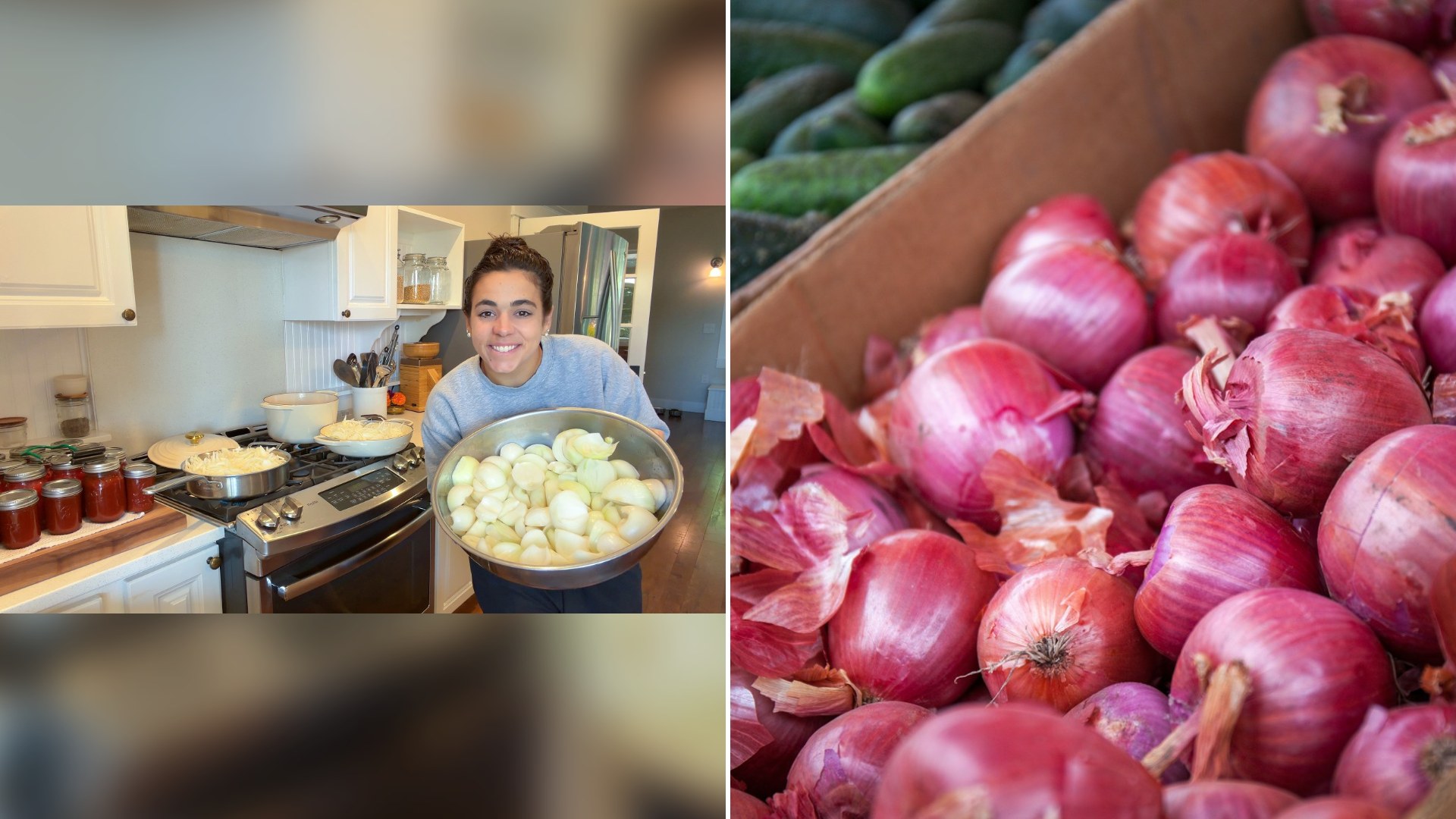
When a garden delivers more than you can eat, the clock starts ticking. Becky of @AcreHomestead says she found herself with about five and a half shelves of onions, and that many of them had bolted, which means they flower and no longer keep well. In a long preserving day she shared online, she turned the problem into pantry staples.
Why The Clock Was Ticking
Becky explains that onions which bolt send up a flower stalk and cannot be stored for fresh eating the way normal bulbs can. The unbolted ones were drying and would be eaten fresh, but she says all the bolted onions had to be processed within about two weeks or they would spoil. Walla Walla onions do not store in any case, so she decided to process all of them.
To keep dirt out of the kitchen, she set up a makeshift station outside with a wheelbarrow. She says the greens had a disease called rust, which does not affect the bulb, and that she dumps such greens in the woods rather than composting them. She estimated about 15 to 20 pounds of white and yellow onions plus roughly a crate of red ones, and even found a rare onion with a flowering stalk growing inside the bulb. She says this year’s onions came from starts rather than seed.
Her plan covered four uses: caramelized onions, onion powder, pickled red onions, and onions prepped for salsa verde and enchilada sauce.
Caramelized Onions For The Freezer
In the kitchen, she washed the onions and planned two pans of caramelized onions cooked in butter and salt, a job that takes about an hour. At the end of the day she finished the batch with about three tablespoons of balsamic glaze and a quarter cup of brown sugar, then bagged the onions flat in freezer bags, about a third to a half cup each. Flat bags thaw fast, and she says they thaw in about 30 seconds under water.
Onion Powder And Seasoned Salt
For powder, she dehydrated onions at 115 degrees Fahrenheit for at least 24 hours. She also dehydrated nine trays of red onions to make seasoned salt. Her warning is memorable: never ever dehydrate onions in your house. She says she has done it once and the smell is potent, so she uses the dehydrator outside the living space.
Salsa Verde Prep And An Unplanned Hot Sauce
Using a canning book, Becky worked out how many onions she needed for salsa verde. The recipe calls for a cup of onions, and multiplied by six that came to six cups of onions, which she bagged in the freezer with Serrano peppers for roughly 12 pints. She says she briefly confused it with a green tomato salsa verde recipe. One of the Serranos, she notes, was very spicy.
That led to an unplanned Serrano hot sauce made with about a cup of apple cider vinegar, salt and honey, simmered and blended. She did not can it. It made three pints, one in the kitchen refrigerator and two in the garage fridge, and she says it improves after sitting for two weeks. She also warns people with asthma about the fumes while it cooks.
She also froze six cups of red onions for a Ball enchilada sauce recipe, with a goal of making enough red sauce to have enchiladas monthly.
Pickled Red Onions And A Caramelized Onion Quiche
For pickles, she keeps them in the refrigerator instead of canning, because she says canned ones get soft. Two jars used red wine vinegar, about two thirds vinegar to one third water, with two tablespoons of sugar per jar and salt. She says fermenting onions once turned out terrible.
The day ended with a quiche made with a store bought crust from the freezer, eggs, milk, Parmesan, bacon, thawed caramelized onions, seasoned salt, and onion and garlic powder. She baked it at 400 degrees for about an hour and 15 minutes and added fresh tomato slices after baking.
How To Save A Glut Of Onions
Becky’s day offers a useful blueprint for anyone facing a similar pile.
Sort first. Use bolted and damaged onions right away, since the flower stalk makes the center tough and they decay faster. Set aside sound, fully cured onions with dry necks for storage in a cool, dry, dark place with good airflow.
Freeze the easy way. You can chop raw onions and freeze them flat in bags for cooking later. Cooked and caramelized onions freeze very well and are a fast shortcut to soups, quiches and pizzas.
Dehydrate carefully. Thin, even slices dry best, and a powder made from the dried slices stores well in a sealed jar. Do it in a garage, porch or any ventilated outdoor space.
Pickle for the fridge. Quick pickled onions need only vinegar, water, a little sugar and salt, and they keep in the refrigerator for weeks.
Be careful with canning. Plain onions are a low acid food, and tested guidance from extension services says to use a pressure canner for low acid foods or follow a tested recipe for pickled and salsa products. Follow tested recipes closely rather than improvising.
Process What You Can
The takeaway Becky leaves is practical. She says to process what you can, and the point is that preserving does not need to be perfect to prevent waste. With about two weeks and a few simple methods, a shelf of onions that might have gone to the compost became powder, seasoned salt, freezer bags of sweet caramelized onions, a quiche and a few jars of pickles.
Leave a Reply